
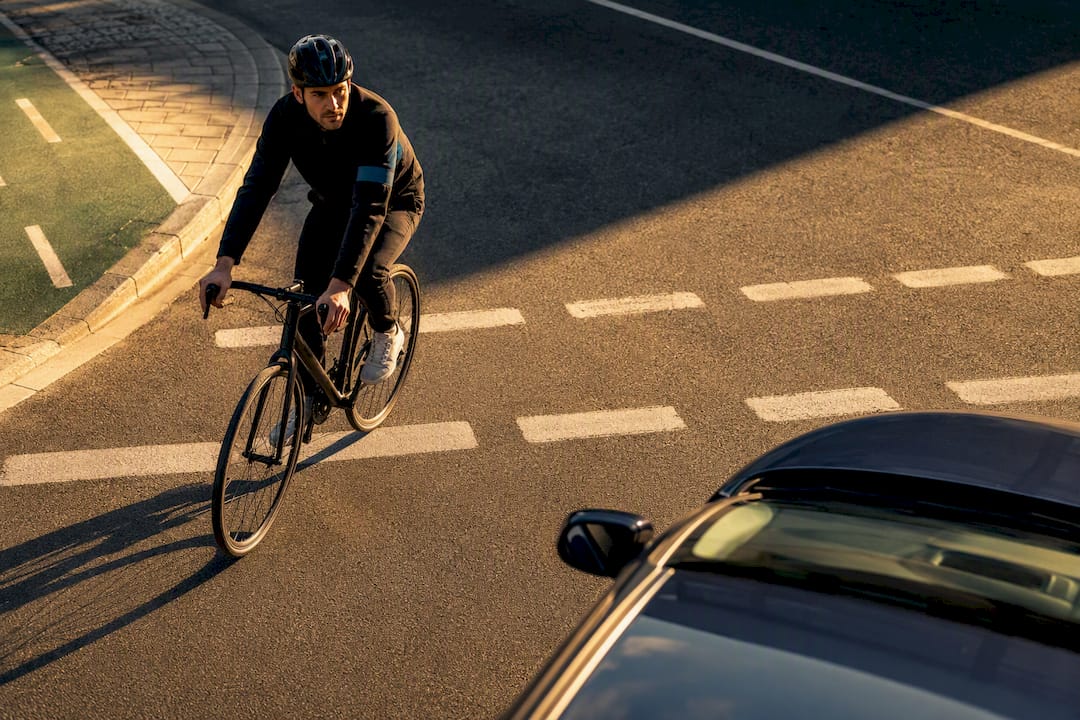
Cyclists have the same legal right to the road as any car or truck in most jurisdictions, and the fastest way to cut collisions is simple: drivers give predictable space, cyclists ride predictably, and both sides slow down at junctions. Most crashes trace back to a handful of fixable habits, not bad luck. Get those habits right and the risk drops fast.
TL;DR:
- Drivers should give at least the local minimum passing distance of about 3 feet and switch lanes if the lane is too narrow to pass safely.
- Cyclists should ride in the primary lane position at junctions and narrow roads, signaling early and establishing eye contact with drivers.
- Most cyclist crashes occur at junctions due to drivers failing to see or properly check for bicycles before turning or merging.
- Habitual techniques like the Dutch Reach and full-lane passing should be practiced daily until they become reflexes for both drivers and cyclists.
- Local laws vary widely, so drivers and cyclists must verify specific passing distances, lane usage rights, and helmet laws in their area before riding or driving.
Table of Contents
- Rules Every Driver Should Follow When Sharing the Road With Cyclists
- Rules Every Cyclist Should Follow to Stay Predictable
- Why Junctions Cause Most Driver-Cyclist Crashes
- Techniques Both Sides Should Practice Until They’re Automatic
- Local Laws Vary, So Check Before You Assume
- Why This Matters to Drive With Care
- Take the Next Step With Drive With Care
- Sources
Rules Every Driver Should Follow When Sharing the Road With Cyclists
A cyclist on the road is a vehicle operator with the same right to that lane as you, according to NHTSA’s guidance on cyclist and driver responsibilities. That framing changes how you should drive around one.
Start with distance. Many states set a legal minimum passing gap, often about 3 feet, and where no such law exists, treat that as the baseline anyway, according to the Pikes Peak Area Council of Governments. If a lane’s too narrow to give that room, change lanes to pass instead of squeezing by.
- Give at least the local minimum passing distance; when in doubt, change lanes entirely.
- Turn your head, not just your eyes, to check blind spots before turning, merging, or pulling out.
- Slow down and “look twice” at junctions, since cyclists hide easily in a driver’s blind spots.
- Never park or idle in a bike lane, and check behind you before opening a door.
- Stay clear of bike boxes and marked cycle lanes when a cyclist occupies them.
Pro Tip: Before opening your driver’s door in traffic, reach across with your far hand instead of your near one. That small twist forces your shoulders to rotate toward the mirror, so you actually see an oncoming cyclist before the door swings open.
Rules Every Cyclist Should Follow to Stay Predictable
Predictability is the cyclist’s best defense, and it starts with lane position. Riding in the “primary position,” roughly the center of the lane, makes you visible and discourages drivers from squeezing past too close. The “secondary position,” closer to the curb, works fine on wide, slow roads. Knowing when to switch matters more than picking one and sticking with it forever.
- Choose primary position at junctions, narrow lanes, or anywhere a close pass is likely; use secondary position on quiet, wide roads.
- Signal turns early with your arm, and try to make eye contact with drivers before crossing their path.
- Run lights front and back after dusk, and wear reflective gear. Check both before you leave, not after dark.
- Ride single file when traffic demands it, and avoid sudden swerves around potholes or debris. Signal the move instead.
- At intersections, act like the vehicle you legally are. Be visible, signal your intent, and assume the driver behind you hasn’t clocked you yet.
That last point sounds pessimistic, but it’s the safer default. A driver’s failure to see you is far more common than most cyclists assume.
Why Junctions Cause Most Driver-Cyclist Crashes
A significant majority of collisions involving a bicycle happen at junctions, according to a review of pedal cyclist road traffic collisions, and the leading cause isn’t recklessness. It’s drivers failing to look properly, or looking and still missing the cyclist entirely, a pattern researchers call “looked but did not see.” The brain filters for cars and trucks; a bike-sized object can slip right past that filter.
The crash patterns repeat themselves: a driver turning left across a cyclist’s path (the left hook), a driver turning right into a cyclist riding straight (the right hook), a door opened into a passing rider, or two vehicles merging into the same gap at once.
- Drivers should slow well before the junction and scan twice, not once.
- Cyclists should position themselves for maximum visibility, ideally with eye contact established before either party moves.
- Neither side should force a gap. Wait the extra two seconds.
- Around large trucks and buses turning left, give extra room and never pass between the vehicle and the curb. Its blind spot swallows a bike whole.
Techniques Both Sides Should Practice Until They’re Automatic
Good habits fade under stress unless you’ve rehearsed them enough that they become reflex. A few specific techniques are worth drilling until they’re second nature.
- The Dutch Reach. Use your far hand to open the car door. The forced torso rotation makes you glance toward oncoming traffic, and that glance is what actually prevents dooring incidents, not the door itself.
- Primary positioning on approach. Cyclists moving toward a junction or a lane narrowing should shift toward the center of the lane well before the pinch point, not at the last second, since a defensive move telegraphed early reads as confident rather than aggressive.
- The full-lane pass. Drivers should slow, check the oncoming lane, and swing wide enough to clear the legal minimum, typically about 3 feet, then merge back. If that’s not possible, wait.
- Bike box discipline. Where roads have a marked bike box at a signal, stop behind the line, not inside it. That box exists so cyclists queue ahead of turning traffic and stay visible to drivers.
- Daily rehearsal. Practicing the head-check and the Dutch Reach on every single trip, even when no cyclist is nearby, is what makes the motion automatic when one actually shows up.
Pro Tip: Treat these as physical habits, not knowledge you already have. Knowing the Dutch Reach and doing it under time pressure in a parking lot are two different skills, and only repetition closes that gap.
Local Laws Vary, So Check Before You Assume
Passing-distance requirements, helmet laws, and whether a cyclist can legally take a full lane all shift by state and by country. What’s standard practice in one city can be a citation in the next.
Before you rely on any specific number in this article, verify it locally. Check:
- Your state’s minimum passing distance law, if one exists.
- Whether cyclists are permitted to use a full traffic lane on your local roads.
- Local rules on parking or stopping in a marked bike lane.
- Helmet requirements by age, since these vary widely.
Your state DMV, the driver’s manual for your state, municipal ordinances, and national resources like NHTSA or a country’s official highway code are the sources to trust, not a forum post or a secondhand rumor.
Why This Matters to Drive With Care
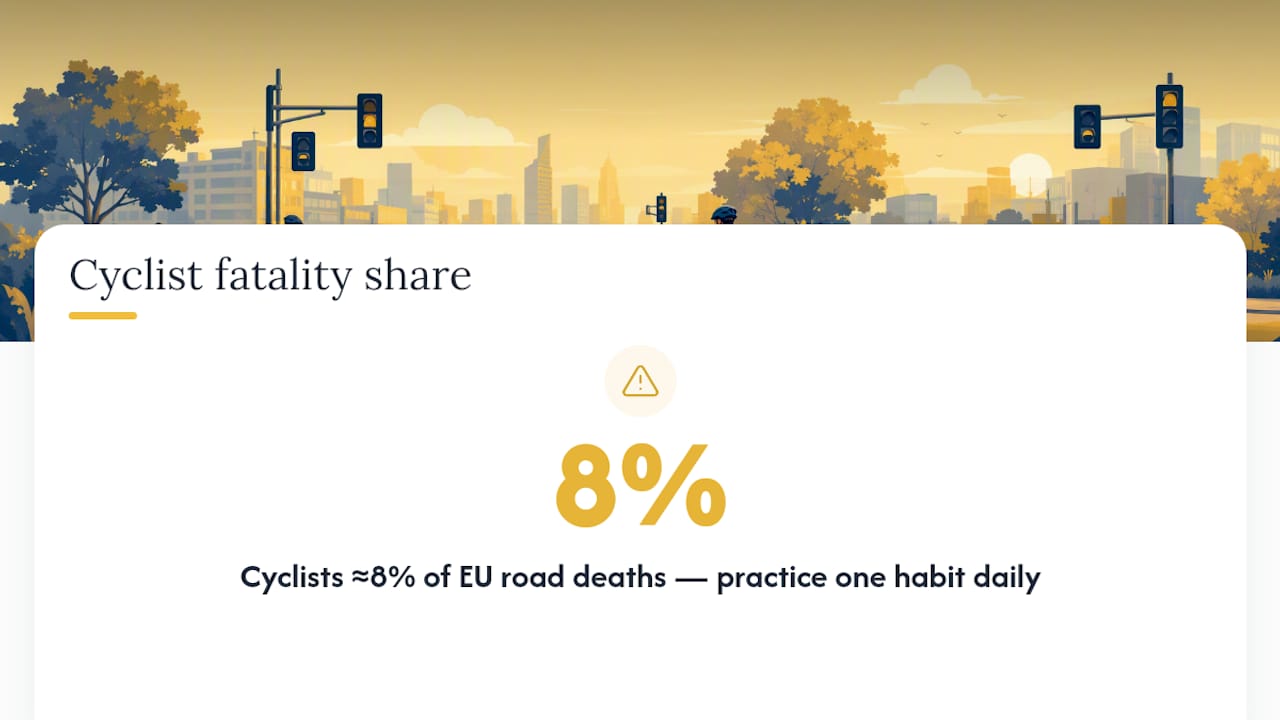
Drive With Care exists because human error, not mechanical failure or bad infrastructure, drives the overwhelming majority of traffic incidents. Cyclists make up roughly 8% of total road fatalities across the EU, a share that’s crept upward as cycling has grown more popular. That’s not an abstract statistic to us. It’s a driver who didn’t check a mirror, or a cyclist who trusted a gap that wasn’t really there.
We built our programs around the idea that a habit rehearsed enough times becomes reflex under pressure, which is exactly when it matters most. A short daily scanning drill or a practiced Dutch Reach doesn’t feel dramatic in the moment. It’s the difference that shows up months later, in a near miss that stays a near miss.
If you take one thing from this article, take the pledge to practice one habit consistently. Small, repeated commitments are what actually change outcomes on shared roads.
— Charles
Take the Next Step With Drive With Care
Reading about safe habits and actually building them are two different things, and that gap is exactly where most safety campaigns fail. Some safety campaigns aim to close it with rehearsal tools designed to make the scanning routine, the Dutch Reach, and junction awareness second nature instead of good intentions you forget under stress.
For practical guides in one place, see our bike and e-bike safety guides for riders, drivers and families.

Our Safer Roads Now initiative gives drivers and cyclists concrete ways to practice these habits, backed by community stories and behavior-change data rather than another poster campaign. If you want a structured way to drill the reflexes covered above, try the safety reset rehearsal and work through the scanning and reaction drills at your own pace. For readers dealing with the aftermath of an incident, our guidance on what to do after a traffic accident walks through the immediate steps. And if you’re ready to formalize your commitment, take the Drive With Care safety pledge today and make the habit official.
Sources
- Road traffic collisions involving pedal cyclists
- Share the Road: It’s Everyone’s Responsibility | NHTSA
- Cyclists – Road safety – European Commission
- It Takes Two: How Cyclists and Drivers Can Keep Each Other Safe – Pikes Peak Area Council of Governments

