Why friends in the car can raise a teen driver’s crash risk
The hidden mix of distraction, pressure, and inexperience that can make a simple ride more dangerous
Safety Behind the Wheel Foundationdrivewithcare.org
Last reviewed:
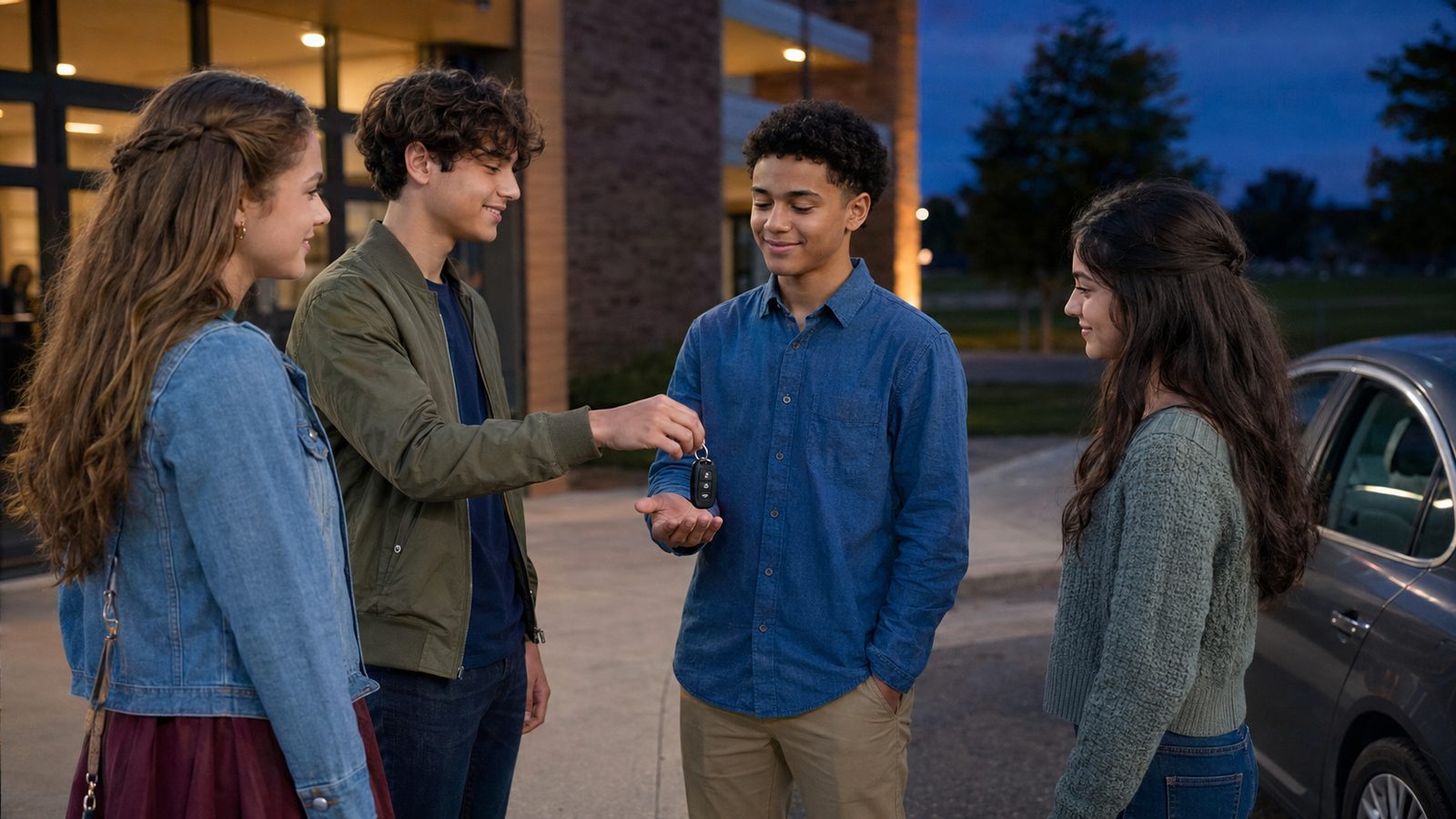
Teen drivers are still learning how to manage the road. They are building the skills needed to scan traffic, judge speed, notice hazards, and react quickly. When friends are added to the car, driving becomes more difficult. Peer passengers can affect a teen driver’s attention, emotions, and choices behind the wheel.
For 16 and 17 year old drivers, the risk rises when they carry passengers under age 21 without an adult in the car. One young passenger can increase the teen driver’s fatal crash risk per mile driven by about 44% to 45%. Two young passengers can double the risk. Three or more young passengers can increase the risk even more. Researches describe this as roughly four times higher than driving alone.
Peer passengers raise the risk because they create distraction. A teen driver may look away from the road to answer a friend, laugh at a joke, turn toward the back seat, or react to noise inside the car. Even a short distraction can matter. A new driver may not have enough experience to recover quickly when traffic changes.
Friends in the car can also increase pressure. A teen may want to seem confident or fun. They may drive faster, follow too closely, race another car, or try to beat a traffic light. These choices may happen in seconds. They are more likely when the mood in the car becomes loud, exciting, or competitive.
Loud conversations are a serious problem. When several teens are in the car, the noise level can rise quickly. Loud talking, laughing, shouting, and music can make it harder for the driver to notice brake lights, traffic signals, road signs, and sudden hazards. The driver may still be looking forward, but their mind may not be fully focused on driving.
Horseplay can be even more dangerous. Pushing, grabbing, throwing objects, sudden movements, or joking around inside the vehicle can pull the driver’s attention away from the road. It can also cause sudden swerving or hard braking. Even when passengers do not mean harm, their behavior can create real danger.
Inexperience makes the problem worse. New drivers often do not scan far enough ahead. They may miss hazards that an experienced driver would notice earlier. They may also have trouble managing several things at once, such as speed, mirrors, traffic lights, lane position, and conversation. Peer passengers can overload a teen driver’s attention at the exact time they need focus the most.
Many teens do not fully understand this risk. The research material notes that only 10% of teenagers correctly recognize that carrying peer passengers increases crash risk. This gap matters. When teens underestimate the danger, they are less likely to set limits or speak up when a ride becomes unsafe.
Adult passengers can have a different effect. The research material states that having an adult passenger age 35 or older in the vehicle can reduce a teen driver’s fatal crash risk. A calm adult can help lower pressure, reduce risky behavior, and support safer choices.
This is why passenger limits are important for new teen drivers. The first months of independent driving are a high risk period. A quiet car gives a teen driver more space to think, scan the road, and react. Fewer passengers means fewer distractions and less pressure to perform.
Parents and caregivers can help by setting clear rules before a teen starts driving friends. The rules should be simple. Limit peer passengers during the early driving period. Keep the car quiet. Require seat belts for everyone. Do not allow phone use while driving. Do not allow speeding, racing, or showing off. Make sure the teen knows they can say no to unsafe rides.
Teen passengers also have responsibility. A good passenger helps the driver stay focused. They keep noise low, wear a seat belt, avoid horseplay, do not encourage speeding, and speak up if the driver is taking risks. Passengers should understand that their behavior can either protect the ride or make it more dangerous.
A teen driver may think they are only giving friends a ride. But friends can change the whole driving environment. More young passengers can mean more noise, more pressure, more distraction, and more risk.
The safest choice for new teen drivers is to limit peer passengers, especially during the first months of driving. This is not about limiting freedom. It is about giving young drivers time to build skill without extra pressure. A calmer car can help a teen driver make better decisions and avoid preventable crashes.
Peer passengers affect teen crash risk because they change how teens drive. They increase distraction. They increase social pressure. They can increase risky behavior. As the number of young passengers rises, the danger rises too. Clear passenger limits, calm passengers, and strong family rules can help protect teen drivers and everyone on the road.
Keep learning
Safe Driving Resource Center
Guides, self-checks and articles for drivers, parents of new drivers, and families recovering after a crash.