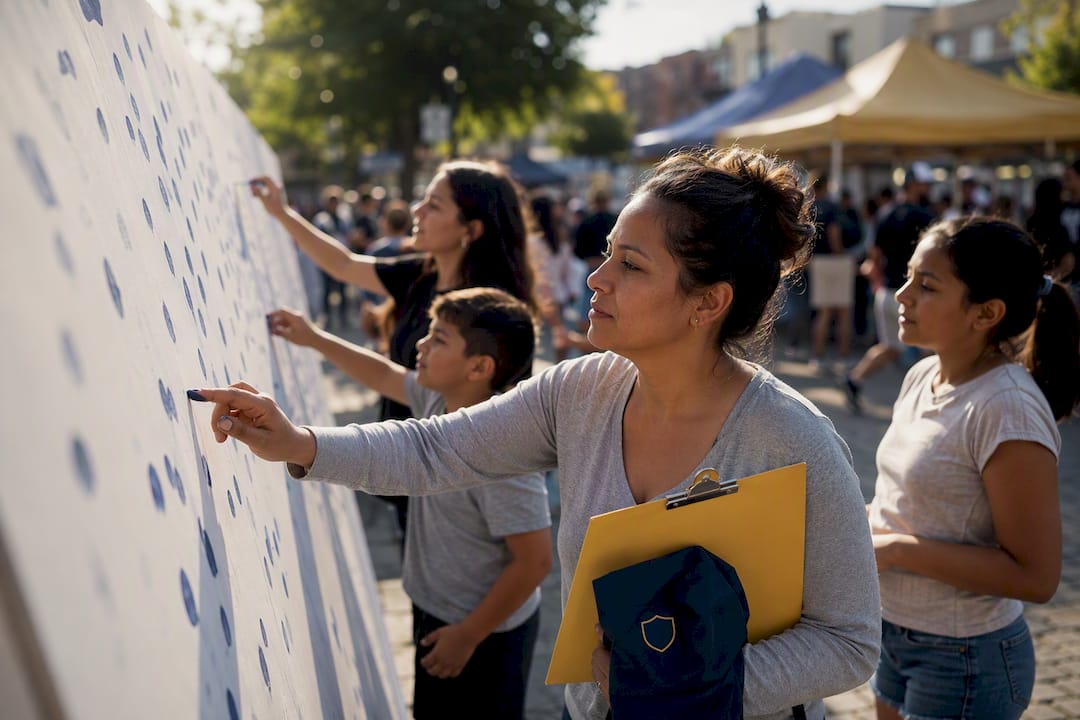
The best pledge events pair a fast, visible commitment with a real human story: a signature wall, a photo booth built around a hashtag, a quick-click seatbelt challenge, or a mock-crash demonstration with survivor testimony. Each one works because it turns an abstract safety message into something people can touch, share, or hear from someone they trust. The European Road Safety Charter’s six-step planning process and programs like a nonprofit organization’s own pledge campaign both point to the same conclusion: simple actions beat complicated ones.
TL;DR:
- Pledge events are most effective when they incorporate simple, tangible actions like sign walls, photo challenges, or seatbelt races tailored to the target audience.
- Coordination with local partners, obtaining permits, and clear role assignments are essential for smooth execution and measurable results.
- Costs vary from under $150 for basic pledge walls to several thousand dollars for large-scale mock-crash demonstrations, often offset by community or sponsor support.
- Promotion through trusted community channels and storytelling around human stories significantly increases turnout and engagement.
- Post-event follow-up, like reminder emails, is critical to converting pledges into lasting behavior change.
Table of Contents
- Twelve Pledge Event Ideas Worth Running This Year
- How to Plan a Pledge Event Without Missing a Step
- Running the Four Highest-Impact Activities the Right Way
- Partners, Permits, and Measuring What Worked
- Building the Campaign Around Your Actual Audience
- What a Pledge Event Actually Costs
- Finding and Keeping Volunteers Who Show Up
- Getting People to Show Up
- A Setup Checklist You Can Copy for Any Event
- How Drive With Care Can Support Your Next Event
- Three Things I’d Tell Any First-Time Organizer
- Sources
Twelve Pledge Event Ideas Worth Running This Year
Not every format fits every audience. A driving school parking lot suits a quick-click seatbelt station; a county fair suits a photo booth. Here’s a working list to pick from, matched to who you’re trying to reach and what you’ll need on hand.
- Pledge wall (physical or digital): A branded board or tablet kiosk where people sign their name to a safe-driving promise. Works for any crowd size, at any venue, and needs only a table, markers or a tablet, and a volunteer to greet signers.
- Photo booth with a hashtag challenge: Guests hold a pledge sign and post it online with a campaign tag. Best for teens and young adults; needs props, a backdrop, and a simple consent form at sign-up.
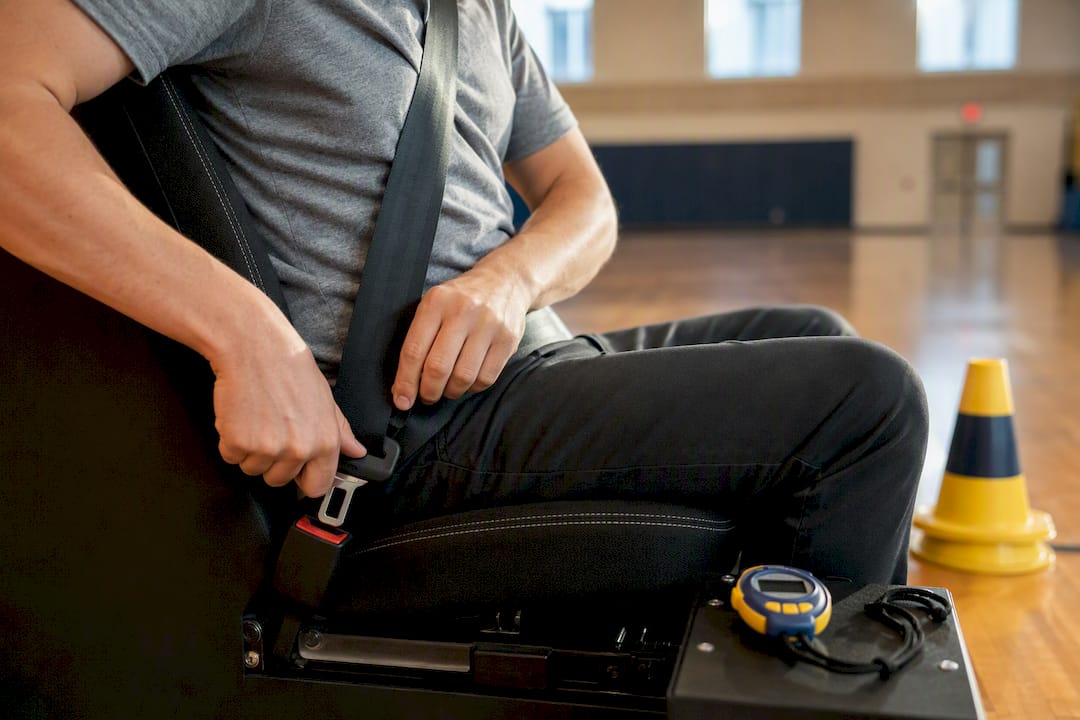
- Quick-click seatbelt challenge: A timed race to buckle in correctly, often run with a seatbelt convincer trainer. Great for school assemblies and driving-school open houses; needs the training rig or a simple stopwatch course and a partner willing to supervise.
- Mock-crash demonstration with testimony: A staged collision scene followed by a survivor or first responder speaking. Highest impact for high school and college audiences; needs coordination with police or fire departments and a trauma-informed speaker.
- Reflective-gear handout: Free reflective wristbands or vest strips paired with a short pledge card. Fits walking and cycling communities; needs a small supply budget and a sign-up sheet.
- School poster contest: Students design safe-driving posters that get displayed at a community event or online. Works well for grade schools and middle schools; needs a teacher partner and a small prize budget.
- Designated-driver coffee stop: A free-coffee station near nightlife areas where designated drivers get recognized and pledge to stay sober behind the wheel. Fits bar districts and event venues; needs coffee supplies and a local business sponsor.
- Pace-car program: Volunteers drive at the posted speed limit during a set window to model compliant driving. Good for commuter corridors; needs volunteer drivers and simple signage on the vehicles.
- Pedal-kart impairment game: Participants navigate a cone course wearing impairment-simulation goggles. Popular at fairs and college orientations; needs a kart or bike, goggles, and open pavement.
- Pledge-labeled giveaways: Water bottles, phone grips, or keychains stamped with the pledge message, handed out at sign-up. Fits any audience; needs a modest merchandise budget.
- Community walk with pledge stations: A short walk or fun run with two or three stops where participants sign pledges and hear a short story. Works for family-oriented neighborhoods; needs route permits and a few volunteer station leads.
- Online or digital pledge drive: A social-media or email campaign asking people to sign a digital pledge and share it. Fits distributed or rural audiences; needs a landing page and a modest promotion push.
How to Plan a Pledge Event Without Missing a Step
Every one of the ideas above still needs the same backbone: a clear objective, a realistic timeline, and someone accountable for each moving piece. Run through this checklist before you lock in a date.
- Define your objective and target group. “Reduce distracted driving among new drivers” is workable; “improve road safety” is not.
- Set a measurable goal. Fifty pledges, 500 social impressions, or one local news mention are all fine benchmarks.
- Choose a date and venue that already draws your target audience.
- Secure any needed permits for signage, road use, or public space.
- Recruit one liaison volunteer per partner organization.
- Assign roles: greeter, photographer, pledge-wall monitor, speaker escort.
- Build a basic budget covering materials, printing, and any rentals.
- Plan promotion across two or three channels, not ten.
- Check accessibility and weather contingencies before the event date.
Timelines scale with your resources. A 6-day sprint works for piggybacking on an existing event: confirm your partner, print signage, and run a single pledge station. A 6-week campaign allows time to recruit volunteers, pre-test your messaging on a small group, and coordinate a speaker. A 6-month campaign supports a full structured six-step process, multiple events, and a real pre/post survey to measure attitude change over time. That same six-week to six-month window also lines up with the adaptable timeline templates highway safety planners recommend for local pedestrian and traffic-safety drives.
Pro Tip: Piggybacking on an existing community event, a fair, a football game, a farmers market, saves you the cost of drawing your own crowd and usually outperforms a stand-alone event on turnout per dollar spent.
Running the Four Highest-Impact Activities the Right Way
These four formats consistently produce the strongest turnout and the most shareable content, but each carries its own setup details and safety notes worth getting right.
Pledge wall. Give it enough surface for at least 100 signatures, a six-foot banner or a folding board works. Offer both a paper sign-up sheet and a tablet form so older and younger visitors can choose their preferred method. Keep the pledge text short: “I promise to buckle up, put my phone away, and drive at a safe speed.” Note on the sign-up sheet that names may appear in event photos, and offer an opt-out.
Photo booth and social challenge. Set the booth against a simple backdrop with two or three pledge-related props: a steering wheel cutout, a “buckled up” sign, oversized sunglasses. Photo booths and hashtag challenges rank among the most consistently effective pledge activities because they turn a private promise into public content. Post the campaign hashtag clearly at eye level, and collect a written image release before anyone steps in front of the camera.
Quick-click seatbelt challenge. Set up a stationary seatbelt trainer or a simple two-chair course where participants race to buckle in properly. Time each attempt and post a leaderboard for a light competitive edge. For younger children, swap the stopwatch for a simple demonstration and skip the competition angle.
Mock-crash demonstration with testimony. Coordinate directly with your local police or fire department well in advance. Mock-crash events run with emergency services and survivor speakers have drawn strong regional media coverage and large student audiences when the tone stays respectful rather than shocking. Prep any survivor speaker with a trauma-informed conversation beforehand, warn the audience about the content before it starts, and hold a short debrief afterward for anyone visibly affected.
A regional mock-crash program covered by the Daily Liberal drew crowds numbering in the hundreds at a single school stop, proof that this format scales when the partnerships behind it are solid.
Partners, Permits, and Measuring What Worked
The right partners lend your event credibility it can’t buy on its own. Collaborations between police, first responders, and driving schools consistently produce stronger behavior change than campaigns run solo, because participants trust a uniform or a certified instructor more than a flyer.
- Police and first responders: lend authority to mock-crash events and seatbelt demonstrations.
- Driving schools: supply instructors, teen participants, and credibility for anything involving new drivers.
- Local media: covers mock crashes and community walks when pitched two weeks ahead.
- Corporate sponsors: fund materials in exchange for logo placement on signage or social posts.
Before installing any signage on a public roadway, check with your local highway authority. Omitting that approval is one of the most common reasons materials get pulled mid-event.
| Metric | What it tells you |
|---|---|
| Pledges collected | Direct measure of participation |
| Social reach or impressions | Awareness beyond the physical event |
| Media mentions | Credibility and secondary reach |
| Pre/post survey shift | Whether attitudes actually moved |
A two-question survey before and after the event, paired with a simple pledge count, gives you a usable signal without any complicated analytics. If your event includes a donation ask, keep it plain and separate from the pledge itself: a small “support this program” line with a clear link works better than folding fundraising into the pledge language.
Building the Campaign Around Your Actual Audience
Start by naming exactly who you’re trying to reach, teen drivers, commuting parents, or older adults, because the format that works for one rarely works for another. A pace-car program means little to a group of high schoolers; a pedal-kart impairment game means little to retirees.
Once you know the audience, design the message and materials around them specifically. A campaign aimed at new drivers should lean on peer stories and short, visual rules. One aimed at commuters might work better with a designated-driver angle or a distraction-focused pledge.
Pre-testing matters more than most organizers expect. Show your pledge card, poster, or booth mockup to five or six people from your target group before the event and ask what confuses them. This step catches problems, unclear wording, a hashtag nobody will remember, before they cost you turnout.
Delivery is where the plan meets the parking lot: stick to your assigned roles, keep the pledge language consistent across every station, and don’t let a single activity run so long it crowds out the others.
Evaluation closes the loop. The six-step approach recommended by European road safety planners treats evaluation as a required step, not an afterthought, because a campaign that never measures its own results has no way to improve the next one.
What a Pledge Event Actually Costs
Costs scale with scope more than ambition. A single pledge-wall station at an existing community event can run under $150: a folding banner, markers, printed pledge cards, and a small giveaway for signers. A photo booth adds printing costs for a backdrop and props, typically another $100 to $300 depending on how reusable the materials are.
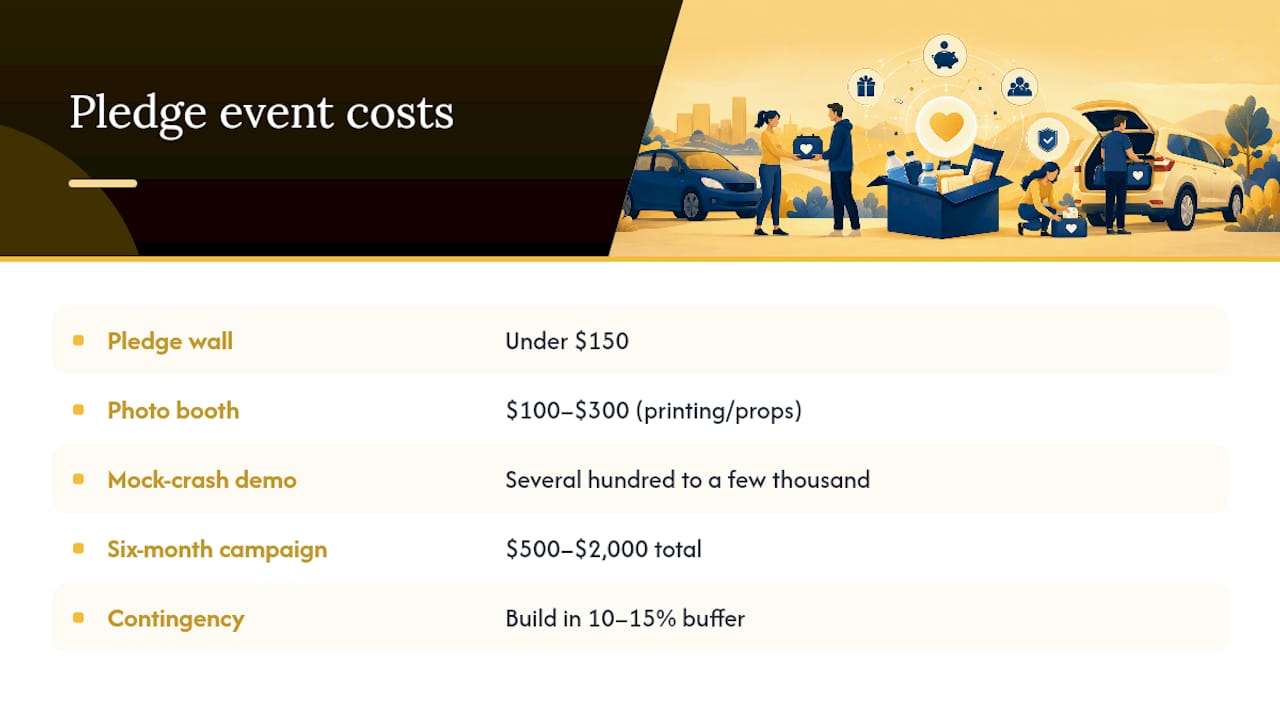
A mock-crash demonstration carries the highest price tag, usually several hundred to a few thousand dollars once you account for a damaged or donated vehicle, safety barricades, and any honorarium for a survivor speaker. Many fire departments and police units will supply the vehicle and staging at no cost when the event serves their own community outreach goals, which is the biggest single lever for cutting this budget.
A six-month campaign with multiple events should budget for reflective-gear giveaways, printed materials for each stop, and a modest promotion spend, often $500 to $2,000 total depending on how many stations you run. Corporate sponsors covering materials in exchange for logo placement can offset a large share of this without turning the event into an advertisement.
Whatever the format, build in a 10 to 15 percent buffer for last-minute needs: extra printing, replacement props, or a second tank of coffee for the designated-driver stop nobody expected to be this popular.
Finding and Keeping Volunteers Who Show Up
A small, committed group beats a large, loosely managed one every time. Three dedicated organizers plus one liaison volunteer per partner organization can run a full event without the communication breakdowns that plague bigger committees.
Recruit from places already aligned with your goal: driving school staff, parent-teacher groups, local Rotary or Lions clubs, and off-duty police or fire personnel. Ask each volunteer to commit to one specific role, greeter, photographer, pledge-wall monitor, rather than a vague “help out” assignment. Specific roles get filled; vague ones get abandoned.
Brief every volunteer the week before, not the morning of. Walk through the pledge language, the photo consent process, and what to do if someone gets upset by a mock-crash scene or a survivor’s story. A five-minute briefing prevents most on-the-day confusion.
Recognition keeps volunteers coming back for the next event. A short thank-you email with a photo from the day, or a shoutout on your campaign’s social post, costs nothing and builds the bench you’ll need for your six-month timeline.
Getting People to Show Up
Promotion works best across two or three channels run consistently, not ten channels run once. A local Facebook event page, a partnership post from your driving-school or police partner, and a flyer at the venue itself usually outperforms a scattershot approach.
Lead your promotion with the human element, not the activity. “Hear from a survivor who lost her son to a distracted driver” pulls more attention than “mock-crash demonstration at 2 PM.” The research on community engagement in road safety backs this up directly: local stories build trust faster than statistics or slogans.
Ask every partner organization to share your event on their own channels. A police department’s social post or a driving school’s newsletter mention reaches people your own page never will. Time your promotion push two to three weeks out for a standalone event, or just a few days out if you’re piggybacking on something already drawing a crowd.
A Setup Checklist You Can Copy for Any Event
Regardless of which format you choose, the setup sequence stays the same. Run through this list the week of your event:
- Confirm your venue, date, and any required permits are locked in.
- Print pledge cards, signage, and consent forms.
- Pack props: photo booth items, seatbelt trainer, or reflective gear.
- Brief every volunteer on their role and the pledge language.
- Confirm your partner’s arrival time and their specific contribution (speaker, vehicle, instructor).
- Set up 30 to 60 minutes before your posted start time.
- Post your promotion reminder the morning of the event.
- Run the activity, collect pledges, and take consented photos.
- Send thank-you messages to volunteers and partners within 48 hours.
- Tally pledges, social reach, and any survey results within a week.
How Drive With Care Can Support Your Next Event
A nonprofit organization built its pledge program around the same idea driving this guide: simple commitments, backed by real stories, create lasting behavior change. One of its initiatives grew directly out of the fact that human error accounts for up to 96 percent of traffic incidents, which means the pledge itself, not just the awareness campaign around it, is the point.
Organizers can request pledge templates, outreach kits, and liaison-volunteer guidance directly from Drive With Care’s community resource library, and driving schools or corporate sponsors can connect with the volunteer ambassador program to find a partner for their next event. If your event includes a mock-crash or testimony segment, Drive With Care’s safety reset rehearsal materials offer scripting support for handling that content responsibly. For prop rentals like signage or light-up letters for a photo booth, Coventry Party Hire supplies event materials that pair well with a hashtag-driven booth.
To bring the pledge itself into your event, direct participants to Make the Promise to Drive Safely, the same sign-up page Drive With Care uses for its own campaign. Corporate sponsors interested in logo placement or matched giving can reach out through the organization’s partnership contact path, and anyone who wants to fund the survivor-support and research work behind these programs can donate directly here.
Three Things I’d Tell Any First-Time Organizer
Keep your message down to one or two behaviors, buckle up, put the phone away, not a list of ten rules nobody remembers walking away. Humanize it with a local story wherever you can; a name and a face beats a statistic every time. And secure one dependable partner, a police liaison, a driving school, before you build the rest of the event around them.
Pro Tip: A pledge signed today means nothing without a follow-up. A short reminder email or text a month later is what turns a signature into an actual habit change.
— Charles
Sources
- How to run effective road safety awareness campaigns
- How to successfully engage a community in road safety
- Road safety activities

