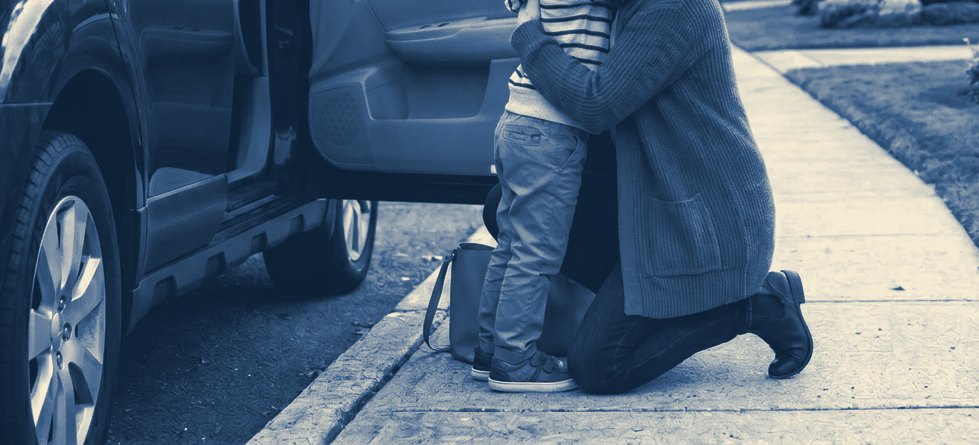
Choosing a safe first car for your teen: what matters most
How to pick a teen's first car using size, crash ratings, safety features and recalls
Safety Behind the Wheel Foundationdrivewithcare.org
Last reviewed:
For parents of new drivers12 min read
Picture three listings on a parent’s phone: a 14 year old compact, a neighbor’s sporty coupe, and a midsize SUV that stretches the budget. All three run fine, but they would not protect a new driver equally in a crash.
That difference matters most early on. In 2024, drivers ages 16 to 19 had a fatal crash rate per mile just over 3 times that of drivers 20 and older [3]. Teen drivers killed in crashes have also been more likely than middle aged drivers to be in small, older vehicles [4].
You can’t control other drivers, but you can choose the car your teen learns in. Here is how a vehicle safety engineer would make that choice.
The engineer's framework: protect, control, prevent, verify
Engineers judge a vehicle in layers. A strong later layer never makes up for a weak earlier one.
- Protect: Do the structure, size and air bags shield the people inside?
- Control: Will the car go where a beginner steers without tempting them to speed?
- Prevent: Can technology and good lighting help avoid common teen mistakes?
- Verify: Is this exact car in factory condition, with its recalls fixed?
If a car fails Protect or Control, cross it off, no matter how many screens or sensors it has.
Size and weight: why the extra pounds matter
Physics explains why bigger is safer for the people inside. A longer vehicle has more structure in front of the cabin, so more metal can crush before the cabin does [5]. And in a two vehicle crash, the heavier vehicle shoves the lighter one backward. So people in the lighter one take more force [5].
IIHS tracks driver deaths in vehicles 1 to 3 years old [6]:
Comparison compiled by Safety Behind the Wheel Foundation
| Vehicle group (1 to 3 years old) | Driver deaths per million registered vehicles, 2024 |
|---|---|
| Minicars | 139 |
| Small cars | 60 |
| All passenger vehicles | 36 |
| Midsize SUVs | 22 |
| Large SUVs | 12 |
These rates also reflect who drives each type and how, so they are not a pure test of design [6]. Even small cars with good ratings fared poorly when IIHS crashed them into larger vehicles in 2019 [5].
IIHS advises a curb weight of at least 2,750 pounds, which rules out all minicars and some small cars [1]. Curb weight appears in the maker’s specifications.
Don’t overshoot, though: A full size pickup or the biggest SUV is harder for a beginner to park and maneuver. Tall front ends also strike pedestrians higher on the body [5]. For most families, the sweet spot is a midsize car or a small or midsize SUV. Electric and hybrid models carry heavy batteries. IIHS notes that extra weight can add protection [5].
Horsepower: why less is more for a new driver
IIHS tells parents to avoid sports cars and high horsepower versions of ordinary models because they make speeding too easy [1]. In insurance data from 2008 to 2012, drivers ages 15 to 17 filed collision claims at nearly twice the rate of drivers 35 to 50 [7]. In midsize sports cars, the teen rate was 2.6 times as high, the Highway Loss Data Institute found [7].
Crash energy rises with the square of speed. So by our calculation, going from 40 to 60 mph raises speed by 50% but crash energy by 125%.
Some electric models are very quick even in base versions, so judge each car on the test drive. If a trim is marketed on performance, choose the standard version instead.
Crashworthiness: how to read IIHS crash test ratings
IIHS rates each test as good, acceptable, marginal or poor, so look up the exact model year. Three tests matter most:
- Small overlap front: The front corner hits a rigid barrier at 40 mph, like clipping a pole or tree [8]. For used cars, the teen list requires a good driver side rating [2].
- Moderate overlap front (updated in 2022): This 40 mph test now puts a dummy the size of a small woman or 12 year old in the back seat [8]. That matters if your teen will drive siblings.
- Side (updated in 2021): A 4,200 pound barrier built to act like the front of a modern SUV hits the side at 37 mph [8].
Older models took older, easier versions of some tests, so compare cars that took the same version. For new cars, look for an IIHS Top Safety Pick or Top Safety Pick+ award, as the teen list does [2].
NHTSA 5 Star ratings and what is changing
NHTSA, the federal vehicle safety agency, runs the 5 Star Safety Ratings. They cover a 35 mph frontal crash, two side crashes and a rollover rating based on how top heavy the vehicle is [9].
IIHS suggests 4 or 5 stars [1]. “Not Rated” means NHTSA didn’t run that test, not that the car failed [9]. Frontal stars compare only vehicles within 250 pounds of each other. So a 5 star small car can’t be compared head to head with a 5 star SUV [9].
For 2027 models, NHTSA adds checks of automatic braking, pedestrian braking, lane keeping and blind spot systems [10]. In September 2026, it posted its first pedestrian protection results, which gauge injury risk when a person hits the hood, windshield or bumper. In all, 102 models from 10 automakers met the new criteria [10]. Older used cars won’t show these checks, which reflects the calendar, not the car.
Electronic stability control: the nonnegotiable
ESC senses when a car starts to skid off the driver’s intended path and brakes individual wheels to help bring it back in line. IIHS calls ESC a must because it greatly reduces the risk of a fatal loss of control crash [1].
In 2024, 41% of drivers ages 16 to 19 in fatal crashes were in single vehicle crashes, the highest share of any age group [3]. A skid that ends off the road is exactly what ESC is built to prevent.
ESC has been required on most passenger vehicles since the 2012 model year [1]. Some older models have it too, so check the owner’s manual. No ESC means no sale.
Crash avoidance features: automatic braking, blind spot and rear systems
IIHS says automatic emergency braking (AEB), lane departure prevention and blind spot monitoring could be relevant to about a third of teen driver deaths [1].
Automatic emergency braking: A forward collision warning alerts the driver to a slowing car ahead. AEB brakes if the driver doesn’t. In IIHS research, warning plus braking cut rear end crashes in half. Warning alone cut them by 27% [11]. Systems that detect pedestrians cut pedestrian crashes by 27% [11].
Under a voluntary pledge, 20 automakers reported AEB on at least 95% of their light vehicles by 2023 [11]. A federal rule, Federal Motor Vehicle Safety Standard (FMVSS) No. 127, will require AEB on nearly all new light vehicles by September 2029. It must work day and night, for vehicles at up to 90 mph and pedestrians at up to 45 mph [11]. As of October 2026, we found no federal action changing that deadline.
Blind spot monitoring: A light near the side mirror warns of a vehicle in the next lane. IIHS research found it reduced lane change crashes by 14% [11].
Rear systems: Rear cross traffic alert warns of traffic approaching from the side as you back out. Rear automatic braking brings the biggest drop in backing crashes of any rear system, IIHS reports [11].
Treat these features as a safety net, not a copilot, since rain, snow and dirt can blind sensors. Teach your teen what each alert means.
Headlights: the safety feature most shoppers forget
About half of traffic deaths happen in the dark or at dawn or dusk [12]. IIHS measures how far headlights reach on straight roads and curves, and how much they glare at oncoming drivers [8]. Vehicles with good rated visibility have 19% fewer nighttime single vehicle crashes and 23% fewer nighttime pedestrian crashes than those rated poor [12].
In 2016, only 1 of more than 80 headlight systems on 31 midsize cars rated good, compared with 46% of systems tested on 2026 models [12]. Each available headlight system gets its own rating, so look up the one on your exact trim [8]. On the test drive, check for cloudy lenses and poor aim, which a repair shop can fix.
New, used or hand me down: what the data say
In an IIHS study of 2008 to 2012 crashes, 82% of teen drivers killed were in vehicles at least 6 years old [4]. Nearly half were in vehicles 11 or more years old. Few had ESC or side air bags as standard [4].
Your teen doesn’t need a new car, though. IIHS notes that a very old car won’t meet its criteria, but a used car already in the family may [1]. One smart move is to give the new driver the family’s safest car while an experienced adult drives the older one.
Your best shortcut is the IIHS and Consumer Reports list of safe vehicles for teens, updated May 27, 2026 [2]. Check the live list, since it changes. Its main rules are these:
- Used picks weigh over 2,750 pounds, earn a good IIHS driver side small overlap rating and score at least average in Consumer Reports braking and handling tests [2].
- “Best choices” add standard AEB with a strong pedestrian rating and good or acceptable headlights [2].
- New picks are 2026 IIHS award winners that Consumer Reports also rates Best for safety, starting under $45,000 [2].
At April 2026 median prices, “good choices” cost about $4,600 to $9,900, and “best choices” about $13,100 to $19,700 [2]. Some models qualify only if built after a certain date [2]. So check the build date on the label in the driver’s door frame.
Recalls, air bags and repair history: verify this exact car
Ratings describe the model as built, while the VIN lets you check this car’s recalls and history.
Check open recalls: Enter the 17 character VIN, found on the lower left of the windshield and on registration and insurance cards, at NHTSA.gov/recalls [13]. Recall repairs are free at the maker’s dealer [13]. The lookup skips recalls over 15 years old unless the maker offers more coverage. It can also miss brand new recalls [13].
Take air bag recalls seriously: More than 67 million Takata air bags have been recalled. Their inflators can explode even in minor crashes. NHTSA has confirmed 28 U.S. deaths [14]. In February 2026, NHTSA relayed a “do not drive” warning for certain 2003 to 2016 Chrysler, Dodge and Jeep models, with about 225,000 still unrepaired [14]. Older hand me downs are exactly where open recalls hide.
Watch for dangerous replacement inflators: By September 2026, NHTSA had linked 11 U.S. deaths to banned replacement inflators marked DTN60DB [15]. These were likely imported illegally and installed after crashes that set off the original air bags [15]. If a car had an air bag deployment since 2020 and was repaired outside a dealer, have a reputable mechanic confirm the air bag is legitimate [15].
Check the history: Get a vehicle history report, as NHTSA advises [15]. Then pay an independent mechanic for an inspection. Ask whether crash repairs touched the frame, air bags or the cameras and radar that run AEB.
Minimum, better, best: a feature guide
This is our own framework based on IIHS, Consumer Reports and NHTSA criteria.
Comparison compiled by Safety Behind the Wheel Foundation
| What to check | Minimum (walk away below this) | Better | Best |
|---|---|---|---|
| Size and weight | At least 2,750 lb; no minicars | Midsize car or small SUV | Midsize car, small SUV or midsize SUV |
| Power | Standard engine; no performance trims | Standard engine | Standard engine with gentle throttle response |
| Stability | ESC | ESC | ESC |
| IIHS crash tests | Good in driver side small overlap | Good in both small overlap tests | Good in updated side and moderate overlap tests (Top Safety Pick or Pick+) |
| NHTSA stars | 4 or 5 stars overall | 5 stars overall | 5 stars, plus passing the new crash avoidance checks (2027 models) |
| Front crash prevention | A plus, not required | AEB for vehicles | AEB that also detects pedestrians, with a strong IIHS rating |
| Blind spot and rear | Mirrors set to cut blind spots | Blind spot warning and rear cross traffic alert | Blind spot intervention and rear automatic braking |
| Headlights | Clear lenses, correct aim | Acceptable IIHS rating for that trim | Good IIHS rating for that trim |
| Recalls and air bags | No open recalls; genuine air bags | Same, plus a clean history report | Same, plus full service records |
Test drive questions to ask
Let your teen drive while you ride along, following your state’s permit rules. Ask your teen:
- Can you reach the pedals while sitting well back from the wheel, with the belt across your collarbone and hips?
- Can you see out the back and over each shoulder without straining?
- Does the car surge forward when you press the gas?
- Can you explain each warning light and alert?
Then ask the seller about past crashes, air bag deployments and who did the repairs. Ask to have your own mechanic inspect the car. Treat a refusal as your answer.
Frequently asked questions
What is the safest first car for a teenager?
No single model fits every family. Start with the IIHS and Consumer Reports teen list [2], then confirm the car weighs at least 2,750 pounds and has ESC and strong crash ratings [1].
Is a used car safe enough for a new driver?
Yes, if it meets the same standards. Used picks on the teen list cost about $4,600 to $19,700 at April 2026 prices [2].
Is an electric car a good first car for a teen?
It can be, since battery weight can add crash protection [5]. Some electric models accelerate very quickly, so test the pedal response and pick a gentler drive mode if available.
The bottom line
Recommendation from Safety Behind the Wheel Foundation
Choose protection and control first: enough size and weight, modest power, ESC and strong IIHS and NHTSA ratings. Add automatic braking, blind spot alerts and good headlights as your budget allows. Then verify the exact car by its VIN and fix every open recall before your teen’s first drive.
Related articles
- Driver assistance technology for new drivers: what it can and can’t do
- Vehicle recalls and safety defects: how to check, fix and report
- Vehicle maintenance for safety: tires, brakes, lights and warning signs
- Is my teen ready to drive alone? A readiness checklist for parents
- Night driving safety: how to see hazards and stop in time after dark
Sources and further reading
- 1Insurance Institute for Highway Safety (IIHS). Young driver safety (guide for parents, including vehicle choice). Updated May 2026. iihs.org/research-areas/teenagers/young-driver-safety
- 2IIHS and Consumer Reports. Safe vehicles for teens. Updated May 27, 2026. iihs.org/ratings/safe-vehicles-for-teens
- 3IIHS. Fatality Facts 2024: Teenagers. Posted June 2026. iihs.org/research-areas/fatality-statistics/detail/teenagers
- 4McCartt AT, Teoh ER. Type, size, and age of vehicles driven by teenage drivers killed in crashes during 2008 to 2012. Injury Prevention. April 2015. IIHS bibliography record. iihs.org/topics/bibliography/ref/2070
- 5IIHS. Vehicle size and weight (research area overview). Updated August 2026. iihs.org/research-areas/vehicle-size-and-weight
- 6IIHS. Fatality Facts 2024: Passenger vehicle occupants (driver death rates by vehicle type and size). Posted June 2026. iihs.org/research-areas/fatality-statistics/detail/passenger-vehicle-occupants
- 7Highway Loss Data Institute (HLDI). Young teen crash risk by vehicle type. HLDI Bulletin Vol. 31, No. 4. April 2014. iihs.org HLDI bulletin 31.04 (PDF)
- 8IIHS. About our tests (with protocol pages for small overlap front, moderate overlap front, side and headlights). Accessed October 2026. iihs.org/ratings/about-our-tests
- 9National Highway Traffic Safety Administration (NHTSA). Ratings (5-Star Safety Ratings explained). Accessed October 2026. nhtsa.gov/ratings
- 10NHTSA. Trump’s Transportation Department Releases First-Ever Pedestrian Safety Test Results for 2027 Vehicle Models (press release). September 18, 2026. nhtsa.gov/press-releases/first-ever-pedestrian-safety-test-results
- 11IIHS. Advanced driver assistance (research area overview, including real-world effectiveness and the federal AEB requirement). Updated September 2026. iihs.org/research-areas/advanced-driver-assistance
- 12IIHS. Headlights (research area overview). Updated July 2026. iihs.org/research-areas/headlights
- 13NHTSA. Check for Recalls: Vehicle, Car Seat, Tire, Equipment. Accessed October 2026. nhtsa.gov/recalls
- 14NHTSA. Consumer Alert: FCA Issues “Do Not Drive” Warning for All Vehicles with Unrepaired Takata Recalls (press release). February 11, 2026. nhtsa.gov/press-releases/do-not-drive-warning-unrepaired-takata-chrysler-dodge-jeep
- 15NHTSA. Consumer Alert: Banned Chinese Air Bag Inflator Kills 11th Person in the U.S. (press release). September 3, 2026. nhtsa.gov/press-releases/banned-chinese-air-bag-inflator-kills-11th-person-us
This article reflects the safety priorities of vehicle safety engineering and consumer safety analysis. It is general education, not professional advice about any specific vehicle or purchase. Ratings, recalls, rules and vehicle features change, so verify current information with IIHS, NHTSA and the manufacturer. Reviewed October 2026.
Keep reading
More on Teen drivers and parents
Keep learning
Safe Driving Resource Center
Guides, self-checks and articles for drivers, parents of new drivers, and families recovering after a crash.