
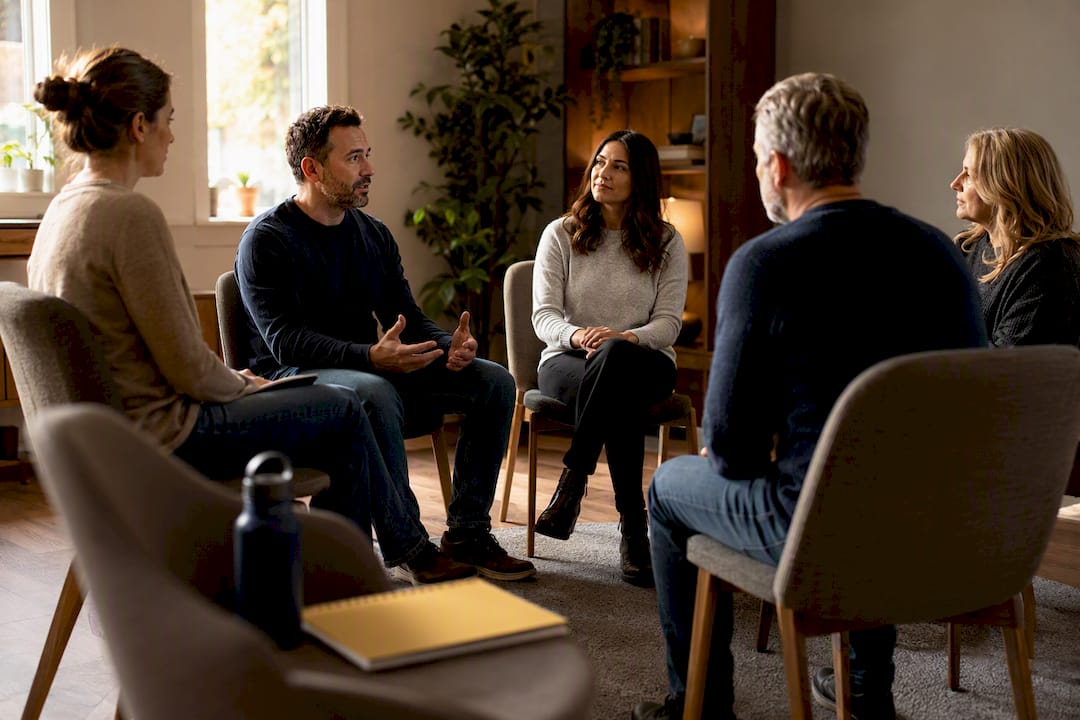
If a car crash left you or someone you love to hurt, grieving, or shaken, your first move should be to call a helpline or join a peer support group, and to handle any urgent medical or mental health crisis first. Drive With Care and national services like Brake offer free routes into that support, in person and online. This guide covers the types of groups available, how to find one, what a meeting actually looks like, and how to choose the right fit for your situation.
TL;DR:
- Peer-led groups generally suit survivors seeking emotional support and practical tips, while professionally facilitated groups are better for severe trauma or PTSD symptoms.
- Finding support is straightforward via national helplines, hospital referrals, nonprofit directories, local government pages, and online moderated groups, with verification on moderation and confidentiality.
- The first support group meeting usually includes check-in, open sharing, coping tools, resource sharing, and confidentiality reminders, but it is not crisis therapy.
- Selecting a group should focus on facilitator type, focus area, format, cost, confidentiality, and referral options, while avoiding red flags like profit-driven motives or lack of clear rules.
- Combining peer support with professional mental health care can improve recovery, especially for ongoing symptoms or complex medical and legal challenges.
Table of Contents
- Types of Car Accident Support Groups and Which One Fits You
- Where to Find a Car Accident Support Group Near You
- What Happens in a First Support Group Meeting
- How to Choose the Right Group and Spot Red Flags
- Drive With Care Resources for Support Group Seekers
- Why Peer Support and Practical Help Work Better Together
- Support Drive With Care’s Work for Crash Survivors
- Where to Get Immediate Help After a Car Accident
- Sources
- FAQ
Types of Car Accident Support Groups and Which One Fits You
Not every support group serves the same purpose, and picking the wrong type can leave you feeling more isolated, not less. The broadest split is between peer-led and professionally facilitated groups.
Peer-led groups are run by survivors themselves, sometimes with light-touch coordination from a nonprofit. They work well for people who mainly need to feel less alone and swap practical tips with others who get it. Professionally facilitated groups, often run through a hospital, trauma center, or licensed counseling practice, bring in a clinician to guide the conversation. These fit better when trauma symptoms are severe, when PTSD is suspected, or when the group needs structure around specific therapeutic goals.
A few distinctions matter beyond that basic split:
- Bereavement and fatal-crash groups are kept separate from general recovery groups because grief after losing someone to a crash carries different weight than recovering from an injury, and mixing the two can be jarring for both groups.
- Injury and TBI-focused groups often include medical screening before joining, since traumatic brain injury symptoms can worsen without proper clinical follow-up.
- Clinically informed peer groups sometimes borrow structured techniques, such as dialectical behavior therapy skills like mindfulness, emotional regulation, and distress tolerance, inside an otherwise peer-driven setting.
- Individual therapy is the better starting point, not a group, if you’re experiencing flashbacks, panic attacks, or an inability to function day to day. A group can supplement that care later.
If you’re not sure which category applies, a quick call to the group’s organizer before your first visit will usually clear it up. Ask what kind of facilitator runs the sessions and who the group is designed for.
Where to Find a Car Accident Support Group Near You
Finding a legitimate group takes less effort than most people expect, but it helps to know which doors to knock on first.
- Call a national helpline first. Services such as Crash Support Network run free virtual peer groups, survivor blogs, and toolkits built specifically for motor vehicle crash survivors, and staff there can point you toward local options too.
- Check nonprofit directories. Organizations focused on road safety and crash recovery, including Drive With Care’s resource hub, maintain lists of programs and referral partners.
- Ask your hospital or trauma center. Facilities that treat crash injuries often host their own peer groups or maintain referral lists, and they’re positioned to flag when a TBI or concussion needs medical follow-up before group participation.
- Search local government crash-victim pages. City transportation departments running Vision Zero programs, like Portland’s, publish contact lists specifically for survivors and families.
- Join a moderated online group if travel, mobility limits, or distance make in-person meetings hard. Look for one with active moderation and clear ground rules, not an unmonitored public forum.
Before committing to any group, verify three things: who moderates the sessions, what confidentiality rules apply, and whether the facilitator has relevant training or lived experience. A legitimate group will answer these questions without hesitation. Virtual groups make sense for rural readers or anyone dealing with mobility limits after an injury; in-person groups tend to build deeper local bonds faster, since shared geography often means shared experiences with the same roads, hospitals, or insurance adjusters.
What Happens in a First Support Group Meeting
Walking into a first meeting is easier when you know the shape of it ahead of time. Most car accident support groups follow a loose but consistent structure.
- Check-in round, where each person shares briefly how they’re doing that week.
- Open sharing, the core of the meeting, where members talk through what’s on their mind at whatever depth feels comfortable.
- Coping tools segment, sometimes led by a facilitator, covering grounding techniques or trauma-informed strategies.
- Resource and referral time, where the group shares practical leads on legal help, medical advocacy, or paperwork nobody warned you about.
- Confidentiality reminder, closing the session and reinforcing that what’s shared stays in the room.
It helps to set expectations early: a support group is not crisis therapy. If you’re having thoughts of self-harm or experiencing an acute mental health emergency, that calls for a crisis line or emergency care, not a weekly meeting. Groups exist for ongoing support between those moments, not as a substitute for them.
What groups often provide beyond the emotional piece surprises people. Many keep informal lists of legal referrals, medical advocacy contacts, and TBI red-flag checklists so members can recognize when a symptom needs a doctor’s attention rather than another week of waiting it out.

Pro Tip: Bring a notebook to your first meeting. Groups tend to mention useful contacts and resources in passing conversation, and those details are easy to lose if you’re relying on memory while also processing an emotional session.
How to Choose the Right Group and Spot Red Flags
Picking a group is less about finding the “best” one and more about matching format, focus, and cost to what you actually need right now.
Run through this checklist before committing to a group:
- Facilitator type: peer survivor, licensed clinician, or a hybrid model?
- Primary focus: general recovery, bereavement, injury-specific, or practical navigation?
- Format: virtual, in-person, or both?
- Cost: most legitimate crash-survivor groups are free or low-cost; be wary of anything charging steep fees for basic peer support.
- Confidentiality policy: is it stated clearly, and does everyone agree to it upfront?
- Referral availability: can they point you toward legal, medical, or insurance help if you need it?
Before attending, it’s worth asking the organizer directly: What’s your confidentiality policy? What happens if someone in the room is in crisis? What training do facilitators have? Is there a cost, now or later? Their answers, or their willingness to answer at all, tell you a lot.
Secondary stressors like insurance disputes, medical bills, and legal procedures often compound the psychological toll of a crash more than the crash itself. Groups that build in navigation help alongside emotional support tend to see higher satisfaction from the people who use them. That’s worth weighing heavily when comparing options.
Watch for red flags: a facilitator pushing a specific legal or medical provider, pressure to share more than you’re comfortable with, no clear confidentiality agreement, or a group that feels more like a sales pitch than a support space. If you hit any of these, it’s fine to leave and try another group. Reporting misconduct to the hosting organization protects the next person walking through that door.
Drive With Care Resources for Support Group Seekers
Drive With Care built its resource hub around the gap between “you got hurt” and “you know what to do next.” A few pages consistently help readers navigating this exact search:
- The resources hub links out to programs, helplines, and educational material in one place.
- The concussion and TBI red-flag checklist helps you recognize when head injury symptoms need urgent medical attention, not just group support.
- The what to do after a traffic accident guide walks through immediate steps, from documentation to first calls.
- The driving again after a serious accident page addresses a fear many survivors carry but rarely discuss openly: getting back behind the wheel.
- The memory, personality, and emotional changes page explains cognitive shifts that catch families off guard after a crash.
The organization partners with local entities to widen the referral net for survivors who need more than one type of support.
Why Peer Support and Practical Help Work Better Together
Peer groups give you something clinical appointments rarely can: continuity. A therapist sees you for fifty minutes every other week; a peer group can be there every week, with people who’ve sat in the same hospital waiting rooms you have. What stands out across survivor accounts is how often the emotional recovery stalls not because of the crash itself, but because of the insurance call that went nowhere or the legal letter nobody could translate. One recurring pattern among group facilitators is pairing peer meetings with an occasional practical session, sometimes called a resource clinic, where members untangle paperwork together. Recovery timelines vary enormously from person to person, and there’s no fixed calendar for it. If symptoms feel unmanageable, pair group support with a licensed clinician rather than choosing one or the other.
— Charles
Support Drive With Care’s Work for Crash Survivors
Every dollar donated to Drive With Care helps keep helplines staffed, support group sessions hosted, and survivor resources like the TBI checklist free and accessible to anyone who needs them. Donations fund the practical side of recovery too, the referral networks and educational materials that help families navigate insurance and legal questions without paying for it out of pocket.
If you’re not in a position to give right now, that’s fine. Help is available either way, no donation required. You can also get involved by volunteering your time or simply sharing these resources with someone who needs them. If you’re able to contribute financially, you can donate now to keep these programs running for the next family that calls.
Where to Get Immediate Help After a Car Accident
- Brake’s road victim support offers free specialist help for people bereaved or injured in crashes, including legal and medical referrals.
- Crash Support Network runs free virtual peer groups and survivor resources.
- The Office for Victims of Crime provides federal victim-assistance guidance and referrals.
- Drive With Care’s home page connects you to broader survivor and safety resources.
Sources
- Help for road victims | Brake
- Crash Support Network
- MVA support group — Invicta Works
- Office for Victims of Crime: Help for victims
FAQ
How long does it take to mentally recover from a car crash?
Recovery timelines vary widely by person and severity of the crash, ranging from weeks to well over a year; there’s no single fixed timeline, which is part of why ongoing peer support matters more than a one-time checkup.
What causes most car accidents?
Human error accounts for the overwhelming majority of crashes, a pattern reflected in national collision data from bodies like Transport Canada, which is why Drive With Care focuses its education programs on behavior change.
How do I heal from car accident trauma?
Combining professional care when symptoms are severe with ongoing peer support tends to work better than either alone, since groups provide the week-to-week continuity that occasional therapy sessions can’t, alongside practical help navigating insurance and medical logistics.
How long does PTSD last after a car crash?
PTSD symptoms after a crash can last months to years depending on severity and access to treatment, and symptoms that persist or worsen after a few weeks are a signal to seek a licensed clinician, such as those found through Align Therapy Collective, rather than relying on group support alone.

