
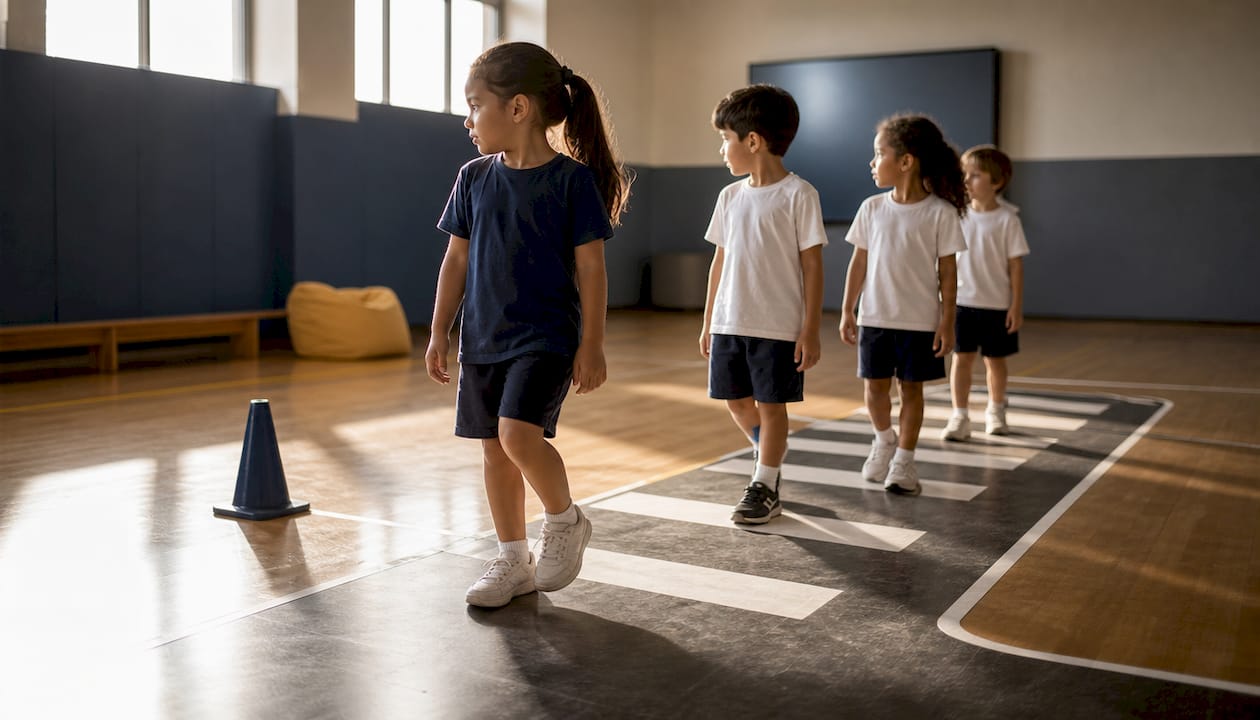
The best results come from age-matched, hands-on activities repeated over weeks, not a single assembly. For early years, use traffic light crafts and short role-play; for K-5, run Stop, Look, Listen drills and hazard walks; for ages 9-11, shift to independent travel practice; for teens, focus on distraction and route risk. The NHTSA Child Pedestrian Safety Curriculum and Think! KS2 resources both offer full lesson packs, so pick one or two activities and drill them until they stick.
TL;DR:
- Activities for young children should focus on physical practice and simple routines, lasting no more than 20 minutes, to build safety habits gradually.
- Structured curricula like NHTSA and Think! provide adaptable lesson packs for different age groups, emphasizing repeated drills and real-world practice to reinforce skills.
- Transition and teen activities should include independent travel practice, risk assessment, and campaigns to foster ownership and judgment skills rather than just theory.
- Combining short classroom activities with supervised practice walks and involving parents enhances retention and real-life application of road safety skills.
- Including basic emergency procedures and first aid awareness prepares students to respond calmly and effectively if accidents occur.
Table of Contents
- School Road Safety Activities By Age Group
- Ready-To-Run Lesson Plans And Printable Resources
- Teaching Techniques That Make Lessons Stick
- What The Research Says About These Activities
- Emergency Procedures And First Aid Awareness
- Sequencing Activities For Real Classrooms
- How Drive With Care Supports Schools
- Sources
- FAQ
School Road Safety Activities By Age Group
A five-year-old and a fifteen-year-old face completely different risks near traffic. Therefore, the activity has to match the developmental stage, not just the topic. Younger kids need concrete, physical practice. Older students need to think about judgment calls and social pressure.
Early years and preschool (ages 3-5)
Keep sessions to 15-20 minutes and lean on play. Traffic light crafts (red means stop, paint a stop sign together), simple role-play where kids “become” cars and pedestrians, and a classroom obstacle course that mimics curbs and crosswalks all work at this age. The goal isn’t memorizing rules yet. It’s building the physical habit of stopping at an edge and looking both ways before moving.
Primary K-5 (ages 5-10)
This is where structured curricula earn their keep. Run a Stop, Look, Listen, Think drill using taped-off “streets” in the gym, then take it outside for a supervised hazard-spotting walk around the school block. Route-mapping exercises, where students draw their walk to school and mark risky spots, work well as a 30 to 45-minute lesson. If bikes are part of your program, this age is also the right time for basic helmet fitting checks.
Upper primary and transition years (ages 9-11)
Pedestrian casualty risk increases significantly in this window as kids start traveling without adults, according to Think!’s guidance on the transition to secondary school. Activities should shift toward independent travel practice: supervised walks where an adult trails a few steps back, distraction training (What happens when your phone buzzes mid-crossing?), and peer-led safety pledges that students design and sign themselves.

Secondary students (ages 13-16)
Older teens respond better to pragmatic, less lecture-heavy sessions. Cover route planning around known danger spots, public transport safety (waiting zones, platform edges), and let students run a short campaign, like a poster series or social post, aimed at younger students. Ownership tends to land the message better than a repeat lecture.
- Early years: traffic light crafts, role-play, obstacle courses (15-20 min)
- Primary K-5: Stop, Look, Listen drills, hazard walks, route-mapping, helmet checks (20-45 min)
- Transition 9-11: independent travel practice, distraction training, peer pledges (30-60 min)
- Secondary: risk assessment, route planning, transit safety, student campaigns
Pro Tip: Don’t try to cover every age group’s activities in one term. Pick the one skill your students are closest to needing (crossing alone, riding to school, taking the bus) and build the whole unit around it.
Ready-To-Run Lesson Plans And Printable Resources
You don’t need to build a curriculum from scratch. Three established sources cover most of what a school needs, and each one is designed to be adapted rather than followed rigidly.
- NHTSA Child Pedestrian Safety Curriculum. Built for grades K through 5, it’s organized into five modules: walking near traffic, crossing streets, crossing intersections, parking lot safety, and school bus safety. Each module comes with a teacher guide, student forms, and parent tip sheets, so you can run a single module as a 45-minute lesson or string several together for a themed week.
- Think! KS2 resources, including Tales of the Road. This collection includes hazard-spotting activities, the Stop, Look, Listen, Think sequence, interactive quizzes, and ready-made timetables for a full drop-down safety day. It’s a strong option if you want a whole-school event rather than a single classroom lesson.
- Jump Start and Safe Routes-style bike safety curricula. These typically include helmet fitting checks, ABC bike checks (air, brakes, chain), follow-the-leader drills, and intersection practice, drawn from programs like the Oregon Safe Routes bike safety curriculum.
Turning a 45-minute lesson into a half-day event is mostly a matter of stations. Set up three or four activity zones (crossing practice, bike checks, a hazard-spotting walk, a pledge signing table) and rotate small groups through each one. That structure also works well for an assembly, where you demonstrate one station live and send classes to the others afterward.
Teaching Techniques That Make Lessons Stick
Facts alone rarely change what a kid does at a curb. A cluster-randomized trial on classroom-based road safety programs found that skill-building and repeated practice produce more reliable behavior change than testimonials or fear-based messaging. That should shape how you plan every session.
- Practice the physical skill (stopping, checking, signaling) far more than you talk about it
- Run short, repeated drills and add complexity week by week rather than teaching everything once
- Use peer pledges, hi-vis vests, and posted route maps to turn safety into a visible, social habit
- Rehearse distractions directly: what does a student do when a friend calls out while crossing?
- Loop parents into supervised practice walks so the skill transfers outside school hours
Pro Tip: Debrief every drill, even a two-minute one. Ask “what would you do differently” before moving on. That five-second reflection is often what separates a lesson kids remember from one they forget by lunch. For older students working on rehearsing high-pressure moments, a structured rehearsal approach can reinforce the same instinct.
What The Research Says About These Activities
The case for interactive, practice-heavy lessons isn’t just intuition. An evaluation of a gamified curriculum called E-drive Academy found statistically significant gains in both road-safety knowledge and self-reported safe behaviors, according to a study of 834 fourth-grade students.
Knowledge gains in a classroom don’t automatically become safer choices at a curb. The programs that hold up best pair interactive lessons with supervised, repeated real-world practice rather than treating a quiz score as the finish line.
That gap between what a student knows and what a student does is exactly why the NHTSA curriculum builds in parent tip sheets alongside its five classroom modules, and why Some organizations structure their programs around pledges and community practice rather than one-off talks. If you’re building a program from the ground up, Drive With Care’s safety awareness resources offer a starting point grounded in that same evidence.
Emergency Procedures And First Aid Awareness
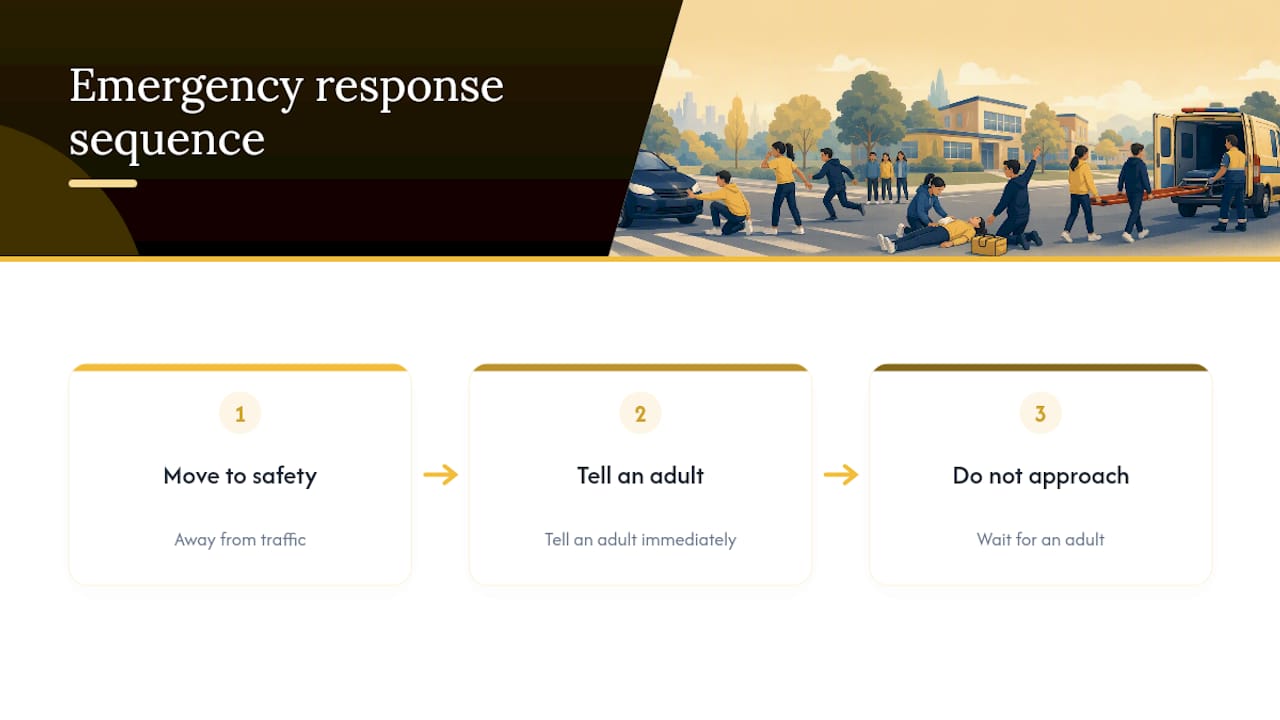
Road safety education should include a plain-language plan for what to do if something goes wrong, not just how to avoid the incident in the first place. Even young students benefit from knowing three basic steps: get to a safe spot away from traffic, tell an adult immediately, and never approach a crash scene without one.
For older students, expand this into a short first aid awareness segment: recognizing shock, knowing not to move an injured person unless there’s immediate danger, and understanding when and how to call for emergency help. Schools running walking school buses or supervised bike programs should make sure at least one adult leader has current first aid training. A workshop like Prime First Aid Training’s babysitter first aid course covers exactly this kind of practical response training and works well for parent volunteers or after-school staff who supervise students near roads.
Keep the messaging calm rather than alarming. The goal is confidence, not fear. A short role-play (What do you say if you see someone fall off a bike?) does more than a lecture on statistics. Pair this with a simple laminated card in the classroom listing the three steps, so the information is visible when it’s needed, not buried in a folder from September.
Sequencing Activities For Real Classrooms
Start with classroom games, move to supervised practice, then hand off to parent-supported journeys. That order matters more than which specific activity you pick first. A walking school bus works well as the bridge step: recruit a few parent volunteers, walk a fixed route on a set schedule, and let students graduate to solo walking once they’ve done it accompanied a dozen times. Ask parents to repeat one phrase at home, “stop at the edge, look both ways,” so the classroom lesson and the driveway conversation reinforce each other.
— Charles
How Drive With Care Supports Schools
Some organizations aim to fill the gap between classroom lessons and lasting habits by adding the community piece such as classroom visits, student pledge campaigns, and volunteer-led supervised walks that turn a single lesson into ongoing practice.
Schools can pull free materials from the Drive With Care resource library to pair with any of the curricula covered above, or invite the organization in directly for a classroom session. If your school or PTA wants to go further, the Safety Supporter Partnership is a $250 one-time option for groups ready to formally back a road safety initiative, and larger partnerships scale up from there for districts wanting sustained involvement. Individual supporters can back the work directly through a donation, starting at $10. If you’re an educator ready to bring structured, evidence-informed road safety programming into your school, reach out through Drive With Care’s resource pages to request a workshop or classroom visit.
Sources
- NHTSA — Child Pedestrian Safety Curriculum
- Journal of Road Safety — Evaluation of the E-drive Academy interactive program
- Think! — Explore education resources (KS2)
- Effectiveness of a classroom-based road safety program (cluster-randomized trial)
FAQ
What Age Should School Road Safety Activities Start?
Preschool, around age three or four, is a reasonable starting point using simple crafts and role-play. Formal drills like Stop, Look, Listen begin working well once students enter kindergarten and continue through the NHTSA curriculum’s K-5 span.
How Often Should Schools Run Road Safety Lessons?
Short, repeated sessions beat a single annual assembly for building real skills. A brief 15 to 20 minute drill every few weeks, scaffolded to add complexity over the term, tends to produce better retention than one long lesson.
How Can Parents Get Involved In School Road Safety Programs?
Parents can volunteer for walking school buses, supervise practice crossings, or reinforce classroom phrases like “stop at the edge, look both ways” during everyday walks. Drive With Care’s safe driving contract resources also give families a simple framework for extending safety conversations into teen driving years.
Are These Activities Adaptable For Students With Disabilities?
Most core activities, including hazard spotting, crossing drills, and pledge campaigns, can be adapted with visual cues, slower pacing, or paired peer support for students with different needs. Curricula like Think!’s KS2 packs and the NHTSA modules are built as flexible frameworks rather than rigid scripts, which makes small adjustments straightforward.
Does Interactive Or Gamified Content Actually Improve Behavior?
Evidence points to gains in both knowledge and self-reported behavior when interactive elements are paired with practice. A study of 834 fourth-grade students found statistically significant improvements using a gamified curriculum compared to traditional instruction, though real-world supervised practice still matters for lasting change.

