Why drivers believe they are safer than they are
Safety Behind the Wheel Foundationdrivewithcare.org
Last reviewed:
Many drivers believe they are safer than they actually are. This does not always come from carelessness. Often, it comes from a common thinking pattern known as the Lake Wobegon effect. In behavioral psychology, this term describes the way people often see themselves as better than average. Behind the wheel, that belief can become dangerous. A driver may believe they can recover from hydroplaning, react quickly to a sudden stop, or safely glance at a phone for just one second. But confidence does not change physics. Wet roads, speed, reaction time, distraction, and limited visibility still affect safety.
This belief can also create a double standard. A driver may see other people as reckless, impatient, or distracted, while viewing their own behavior as reasonable. When another driver speeds, it may look dangerous. When we speed, we may tell ourselves we are only keeping up with traffic. When someone else looks at a phone, it may seem irresponsible. When we do it, we may believe it is only a quick check. The same behavior can look risky in others and harmless in ourselves. That is one reason overconfidence is so difficult to recognize.
The double standard can be even stronger when the other person is not in a car. In a Dutch survey of 645 road users, people who saw themselves mainly as drivers tended to blame a cyclist’s rule breaking on the cyclist’s character. When another driver broke a rule, they were more likely to blame the circumstances [1]. The researchers warn that blaming character tends to make people more aggressive, which leaves cyclists with less goodwill on the road [1].
Confidence about the rules can also run ahead of knowledge. In an Australian survey of almost 2,000 drivers, knowledge of the road rules for bike lanes was low, even among drivers who also ride [2]. When a rider does something that seems odd, ask what the road might look like from the saddle before deciding they are reckless.
Hurry makes all of this harder to see. In a driving simulator study, drivers who were made to run late chose higher speeds and drove more aggressively [3]. A driver who is running late may decide that squeezing past a rider is fine just this once. If you often find yourself stuck behind a cyclist, our guide to staying patient behind a cyclist explains why riders take the lane.
The phrase “good driver” can make this problem worse because people define it in different ways. A cautious driver may believe good driving means following speed limits, wearing a seat belt, staying focused, and leaving enough space. A more aggressive driver may believe good driving means quick reactions, confidence, and control of the vehicle. Because people often choose the definition that makes them feel good about themselves, many drivers can honestly believe they are above average. But safe driving is not about identity. It is about behavior.
A better question is not, “Am I a good driver?” A better question is, “What choices am I making right now?” Where is my phone while I drive? Am I leaving enough space to stop safely? Do my passengers feel safe speaking up? Do I slow down when the weather changes? Have I set my route, music, and phone before the car moves? These questions are harder to avoid because they focus on real actions, not self image.
Experience can also give drivers a false sense of safety. Many people believe that if they have not been in a crash, their habits must be safe. But a clean driving record does not prove that every choice has been safe. It may only mean the driver has not yet faced the wrong hazard at the wrong moment. A driver may check a phone hundreds of times without crashing. The brain may treat that as proof of control. In reality, every glance still takes attention away from the road.
This is especially important after a close call. A driver may explain the moment as bad luck, poor road design, another driver’s mistake, or an unavoidable situation. Sometimes those factors are real. But when drivers never examine their own choices, they miss the chance to build safer habits. A close call should not become proof that everything is fine. It should become a reason to ask what can change before the next trip.
Overconfidence creates real risk because it makes danger feel smaller than it is. A driver who believes their skill will protect them may drive faster in rain, follow another vehicle too closely, check a message, or delay slowing down. But safety depends on the space between what the road demands and what the driver can actually handle. When confidence is greater than ability, that safety space becomes smaller. If traffic suddenly stops, a child enters the road, a tire loses traction, or another vehicle swerves, there may not be enough time or distance to recover.
That is the hidden danger of the Lake Wobegon effect. It does not simply make drivers feel confident. It can make them build habits around a false sense of control. The driver may still care about safety. They may still believe they are responsible. But belief alone cannot prevent a crash. Safe systems, safer habits, and honest self awareness matter more than confidence.
Through the Safer Roads Now initiative, Safety Behind the Wheel Foundation encourages every driver to remember one simple truth: confidence is not a safety plan. The safest drivers do not rely on confidence alone. They prepare before the trip begins. They set the route before driving. They silence the phone. They choose music before the car moves. They buckle up. They leave space. They slow down when conditions change. They avoid impairment. They allow passengers to speak up. They treat every trip as a responsibility, not just a routine.
The warning is not only for other drivers. It is for all of us. Safe driving is not about proving we are better than average. It is about making choices that protect every person in and around the vehicle. Before the car moves, remove the temptation. Let the message wait. Give yourself time. Leave room for the unexpected. Every safe choice helps protect a life, a family, and a story still being written.
Sources and further reading
- 1Hoekstra ATG, Twisk DAM, Hagenzieker M. Do road user roles serve as social identities? Differences between self-described cyclists and car drivers. Transportation Research Part F: Traffic Psychology and Behaviour. 2018. doi.org/10.1016/j.trf.2018.09.006
- 2Johnson M, Oxley J, Newstead S, Charlton J. Safety in numbers? Investigating Australian driver behaviour, knowledge and attitudes towards cyclists. Accident Analysis & Prevention. 2014. doi.org/10.1016/j.aap.2014.02.010
- 3Fitzpatrick CD, Samuel S, Knodler MA. The Use of a Driving Simulator to Determine How Time Pressures Impact Driver Aggressiveness. University of Massachusetts Amherst, via U.S. Department of Transportation ROSA P. 2017. rosap.ntl.bts.gov/view/dot/32619
Special thanks to our contributors
We appreciate the professionals, experts, and community members who share their knowledge and perspectives to help make this resource better. Your insights are always welcome and appreciated.
- Paul MickiewiczLeague Certified Instructor, (LCI) & Cycle Savvy Instructor, (CSI), New Jersey Bike Walk Coalition
Have professional expertise, firsthand experience, or a perspective that could make this resource better?
We welcome your input. Your knowledge and experience can help us make this resource more useful, accurate, and meaningful to the people who rely on it.
Thank you. Your contribution is on its way.
We’re grateful you took the time to share your knowledge with us. Our team reviews every contribution with care. If it helps improve this resource, we’ll update the page and recognize you the way you chose.
Keep learning
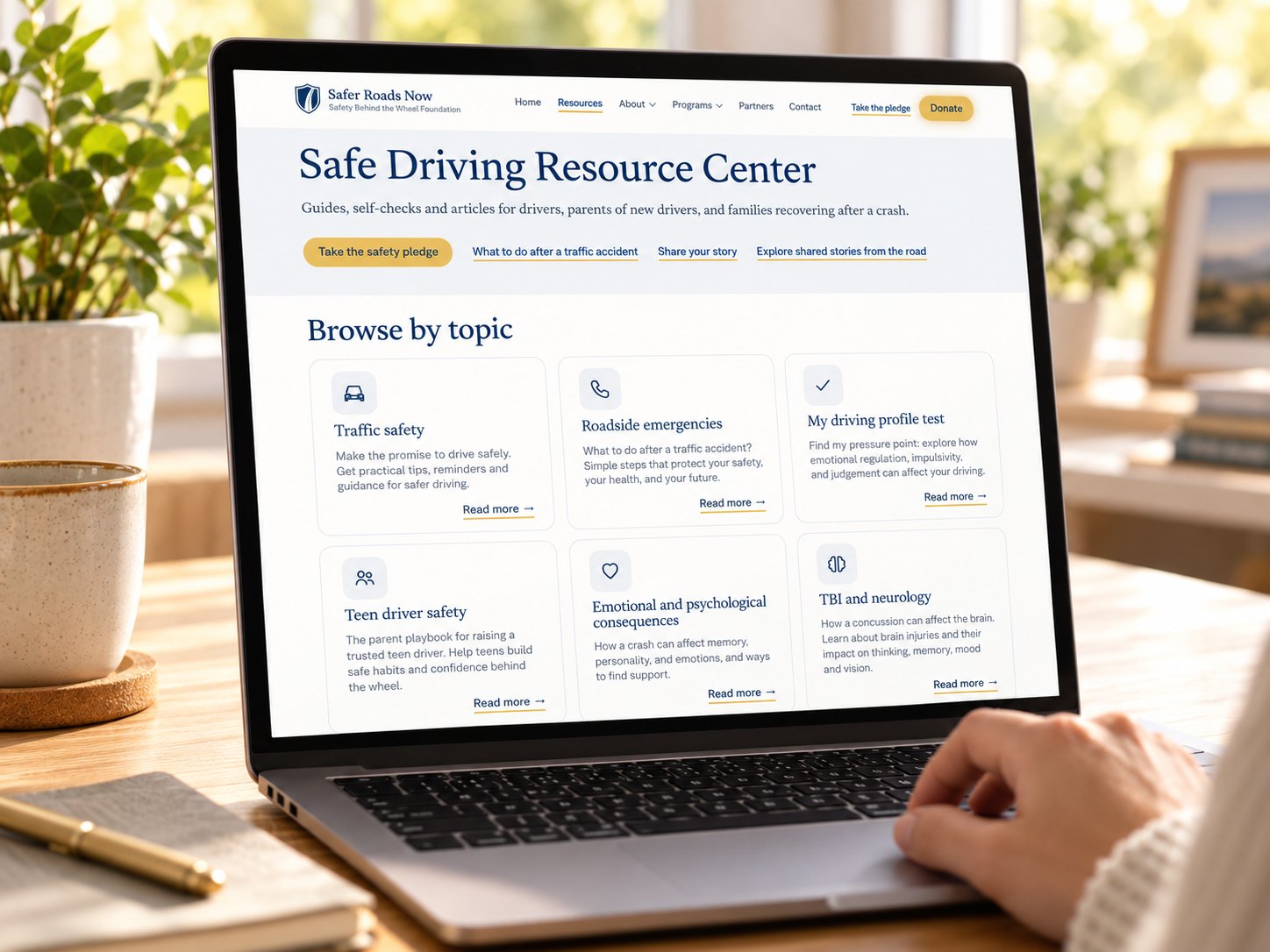
Safe Driving Resource Center
Guides, self-checks and articles for drivers, parents of new drivers, and families recovering after a crash.