
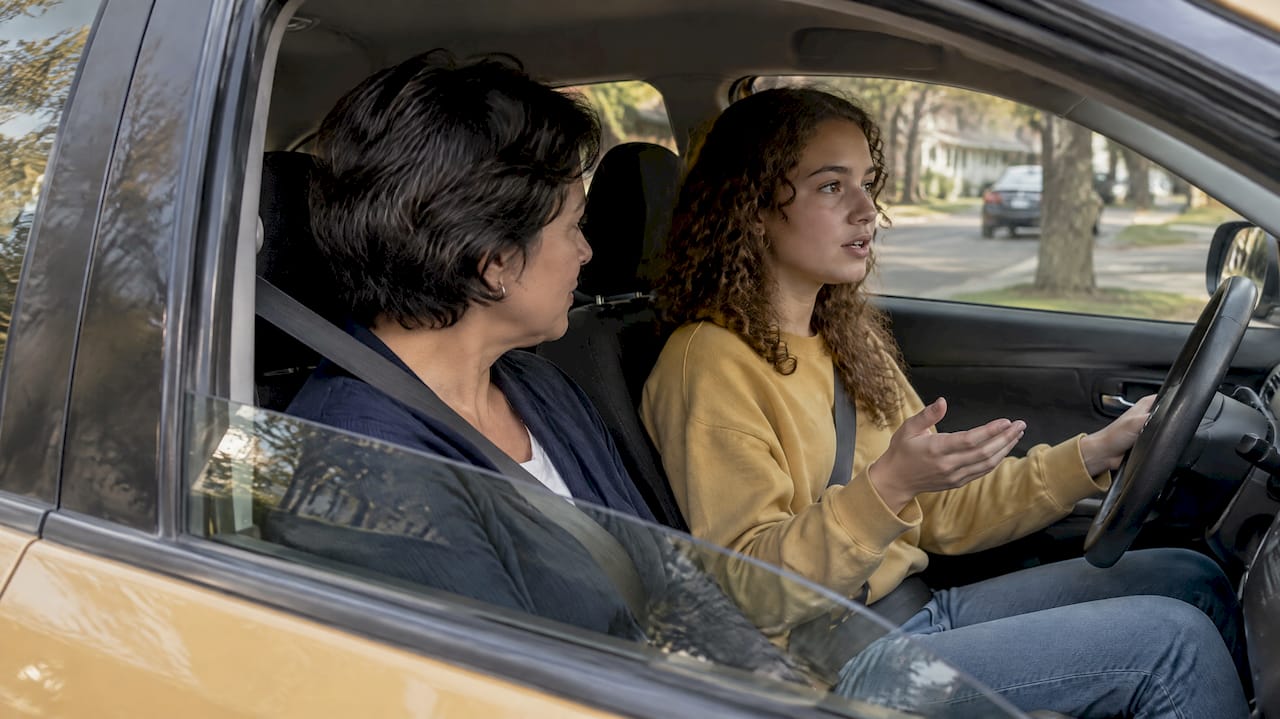
Most newly licensed teens may not drive with peer passengers for the first several months of independent driving unless a parent, guardian, or another licensed adult rides along. Common exceptions cover immediate family members, school, and work trips. Because exact ages, durations, and penalties differ by state, check your state DMV or DPS page for the specifics that apply to your teen.
TL;DR:
- Most states limit new teen drivers to one non-family passenger under 20 or 21 during the intermediate licensing stage, often for the first 6 to 12 months.
- Passenger restrictions can be reset or extended by traffic violations, crashes, or violations, with specific rules varying significantly by state.
- Crash risk increases sharply with each additional peer passenger, especially when those passengers are peer risk-takers, due to distraction and social pressure.
- Enforcement type (primary or secondary) affects how consistently passenger restrictions are applied on the road.
- Families should implement written rules, gradual lifting of restrictions, supervised practice, and rehearsed refusal responses to improve compliance and safety.
Table of Contents
- How passenger restrictions work under graduated driver licensing
- Real state examples show how the rules differ
- Why peer passengers raise crash risk for new drivers
- Turning the law into household rules that stick
- Our perspective on keeping teens accountable
- Help us expand teen driving safety programs
- FAQ
- Sources
How passenger restrictions work under graduated driver licensing
Most states use a graduated driver license (GDL) system that moves teens through a learner stage, an intermediate stage, and full licensure. Passenger restrictions apply during the intermediate stage, typically the first 6 to 12 months after a teen gets an unsupervised license. States phrase the limits differently, but the structure is usually similar.
- No passengers under a certain age (often under 18, 20, or 21) unless a parent or guardian is present
- A cap on the number of same-age passengers, such as one non-family passenger under 18
- Exceptions for immediate family members, school activities, religious events, or employment
- Longer restrictions or delayed upgrades following a traffic conviction or at-fault crash
Enforcement also varies. A primary enforcement law lets police stop a teen driver for the violation alone, while secondary enforcement means an officer must have another reason to pull the car over first. That distinction affects how consistently a rule actually gets applied on the road.
Real state examples show how the rules differ
Comparing a few states side by side shows how much the fine print can vary, even when the underlying goal is the same.
- Texas limits provisional license holders to no more than one passenger under age 21 who is not an immediate family member, a rule that applies until the driver turns 18, according to the Texas Department of Public Safety.
- Minnesota typically allows one passenger under 20 during the first six months of independent driving, expanding to up to three during the second six months, with family members exempted throughout.
- Pennsylvania junior license holders face passenger limits that loosen after six violation-free months, but a conviction or an at-fault crash can reset that clock and extend the restriction.
- South Carolina permit holders under 15 may not drive between midnight and 6 a.m. unless accompanied, and restricted license holders at 16 face passenger and curfew limits unless a qualified licensed adult is in the vehicle, according to the South Carolina DMV.
- Nationally, most states build some version of a passenger restriction into their intermediate licensing stage, pairing it with nighttime driving curfews.
These examples make one thing clear: the words “passenger restriction” can mean very different things depending on where your family lives, so the state DMV page is the only reliable source for your teen’s exact rule.
Why peer passengers raise crash risk for new drivers
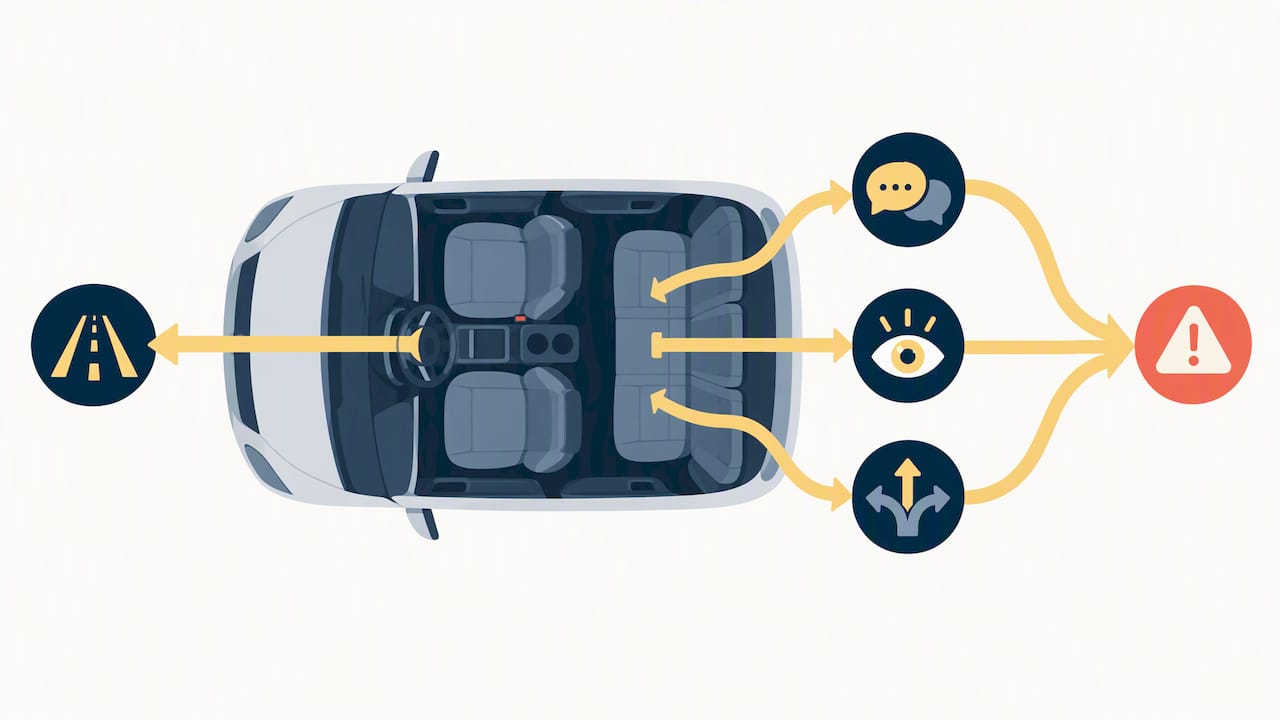
Passenger restrictions exist because the evidence linking peer passengers to crash risk is substantial. Peer-reviewed research on teen drivers found that risky driving increases in the presence of peer passengers, especially when those passengers are themselves risk-accepting. Distraction is part of it, but social pressure plays a bigger role than many parents expect: teens may speed, follow too closely, or take chances specifically because friends are watching.
Crash-risk multipliers climb sharply with each additional passenger, according to Iowa DOT summaries of crash data, which show risk rising with one peer passenger and climbing further with two or more. NHTSA crash analyses support the same pattern and underpin the GDL approach used across the country.
Teen drivers often alter their driving behavior in response to peer passengers, with risk-accepting passengers associated with riskier simulated driving performance.
GDL laws are designed to limit a new driver’s exposure to these high-risk social situations while skills are still developing, pairing supervised practice with a gradual, staged return of full driving privileges. For a deeper look at how friends in the car raise a teen driver’s crash risk, the mechanics are worth understanding beyond the statute language.
Turning the law into household rules that stick
Knowing the legal limit is only half the job. The other half is making sure your teen actually follows it when no one in authority is watching.
- Put the rules in writing with a safe driving contract between teen driver and parents, covering passenger limits, curfews, phone use, and clear consequences for violations.
- Ease restrictions gradually, tying any expansion of passenger privileges to a violation-free stretch of months rather than a fixed calendar date.
- Use supervised check-in drives periodically, even after the license is full, to confirm habits haven’t slipped.
- Rehearse the moment before it happens: practice what your teen will actually say when a friend pushes for “just one more stop” or asks to pile in with extra passengers.
That rehearsal matters more than most families expect. The Safety Reset Rehearsal walks through scripted responses teens can fall back on under social pressure, so the refusal feels rehearsed rather than confrontational. For a broader framework on supervision and trust, the parent playbook for raising a trusted teen driver covers how to monitor without souring the relationship.
Pro Tip: Practice the exact words your teen will use to turn down a risky request before the situation ever comes up, not after.
Our perspective on keeping teens accountable
Our Safer Roads Now initiative treats passenger restrictions as a starting point, not a finish line. We provide pledge programs and safe-driving contract templates because statutes alone rarely change behavior. Laws set the floor. Families, driving schools, and community partnerships are what actually keep a 16-year-old from caving to a backseat full of friends on a Friday night.
— Charles
Help us expand teen driving safety programs
Education programs, survivor support, and community outreach only reach more families when more people fund them. Every dollar contributed through Donate Now goes toward safe-driving contracts, pledge campaigns, and the kind of rehearsal tools covered above.

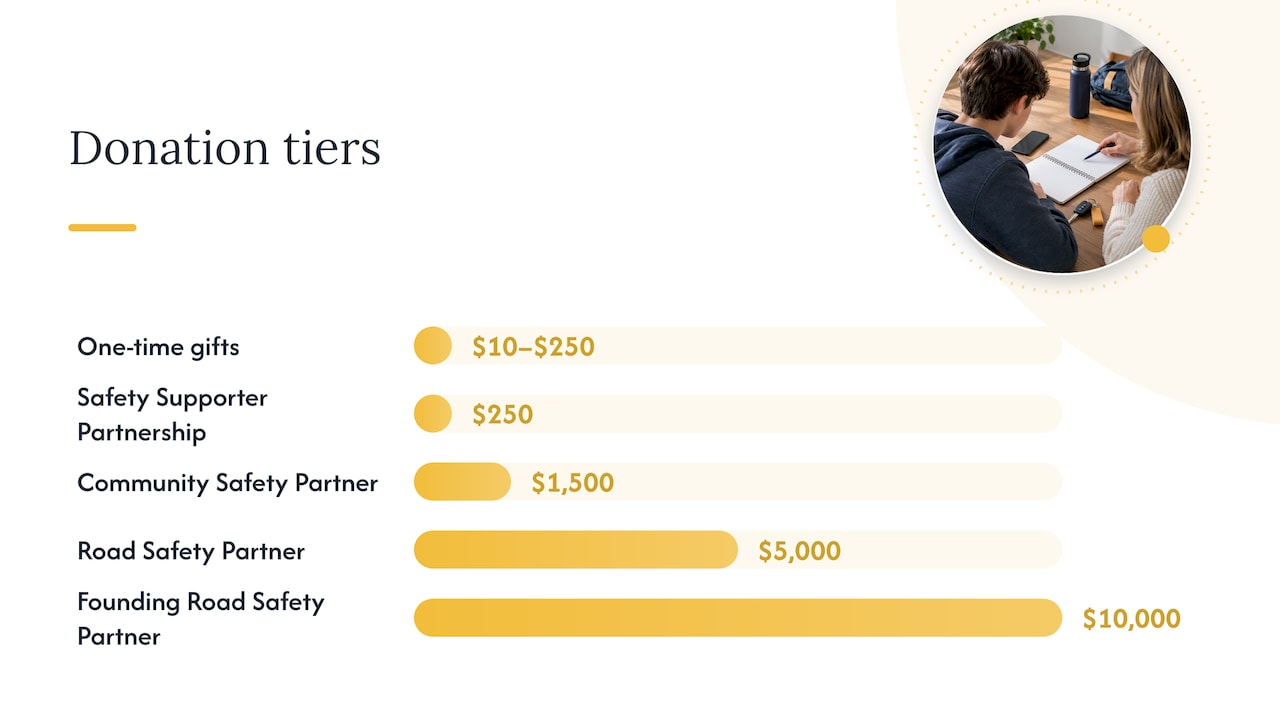
- A one-time gift of any amount between $10 and $250 through Donate Now supports our education and outreach work directly.
- Organizations can join as a Safety Supporter Partnership for $250.
- Larger partners can step up as a Community Safety Partner at $1,500 or a Road Safety Partner at $5,000.
If your school, dealership, or company wants to go further, our Founding Road Safety Partner tier at $10,000 helps anchor new programs in your community.
This article is general information, not a substitute for advice from a qualified lawyer. Consult a qualified legal professional about your own circumstances before acting on anything here.
FAQ
How many passengers can a 16-year-old have in Texas?
A Texas provisional license holder under 18 may not drive with more than one passenger under age 21 who is not an immediate family member, according to the Texas Department of Public Safety. A parent or guardian in the vehicle removes this limit.
How many passengers can a 17-year-old have in Florida?
Florida’s graduated license guidance ties passenger and curfew rules to the driver’s license stage rather than giving a single fixed number for every teen driver, according to FLHSMV. Check the FLHSMV page directly for the exact limit tied to your teen’s license type.
How many passengers can a 17-year-old have in PA?
Pennsylvania junior license holders face passenger limits that typically loosen after six violation-free months of driving, but a conviction or an at-fault crash can reset that period and reinstate the stricter limit. The exact passenger count allowed depends on how long the license has been held without incident.
How late can a 15-year-old drive in SC?
A South Carolina permit holder under 15 may not drive between midnight and 6 a.m. unless accompanied by a supervising licensed driver, according to the South Carolina DMV. This curfew applies regardless of passengers in the vehicle.
Sources
State rules on teen passengers change by legislature, so the state DMV or DPS page is always the binding source for your family, not a national summary. The sources below back the facts in this guide and are worth bookmarking directly.
- Texas provisional license — Texas Department of Public Safety
- Teenage drivers — South Carolina DMV
- Teen Drivers’ Perceptions of Their Peer Passengers: Qualitative Study — PMC
- NHTSA crash analysis reports
- Passenger restriction — Iowa DOT

