After a serious crash: fault, settlements, deadlines and your legal rights
The legal choices and deadlines that call for extra care after a crash
Safety Behind the Wheel Foundationdrivewithcare.org
Last reviewed:
For survivors and families9 min read
One of the first things people ask after a bad crash is “Who is at fault?” It’s a fair question.
In practice, the legal questions reach further. What evidence backs up each version of events? Which losses can the law recognize? What exactly would a settlement close out? Which deadline applies? [1, 2]
A lawyer would look at each of these on its own. A fast answer from an adjuster or a police report may help you make sense of the claim. Even so, it won’t settle every legal issue. [1, 2]
This guide offers general information for the United States. It isn’t advice about any one case. The answer may change based on the law of the state tied to the crash, your policy and the people involved. Have a lawyer licensed in the right state check any serious injury, disputed fault or government vehicle. The same goes for a proposed release or a deadline. [3, 4]
How fault works in a civil claim
In a civil claim, fault usually turns on two points. Did someone fail to use reasonable care? Did that failure cause harm? A traffic violation can carry real weight as evidence. So can where the damage is, photos, video, what witnesses say, the design of the road and medical records. [1, 2]
A police report may hold the officer’s direct observations, statements from other people and the officer’s conclusions. Read it closely. Not every sentence in it is something the officer saw firsthand. [1, 2]
Insurers look into claims and make decisions on them. If the case ends up in a lawsuit, a court or jury can reach its own finding. An insurer may say you share some of the fault. If so, ask what you did that it says caused the crash. Ask what evidence backs that view and which state rule it used. Respond with specific facts and documents. [1, 2]
Don’t cover holes in your memory with a confident guess. [1, 2]
How shared blame and no fault benefits differ
A crash can be partly the fault of more than one driver. In some states, a person’s recovery shrinks by their share of responsibility. In others, recovery can be blocked once that share reaches a certain level. Court sources in New York and Connecticut, for example, describe different comparative negligence rules. Don’t judge your offer using a percentage rule from another state. [2, 5]
The term “no fault” often refers to benefits that may cover medical costs or lost earnings. They may pay before anyone decides who caused the crash. Even so, a driver can still be held legally responsible. In some states, no fault also changes which injury claims you may bring against another driver. New York’s system is one example. Ask which benefit rules and lawsuit rules apply where your crash took place. [6]
Policy limits and claim value are two different numbers
A liability policy limit is the most that coverage may pay under its terms. That number isn’t a professional’s measure of the full harm. A settlement offer isn’t a final legal finding either. How much may be recoverable depends on the evidence, causation, the law that applies and the insurance available. It also depends on the assets and legal responsibility of the people involved. Ask the adjuster which limit and which coverage they mean. [6, 7]
If the law allows those categories, an injury claim may include past medical costs, lost income and future treatment. It may also include a reduced ability to work and the injury’s effects on daily life. Property damage may cover repairs or the car’s value, plus related expenses. Each item needs records to back it up. [6, 8]
Some states put special limits on recovery for pain and other nonfinancial harm in auto cases. Don’t assume your list of losses translates straight into a settlement figure. [6, 8]
Timing an injury settlement
With bills piling up, you may want the claim wrapped up right away. Settling early, though, may mean settling on incomplete information. Follow your care team’s advice. Get records of your diagnoses, treatment, work restrictions, current symptoms and likely future care. Ask what is still uncertain. [8]
Your case may involve a concussion, ongoing pain, surgery or a reduced ability to work. If so, a lawyer can help judge whether there’s enough information to settle. [8]
Holding off indefinitely isn’t safe either. A claim can face a legal filing deadline even while you’re still in treatment or talks are going well. Ask a local lawyer to pin down the deadline early. Don’t assume talking with an insurer pushes it back. [3, 4, 9]
Signing a release is a final step
A release is the paper you sign in exchange for payment. It spells out which claims and which people you can no longer pursue. The exact wording counts. A payment for car damage may be meant to settle only property damage. A form could also be written more broadly. [10]
New York’s insurance regulator has a rule on releases that went beyond the scope of a property damage settlement. That rule is one state’s example and doesn’t apply everywhere. [10]
Before you sign, find out who is being released, which crash and claims are covered and how much will be paid. Check whether future or unknown injuries are included. Ask if the document affects your own insurer’s right to be reimbursed. Request a copy and enough time to review it. If any part of an injury release confuses you, get local legal advice. Once a valid final release is signed, it can be hard to undo. [10, 11]
Also ask what you’ll really take home after attorney fees, case costs and unpaid medical bills. Factor in any repayment claim from a health plan or Medicare as well. Medicare may make conditional payments for crash care. It may later seek repayment from a settlement. The gross offer and the amount left for you can be very different. [12, 13]
Track every deadline on one calendar
There’s no one “car accident deadline.” Your policy can require prompt notice. Personal injury protection or no fault benefits may come with their own forms and short filing windows. An injury lawsuit may have a different time limit than a property damage suit. [3, 4, 6]
A claim involving a government body may need written notice much earlier, before any lawsuit. That includes a city, county, state or transit agency. California’s court guides show these separate categories. Don’t copy their dates for another state. [3, 4, 6]
Write down the crash date and every date you sent a claim notice or got a response. Record the insurer’s name and any government vehicle or road agency involved. Ask a local lawyer to work out each possible deadline. [3, 4]
A phone call doesn’t prove you’ve met a lawsuit or government notice deadline. Neither does a police report request or a pending insurance claim. There may be exceptions, including some for children. Don’t count on one without a lawyer’s review. [3, 4]
If another person comes after you with a claim
Tell your own liability insurer right away. Send it every letter, demand, summons or court paper you get. Your policy may require you to cooperate and may provide a defense for a covered claim. Don’t ignore a summons just because an adjuster is already on the case. Tell the truth about what happened and keep your records safe. Before talking with your insurer, don’t promise to pay anyone or sign a private deal. [6, 11]
Times to call a lawyer sooner
See a local attorney early if anyone has a significant or lasting injury or if fault is contested. The same goes when several vehicles or insurers are involved or a driver was on the job. Do the same if a government vehicle or road condition may matter, insurance may fall short or a child is hurt. Get advice before a final injury settlement or when a deadline is close. [3, 4]
A lawyer can dig into the facts and find the responsible parties and their coverage. The lawyer can also figure out deadlines, assess reimbursement claims and explain what a release would do. [3, 4]
Ask about the lawyer’s experience with cases like yours and who will do the work. Find out what services the agreement covers and how often you’ll get updates. If the fee depends on what you recover, read the written agreement. Ask what percentage applies and whether it’s figured before or after expenses. Find out which costs you might owe and how medical repayment claims will be handled. Check the lawyer’s license with the state bar. [13, 14]
Pushing back on an insurer's decision
Ask for the exact facts and policy terms behind the decision, in writing. If you dispute a value under your own policy, see if an appraisal clause applies. For concerns about how the claim is handled, contact the insurer’s supervisor or complaint team, then your state insurance department. A regulator can check whether insurance rules were followed. It won’t act as your personal lawyer or extend a court filing deadline. [7]
The NAIC recommends written explanations and help from the state insurance department when a claim dispute lingers. [7]
What to ask before you decide anything
Question checklist from Safety Behind the Wheel Foundation
- What evidence backs the current fault decision? Which fact would change it?
- Which of my claims are open, including car damage, medical benefits, injury and any claim against me?
- What deadlines apply to insurance forms, a government notice and a lawsuit? Who checked them?
- What exactly would this payment and release settle? Do they include future or unknown losses?
- What will be left after fees, costs, unpaid bills and reimbursement claims?
Protect your rights while the claim plays out
Recommendation from Safety Behind the Wheel Foundation
Fault, claim payment and legal rights are connected, though each is a separate question. Save the facts, ask for the reasoning behind any fault decision and learn your deadlines early. Treat a final release as a serious choice. If the injury or responsibility is in dispute, get advice from a lawyer licensed for your case. That advice can head off a mistake that may be hard to fix later.
Sources and further reading
- 1California auto insurance guide
- 2New York comparative fault
- 3California lawsuit deadlines
- 4California government claims
- 5Connecticut comparative fault
- 6New York auto claim guide
- 7NAIC claim guidance
- 8California injury case guide
- 9New York negotiation case
- 10New York release guidance
- 11Washington claims guide
- 12CMS Medicare recovery
- 13California bar fee guide
- 14California lawyer search
This article offers general education for readers in the United States. Legal rights and deadlines turn on state law and the facts of each case. A serious injury or a final release should be reviewed by a lawyer licensed in the right jurisdiction.
Special thanks to our contributors
We appreciate the professionals, experts, and community members who share their knowledge and perspectives to help make this resource better. Your insights are always welcome and appreciated.
Have professional expertise, firsthand experience, or a perspective that could make this resource better?
We welcome your input. Your knowledge and experience can help us make this resource more useful, accurate, and meaningful to the people who rely on it.
Thank you. Your contribution is on its way.
We’re grateful you took the time to share your knowledge with us. Our team reviews every contribution with care. If it helps improve this resource, we’ll update the page and recognize you the way you chose.
Keep reading
More on Legal rights and evidence
Keep learning
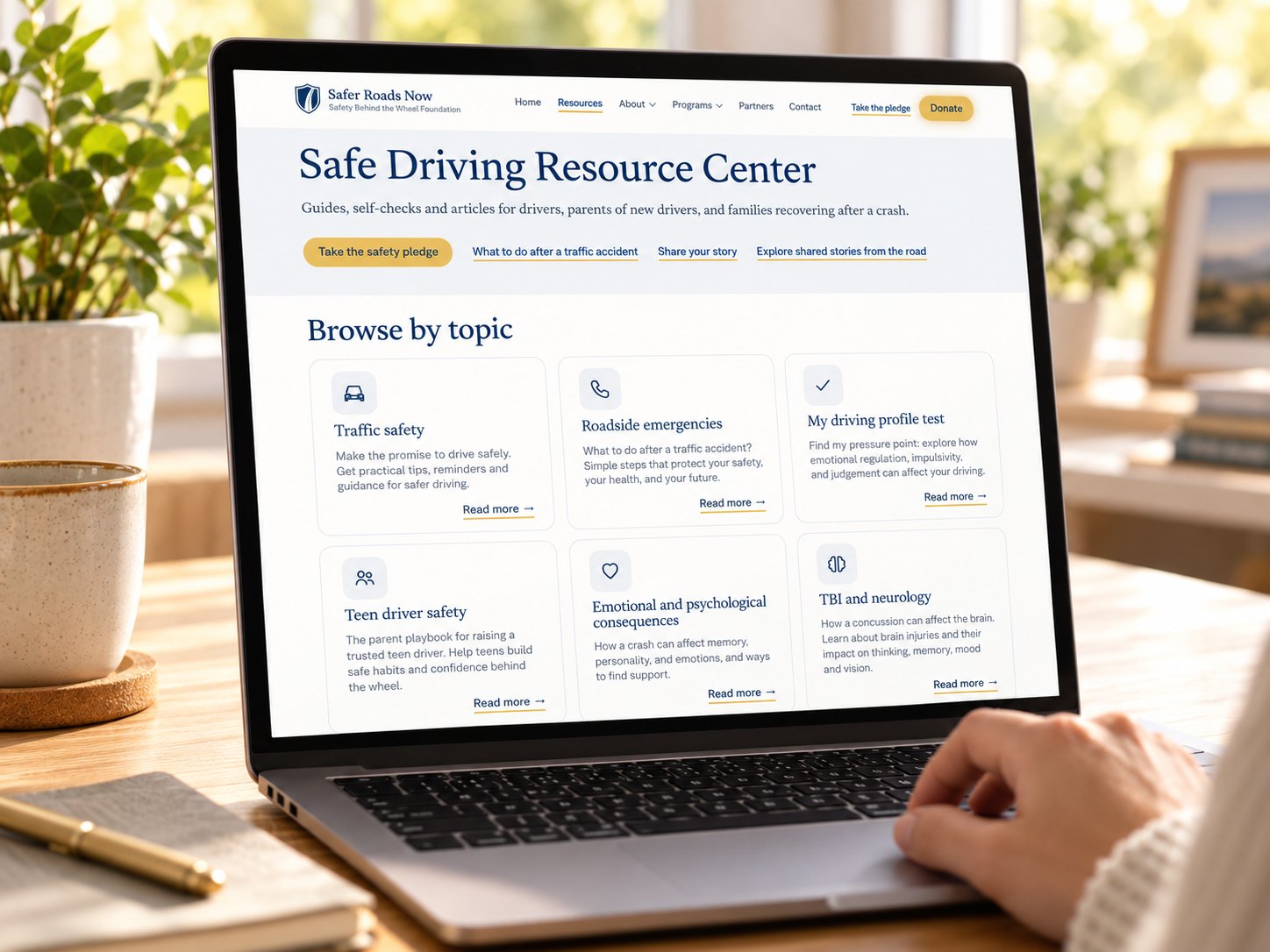
Safe Driving Resource Center
Guides, self-checks and articles for drivers, parents of new drivers, and families recovering after a crash.