
Drive to what you can see. Slow down to match your headlight range, use the correct beam for the situation, and check your lights before you leave the driveway. If you feel even slightly drowsy, stop. A short nap or a delayed trip beats pushing through.
- Match speed to your headlight sight distance, and add extra following room
- Confirm low beams, high beams, and taillights work before you go
- Pull over at the first sign of drowsiness. Don’t fight it.
More than half of all driver deaths and nearly three-quarters of pedestrian deaths happen after dark, even though only about a quarter of all driving happens then.
Key Takeaways
Night driving safety comes down to matching your speed to what your headlights actually show you and refusing to drive drowsy.
| Point | Details |
|---|---|
| Drive to sight distance | Slow down so you can stop within the area your headlights illuminate. |
| Fatigue peaks overnight | Drowsy crashes cluster between midnight and 6 a.m.; stop at the first sign of microsleeps or yawning. |
| Maintain your equipment | Clean windshields, mirrors, and headlight lenses restore lost visibility for little cost. |
| Manage glare deliberately | Look toward the right edge line, dim your dashboard, and never brake hard when blinded. |
| Rehearse with Drive With Care | Drivewithcare’s free checklists and safety pledge turn these tips into automatic habits. |
Table of Contents
- Why night driving raises your crash risk
- Prepare your eyes and body before a night drive
- Vehicle maintenance checklist for better night visibility
- On-road driving techniques: speed, spacing, and scanning
- Dealing with glare and oncoming high beams
- Recognize and manage fatigue and impairment
- Watch for pedestrians, cyclists, and wildlife; choose safer routes
- Useful vehicle tech and limits of driver-assist at night
- Drive With Care resources: pledge, programs, and practical tools
- Author note: why rehearsal and small habits reduce real harm
- Support safer nights on the road
- Sources
Why night driving raises your crash risk
Your eyes lose ground the moment the sun sets. Peripheral vision narrows, depth perception gets unreliable, and your brain simply takes longer to register a pedestrian at the edge of a lane or a deer near the shoulder. None of that is a character flaw. It’s how human vision works in low light.
Driver fatality rates and pedestrian death rates are dramatically higher after dark, even though nighttime accounts for only a fraction of total driving hours, according to AAA’s position on nighttime driving.
Add glare from oncoming headlights and a shorter effective sight line, and your reaction window shrinks fast. Speeding-related fatalities are disproportionately common at night precisely because drivers keep daytime speeds while their headlights illuminate far less road than the sun did.
Prepare your eyes and body before a night drive
Night vision is not fixed. You can improve it, and you can also sabotage it in the ten minutes before you leave the house.
- Book an annual eye exam. Conditions like cataracts and dry eye worsen glare sensitivity as you age, and anti-reflective lens coatings measurably reduce halo effects from oncoming headlights.
- Skip dark-tinted glasses after sundown. They cut the light your eyes need.
- Give your eyes a few minutes to adjust to darkness before pulling out, and dim your phone brightness beforehand.
- Don’t drive if you’ve been awake 16 hours or more. Shift your trip to your normal waking hours whenever you can.
Pro Tip: Keep a pair of artificial tears in the glove box. Dry eyes intensify glare, and a couple of drops before a long night drive genuinely helps.
Vehicle maintenance checklist for better night visibility
Half of night-driving risk is your body. The other half is glass and bulbs. Northwestern Medicine’s night-driving guidance points to a short list of fixes that make a real difference:
- Clean the windshield, all windows, and mirrors inside and out. Streaks scatter oncoming light into a glare film you can’t see through.
- Wipe condensation immediately. A foggy interior pane blinds you faster than most drivers realize.
- Inspect headlight lenses for yellowing or cloudiness, and have your aim checked at a shop if beams look uneven.
- Replace weak or mismatched bulbs. A dim low beam cuts your effective sight distance without you noticing gradually.
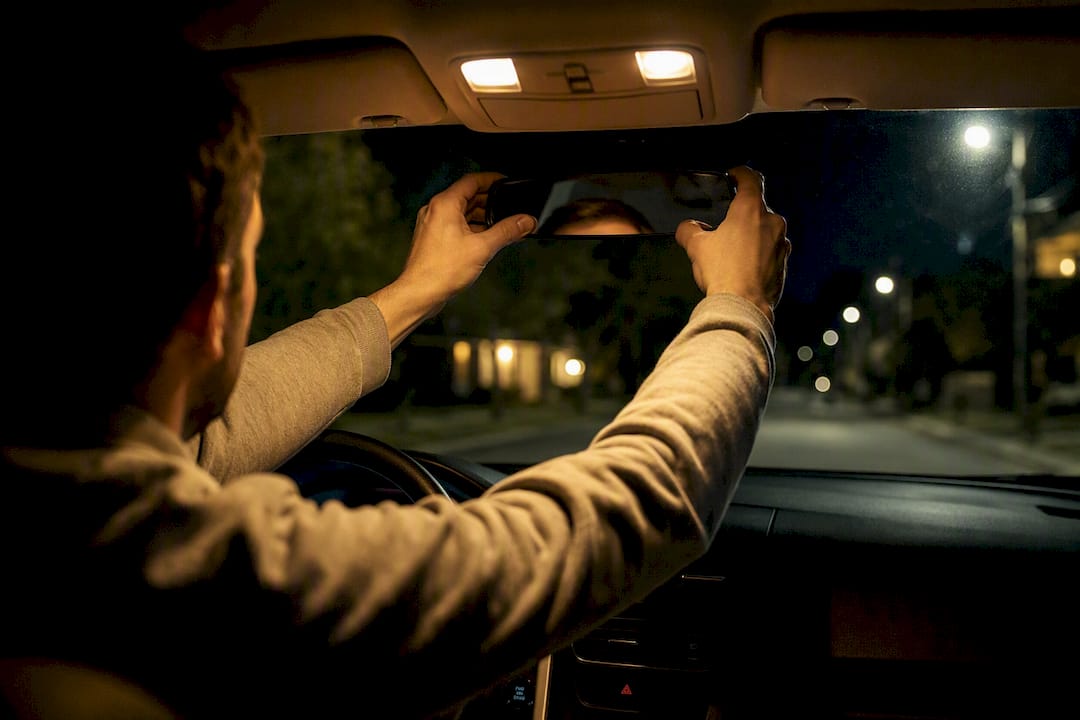
- Dim your dashboard display and tilt your rearview mirror to its night setting to knock down glare from trailing headlights.
Pro Tip: Run your hand across the outside of each headlight lens. If it feels chalky or looks hazy under a flashlight, a headlight restoration kit is a $15 fix that can restore a surprising amount of light output.
On-road driving techniques: speed, spacing, and scanning
Drive to your sight distance, not to the speed limit. If your headlights illuminate 200 feet of road, you need to be able to stop within that distance. That single habit change addresses the core reason nighttime speeding crashes disproportionately end in fatalities: drivers keep daylight speeds while working with a fraction of daylight visibility.
- Cut your speed below the posted limit on unlit roads, especially rural two-lanes with no shoulder lighting.
- Extend your following distance. Use a 4-second gap instead of the usual 2 to 3 seconds on unfamiliar or unlit stretches. Darkness makes it harder to judge how fast the car ahead is slowing.
- Scan actively instead of staring straight ahead. Track the right edge line, glance at your mirrors, and sweep the road ahead in a rhythm rather than locking your eyes on one point. Tunnel vision at night is a documented risk. State driver guidance requires you to be able to stop within your headlight-illuminated distance for exactly this reason.
Dealing with glare and oncoming high beams
When a car with its high beams on comes toward you, don’t stare at it. Your eyes will chase the brightest point in your field of vision automatically, and that’s the opposite of what you want.
- Shift your gaze slightly toward the right edge line or lane marker and use your peripheral vision to track the oncoming car.
- Dim your dashboard lighting before you start driving so your eyes stay adjusted to the dark outside.
- If you’re prescribed anti-reflective glasses, wear them. They cut the halo effect around bright light sources.
- If you’re briefly blinded anyway, ease off the gas, hold your lane, and slow down gradually. Never brake hard. A sudden stop in that half second of blindness is more dangerous than the glare itself.
Recognize and manage fatigue and impairment
Drowsy driving isn’t a vague warning. It has a predictable window, and NHTSA data shows drowsy-driving crashes cluster between midnight and 6 a.m., the same hours when alcohol-impaired fatal crashes occur at a rate nearly four times higher than during the day.
- Watch for microsleeps: brief moments where your eyes close or your attention blanks out entirely.
- Notice repeated yawning, heavy eyelids, or drifting out of your lane. Any one of these means stop now, not at the next exit you feel like taking.
- Take breaks every two hours on longer night trips. A 15 to 20-minute nap in a safe, well-lit spot restores alertness better than caffeine alone.
- If you’re too impaired or too tired to drive safely, a designated driver service is a legitimate backup plan, not a failure.
Fatigue-related impairment produces a crash-risk increase comparable to moderate alcohol impairment. Treat drowsiness with the same seriousness you’d treat a few drinks.
Watch for pedestrians, cyclists, and wildlife; choose safer routes
Route choice matters as much as driving technique. Well-lit, multi-lane roads give you more reaction time and more escape room than a dark two-lane highway, and AAA’s night-driving guidance recommends choosing the former whenever a route options exists.
- Prefer well-lit, multi-lane roads over unlit rural two-lanes when you have a choice.
- Look for reflectors on bikes, retroreflective clothing on pedestrians, and the telltale eye-shine of animals near the roadside.
- Use your high beams on empty, unlit stretches to spot hazards farther out, then dim promptly for oncoming traffic.
- If an animal appears, brake firmly and stay in your lane. Swerving into oncoming traffic to avoid a deer causes far worse crashes than hitting one directly.
Useful vehicle tech and limits of driver-assist at night
Adaptive driving beams adjust automatically to traffic, extending illuminated distance without blinding oncoming drivers, and automatic-dimming mirrors cut glare from cars behind you.
- Pedestrian-detection and driver-assist systems exist, but their sensors perform noticeably worse in low light than in daylight.
- Treat automation as backup, not a substitute for scanning the road yourself.
- Test your specific vehicle’s systems on a familiar dark road before you trust them on an unfamiliar one.
Drive With Care resources: pledge, programs, and practical tools
Drivewithcare’s Safer Roads Now initiative exists because human error drives up to 96% of crashes, and small rehearsed habits close that gap.
- Download free pre-drive checklists covering lights, glass, mirrors, and rest.
- Explore teen and family driving agreements if you’re coaching a new driver.
Author note: why rehearsal and small habits reduce real harm
Try one checklist item tonight, before your next drive. Consistency beats intensity here. If you’ve lost someone to a preventable crash, the Drive With Care pledge exists for exactly that reason.
— Charles
Support safer nights on the road
There’s no single gadget that fixes nighttime driving risk. What works is rehearsal: running the same pre-drive checklist enough times that it becomes automatic, the way checking your mirrors already is. Drivewithcare built its free checklists and pledge program around that exact idea, backed by the same NHTSA and AAA data behind the advice in this article.

Take the Drive With Care safety pledge tonight and commit to one concrete habit, whether that’s a headlight check or a hard stop rule when you’re drowsy. If this article’s approach to prevention resonates with you, a donation funds the education programs, survivor support resources, and brain injury research that keep this work going. Donate Now to support that mission directly.
Sources
- AAA position on nighttime driving
- NHTSA — Drowsy driving
- GEICO — 12 safety tips for driving at night
- UTMB — Cataracts and vision advice
- Northwestern Medicine — Expert tips for driving safely at night

