
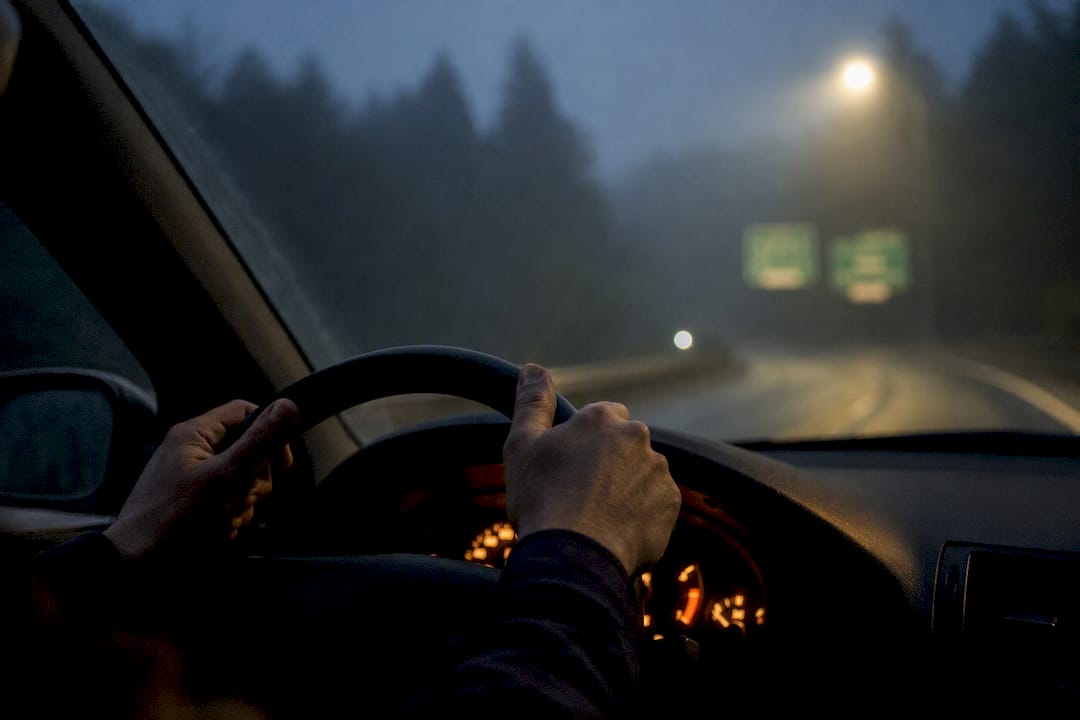
If you feel your eyes getting heavy behind the wheel, stop driving and rest. That single decision prevents most drowsy-driving crashes before they happen. NHTSA estimates drowsy driving causes roughly a large number of crashes each year in the U.S., and the CDC puts driver fatigue behind as many as one in five fatal crashes.
Three things to do right now if you’re fighting sleep on the road:
- Find a safe, well-lit place to pull over. A gas station or rest area works. The shoulder of a highway does not.
- Take a 15 to 30 minute nap. Set an alarm and actually close your eyes.
- Don’t rely on caffeine, music, or open windows alone. They buy you minutes, not miles.
Key Takeaways
Prioritizing sleep and pulling over at the first warning sign prevents the overwhelming majority of drowsy-driving crashes, which cost roughly 100,000 incidents a year in the U.S.
| Point | Details |
|---|---|
| Sleep is the only real fix | Get 7 to 9 hours consistently; naps and caffeine only buy temporary alertness. |
| Know the late-stage signs | Forgetting recent miles driven means a microsleep already happened; stop now. |
| Nap plus caffeine, timed right | Drink caffeine right before a 15 to 30 minute nap so it kicks in as you wake. |
| Skip the myths | Loud music and cold air don’t fight fatigue; they just distract you. |
| Build family accountability | A signed pledge or teen driving contract turns good intentions into a habit. |
Table of Contents
- Why Drowsy Driving Prevention Matters More Than You Think
- Signs You’re Too Sleepy to Keep Driving
- Preventing Drowsy Driving Before You Even Start the Car
- What to Do the Moment Drowsiness Hits While Driving
- Who Faces the Highest Risk and What Helps Them Most
- Rumble Strips, Rest Areas, and Driver Monitoring: What Actually Works
- How Drivewithcare Helps Families Build Safer Habits
- The Gap Between What Prevention Campaigns Promise and What Actually Works
- Sources
Why Drowsy Driving Prevention Matters More Than You Think
Drowsy driving isn’t a minor lapse. It’s functionally similar to drunk driving. Going 17 hours without sleep impairs your reaction time and judgment about as much as a blood alcohol concentration of 0.05, according to the CDC. Push past 24 hours awake and that impairment climbs toward 0.10, which is above the legal limit everywhere in the country.
The real danger is the microsleep, a brief, involuntary lapse into sleep that can last up to 30 seconds without any warning. At 55 miles per hour, that means traveling over 100 yards with nobody at the wheel. Picture a driver on a quiet rural highway at 2 a.m., eyes closing for just a few seconds, drifting across the center line into oncoming traffic or off the shoulder into a tree. No swerve, no brake lights. Just gone.
Signs You’re Too Sleepy to Keep Driving
Your body gives warnings before it shuts down. The trouble is most drivers ignore them until it’s almost too late.
- Frequent yawning or trouble keeping your eyes open
- Heavy eyelids or blurred vision
- Drifting between lanes or hitting rumble strips
- Missing your exit or a turn you know well
- Not remembering the last several miles you drove
That last one deserves extra attention. Forgetting recent miles usually means you already had a microsleep and your brain filled in the gap. It’s one of the clearest signs of sleepy driving and a signal to stop immediately, not in five minutes.
If you’re a passenger and notice these signs, speak up. Ask direct questions to keep the driver engaged, or better, offer to take the wheel or find the nearest place to stop.
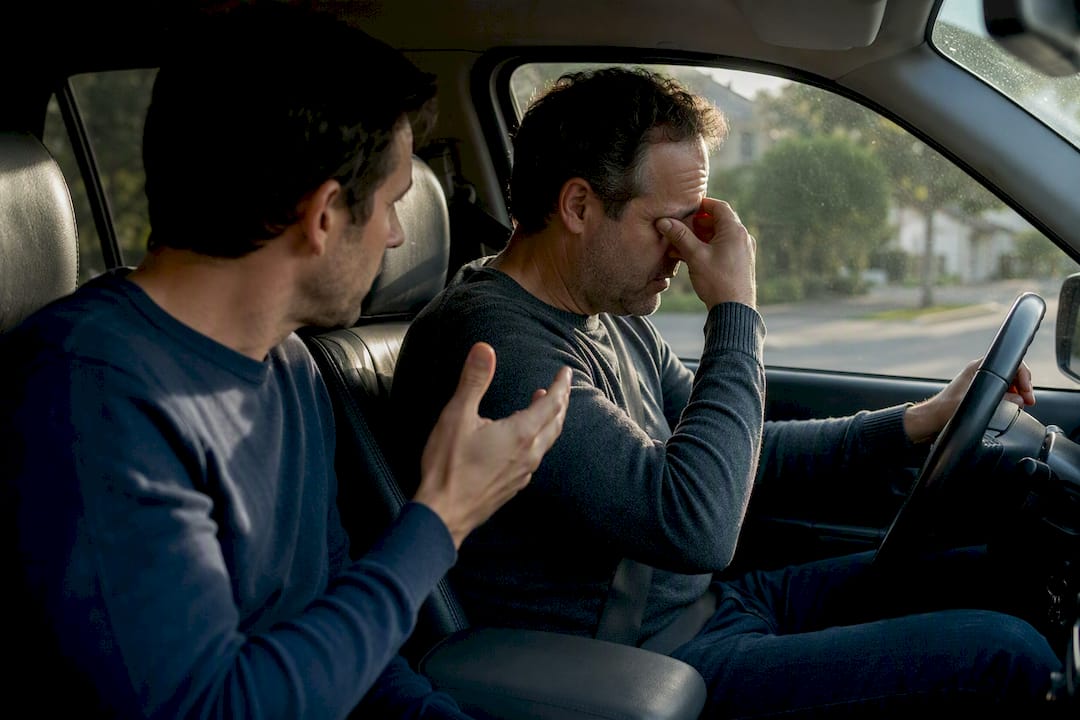
Pro Tip: Set a rule with your family or coworkers before a long trip: whoever notices drifting, yawning, or memory gaps says something out loud, no exceptions, no ego.
Preventing Drowsy Driving Before You Even Start the Car
Prevention starts the night before, not when you’re already nodding off. The National Sleep Foundation treats insufficient sleep as the single most preventable cause of drowsy driving, and that framing matters because it puts the fix in your hands well ahead of the trip.
- Get 7 to 9 hours of sleep on a consistent schedule, especially the two nights before a long drive. Stacking several short nights in a row compounds fatigue faster than most people expect.
- Time your trip around your body clock. Avoid driving between midnight and 6 a.m. and during the early afternoon dip whenever you can plan around it.
- Build in real breaks. Stop every two hours or 100 miles, and share the driving with someone else if the trip runs long.
- Check your medications. The FDA warns that many prescription and over-the-counter drugs, including some antihistamines and sleep aids, cause drowsiness that lingers into the next day.
- Rule out alcohol entirely before driving, even small amounts, since it amplifies fatigue.
If you’re consistently tired despite following all of this, that’s worth a conversation with a doctor. Chronic drowsiness can point to an undiagnosed sleep disorder like obstructive sleep apnea, which is common among commercial drivers and shift workers.
- For employers: a basic fatigue risk management system, sensible scheduling, and screening for sleep disorders go a long way toward reducing fatigue-related incidents on the job.
What to Do the Moment Drowsiness Hits While Driving
The order of operations here matters more than most drivers realize.
- Pull over somewhere safe, well-lit, and off the traffic lanes.
- Nap for 15 to 30 minutes. Set an alarm so you don’t oversleep into a groggier state.
- Drink caffeine right before the nap, not after. It takes about 20 to 30 minutes to kick in, so timing it before you close your eyes means you wake up as it starts working.
That combination gives you a real, if temporary, boost. NHTSA recommends exactly this pairing as a short-term countermeasure, but it’s a bridge to your destination or your bed, not a cure. Caffeine and a short nap wear off, usually within an hour or two, and driving on borrowed alertness after that is how tired drivers convince themselves they’re fine.
Skip the myths. Loud music, cold air blasting from the vents, and rolling down the windows don’t fix fatigue. The National Sleep Foundation is blunt about this: none of these tricks work, and some just add distraction on top of impairment.
Pro Tip: If you truly cannot stop right away, slow down, add extra following distance, and ask a passenger to take over or call someone for help. That’s a stopgap, not a solution. Get off the road as soon as it’s physically possible.
Who Faces the Highest Risk and What Helps Them Most
Some groups carry a disproportionate share of drowsy-driving risk. Novice and teen drivers lack the experience to recognize early warning signs. Shift workers and commercial drivers fight their own circadian rhythms on a schedule that never quite lets them catch up. People with undiagnosed sleep disorders start every drive at a deficit.
- Employers can rotate shifts clockwise (morning to afternoon to night) rather than backward, which reduces circadian disruption and lowers fatigue-related crash risk.
- Fleet managers should limit consecutive long shifts, allow nap breaks, and screen drivers for sleep apnea and other conditions.
- Families with teen drivers benefit from a written safe-driving agreement that sets rules around late-night trips and passenger limits.
- Peer accountability, friends or siblings checking in during long drives, catches fatigue before it becomes a crash.
Rumble Strips, Rest Areas, and Driver Monitoring: What Actually Works
Infrastructure helps, but it’s not magic. Rumble strips jolt a drifting driver awake for a moment, and that startle effect has measurable value, though it fades fast if the driver is already dangerously fatigued.
Rest area placement backs this up with real numbers. One evaluation found supplemental rest areas cut drowsy-driving freeway crashes by 14%, and combining advisory signage with rest areas produced a 49% drop in drowsy-driving crashes in another study, according to the GHSA Wake Up Call report. That’s a strong case for building more rest stops along long-haul freight corridors, not fewer.
- Driver monitoring systems track yawning, long blinks, and lane departures, issuing alerts as fatigue builds.
- These systems can’t force a driver to stop. A driver who ignores three alerts in a row gets no fourth chance if a microsleep hits.
- The strongest results come from combining engineering fixes with education and policy, not relying on any single layer alone.
How Drivewithcare Helps Families Build Safer Habits
Government data tells you what to do. Actually doing it, consistently, is a family and community habit, and that’s where Drivewithcare focuses its work. The organization’s Safety Behind the Wheel initiatives treat drowsy driving as preventable through the same public-health lens the National Sleep Foundation uses: sleep is a family safety practice, not a personal inconvenience.
- Take the Drive With Care Safety Pledge before a big trip or as a standing family commitment.
- Use a safe driving contract between teen drivers and parents to set clear rules around fatigue, curfews, and long drives.
- Get involved through school and driving-school partnerships that bring fatigue education directly to new drivers.
Public-health campaigns that invite pledges and family contracts tend to improve teen driving behavior more than warnings alone, largely because they turn a vague rule into a specific, shared commitment. If your household hasn’t set one yet, that’s the easiest first step toward reducing risk before the next long drive.
The Gap Between What Prevention Campaigns Promise and What Actually Works
Most drowsy-driving campaigns lean hard on scare statistics and stop there. The data backs the fear, but fear alone doesn’t change behavior on a Tuesday night when someone’s exhausted and still has 40 miles to go. What the evidence actually supports is narrower and more useful: sleep debt is the root cause, and almost every other countermeasure, caffeine, rumble strips, driver monitoring, is a patch on top of that debt.
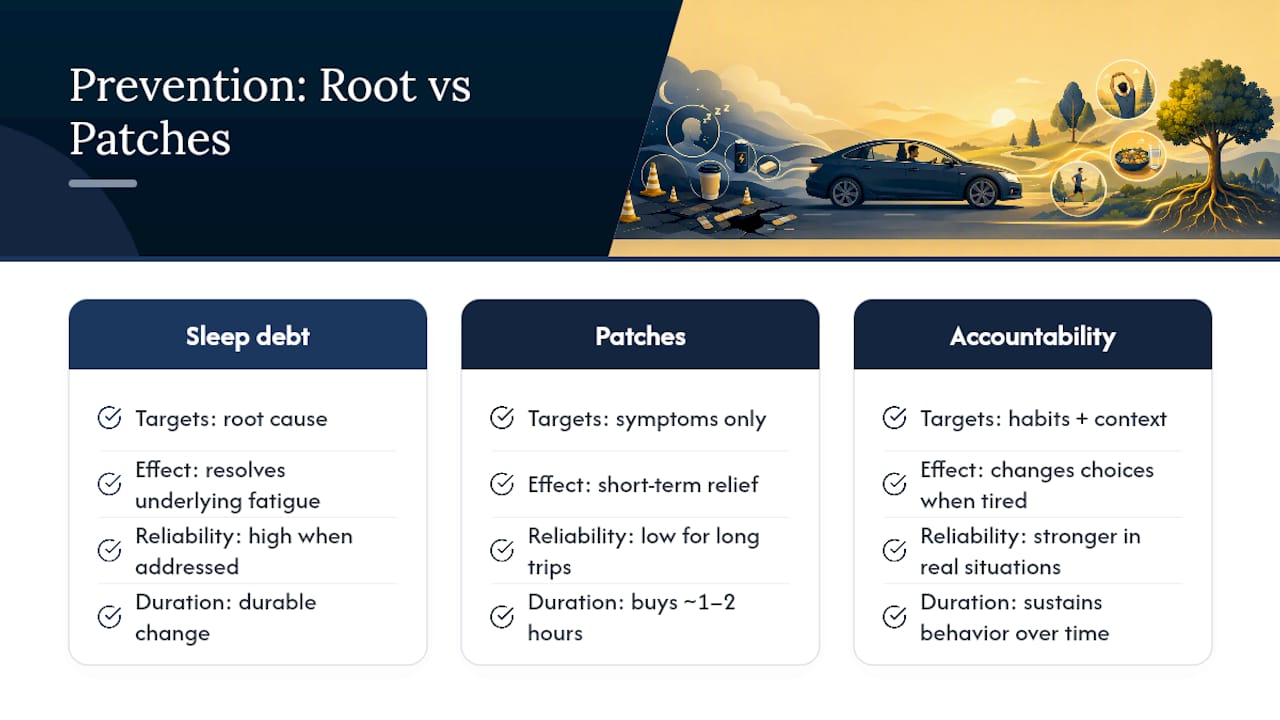
Where conventional advice falls short is treating a nap and a coffee as a solution rather than a stall tactic. It’s not. It buys you an hour, maybe two, and plenty of drivers push past that window because they feel fine again.
What actually moves the needle is pairing personal habits with family accountability. A teen who’s signed a driving contract with a fatigue clause thinks differently at 11 p.m. than one who hasn’t. That’s not a minor detail. It’s the difference between a policy on paper and a habit that holds up when it’s inconvenient.
— Charles
Sources
- Drowsy Driving: Avoid Falling Asleep Behind the Wheel | NHTSA
- Driver Fatigue on the Job | Motor Vehicle | CDC
- Drowsy Driving Prevention 2025 – National Sleep Foundation
- REPORT UPDATE (Wake Up Call 2026 Update) – Governors Highway Safety Association

