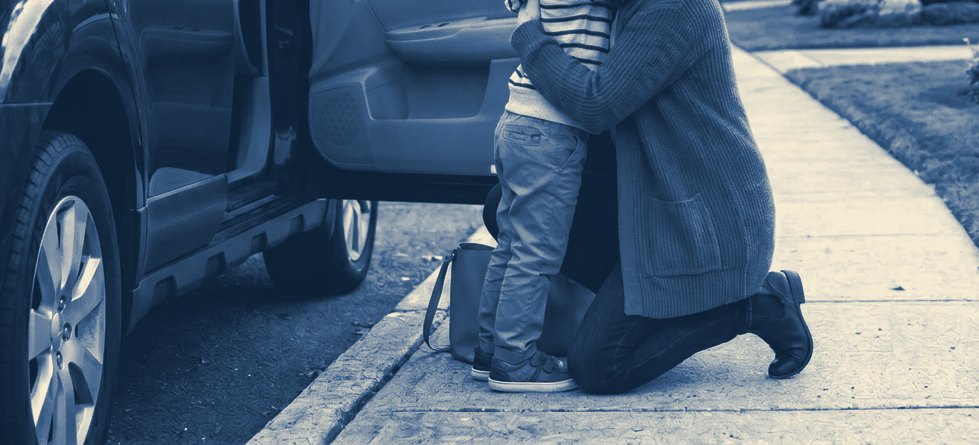
Hot car deaths and backovers: how to keep kids safe in and around cars
Simple habits that prevent hot car deaths, backovers, rollaways and trunk traps
Safety Behind the Wheel Foundationdrivewithcare.org
Last reviewed:
Picture a morning when the routine shifts: a parent who rarely does drop off has the baby, the baby dozes off, and a work call fills the drive. Nothing feels risky. That is why injury prevention specialists plan for days like this.
Heatstroke is the leading cause of vehicle related deaths outside of crashes among U.S. children younger than 15, according to the American Academy of Pediatrics (AAP) [5]. The National Highway Traffic Safety Administration (NHTSA) reports that a child dies in a hot car about every 10 days [2]. Parked and slow moving cars also pose other dangers, including backovers, rollaways and trunk entrapment [1].
This guide explains why these deaths happen in careful families and gives you a daily routine, a driveway checklist and a rescue plan.
How fast a parked car turns dangerous
Sunlight heats the dashboard and seats, which then warm the air. The National Weather Service (NWS) notes that a dark dashboard can reach 180°F to over 200°F [6].
NHTSA says a car’s inside temperature can rise almost 20°F in the first 10 minutes and pass 110°F on a day in the mid 60s [1]. Slightly open windows do not meaningfully slow the heating [6].
A child’s body temperature rises 3 to 5 times faster than an adult’s [2]. Heatstroke begins at a core temperature of about 104°F. About 107°F is deadly [1]. A child in a harness also cannot open a door or call for help.
Deaths peak in July and August [4], but NHTSA stresses that the danger is not limited to summer or hot states [1]. AAP notes heatstroke can occur when it is only 57°F outside [5].
Three ways children die in hot cars
NoHeatStroke.org, maintained by Jan Null of San Jose State University’s meteorology department, tracks these deaths through news reports [3]. It counts 1,070 deaths since 1998, an average of 37 a year, with record highs of 53 in both 2018 and 2019 [3, 4].
The database lists 35 deaths in 2025 and 25 in 2026 as of September 28 [3]. NHTSA’s May 2026 announcement, issued months earlier, gave 31 for 2025. Counts like these can rise as cases come to light [2].
How children end up in hot cars, 1998 to 2025 (1,041 deaths) [3, 4]
Comparison compiled by Safety Behind the Wheel Foundation
| What happened | Share of deaths | Average age | The habit that best prevents it |
|---|---|---|---|
| A caregiver forgot the child | 52.9% (551) | 19 months | A look before you lock routine plus a child care call plan |
| The child got into a parked car alone | 23.8% (248) | 47 months | Locked cars, hidden fobs and closed fold down seats |
| An adult knowingly left the child | 21.9% (228) | 26 months | One firm rule: the child always comes with you |
| Unknown | 1.3% (14) | Not reported | Not applicable |
Forgotten children are usually babies and young toddlers, who may be quiet or asleep in a rear facing seat. Children who get in alone average almost 4 years old, the age of climbing and exploring. Overall, 54% of the children who died were younger than 2 [3].
Why "it could never happen to me" is a myth
A 2019 review by researcher David Diamond describes these cases as failures of prospective memory: remembering to carry out a plan later [7].
Two brain systems compete: a habit system runs familiar routines like your commute on autopilot. Another holds new plans, such as drop the baby off first. Stress, fatigue and changes in routine make it easier for the habit to win. The plan can vanish with no sense that anything is missing [7].
So prevention cannot rely on trying harder to remember. It needs cues outside your head.
Never leave a child alone in a car
About 1 in 5 hot car deaths since 1998 happened when an adult chose to leave a child in the car [3]. NHTSA’s rule is to never leave a child alone in or around a car for any reason [1].
- No quick stop exceptions: bring the child, use a drive through or skip the errand.
- A sleeping child comes too, because waking a baby is far safer than leaving one.
- A running engine is not a fix: NHTSA advises never leaving keys in the car. A child alone can work windows and controls [1].
A daily "look before you lock" routine
On National Heatstroke Prevention Day, May 1, 2026, NHTSA urged families to “Stop. Look. Lock.” [2]. This routine turns that message into habits that hold up on a distracted day.
- Put something you need in the back: set your phone, badge or bag on the floor behind your seat, so you must open the back door [2].
- Use a visual cue: keep a stuffed animal in the empty car seat. Move it up front whenever your child is buckled in [8].
- Say the plan aloud when anything changes, and confirm arrival whenever someone else drives your child [5].
- Drive with your phone out of reach, since distraction raises the risk of forgetting [5].
- Stop and look at every seat: open the rear door and check each one, even a car seat you believe is empty [1, 2].
- Then lock, every time, even in your own driveway [1, 6].
- Expect the call: ask your child care provider to phone if your child is more than 10 minutes late. Always answer [5].
Make a child care arrival agreement
NHTSA urges families to ask child care programs and schools to call when a child does not arrive [2]. Write down the expected arrival time, who to call in what order and what happens if no one answers. Share the routine with grandparents and sitters. Ask transport programs to walk the whole vehicle before locking it.
Rear seat reminders: a helpful backup, not a guarantee
Many newer vehicles sound and flash an alert when you turn off the car after a trip with someone in back. In 2019, automakers in the Alliance for Automotive Innovation pledged to make these alerts standard by model year 2025. By October 2024, the group reported them standard on more than 260 models [9].
These systems use one of two methods [9]:
- Door based reminders react when a rear door was opened before the trip. They cannot tell whether a child is there, or sense a child who climbs into a parked car later.
- Occupant detection uses a camera or radar sensor to look for someone in the back seat.
In the 2021 Infrastructure Investment and Jobs Act, Congress told NHTSA to require rear seat alerts, with a final rule due by November 2023 [10]. The rule remains at its earliest stage. NHTSA targeted a first notice for July 2026, but none had appeared in the Federal Register by early October [10].
Learn from your owner’s manual which type you have. Treat any alert, app or gadget as a backup to your own look.
Keep children out of parked cars and trunks
- Lock every car, every time, including at home [1, 6].
- Keep keys and fobs out of sight and reach [1].
- Keep fold down rear seats closed so children cannot crawl into the trunk [1, 5].
- Teach that cars and trunks are not play spaces [1].
- Give older children an escape plan: honk the horn and try both front and rear doors [8].
- If a child is missing, search fast, checking any pool first and then cars and trunks [8].
New passenger cars with trunks have needed a glow in the dark interior trunk release since September 1, 2001 [1]. The standard does not cover vehicles with a back door, such as SUVs and hatchbacks [14]. A release only helps a child who knows about it. So show school age children where it is from outside the trunk.
What to do if you see a child alone in a hot car
- Call 911 right away, before searching for the driver [1, 2]. Give your exact location, the vehicle’s color, make and plate, and what you see.
- Check the child: if the child is unresponsive or in pain or distress, get them out and start cooling them, following the dispatcher’s guidance [2, 5].
- Cool, do not freeze: move the child out of the heat and spray them with cool water, not an ice bath [5].
- If the child is alert, stay with them until help arrives. Have someone else look for the driver or ask the store to page them [5].
- Hand off clearly: tell responders what you saw and did, then let them take over.
Backovers and frontovers: what the driver cannot see
A backover happens when a backing vehicle strikes someone behind it. A frontover is the same harm from a vehicle moving forward. In 2007 to 2011 data, children under 5 made up 31% of light vehicle backover deaths, NHTSA found [12].
Off public roads, backing vehicles killed an average of 263 people and injured about 10,000 a year from 2017 to 2021 [11]. Forward moving vehicles were involved in 447 deaths a year, though NHTSA cautions that this is not a direct count of frontovers [11].
Vehicle size matters. A Consumer Reports test cited by the Insurance Institute for Highway Safety (IIHS) found a 5 foot 8 inch driver could not see 18 feet behind a midsize SUV [13]. Behind a midsize sedan, the blind zone was 13 feet. Forward blind zones in several popular SUVs and a pickup grew from 1997 to 2023 [13].
What backup cameras do, and do not do
Since May 1, 2018, new vehicles under 10,000 pounds must show a 10 by 20 foot zone directly behind the vehicle within 2 seconds of shifting into reverse. The test uses an object the height of an 18 month old [12].
IIHS research found cameras shrink the area where a toddler cannot be seen by about 90% on average [13]. Still, a camera only helps if you look. A child can also dart in from the side. In a 2019 IIHS study, cameras plus parking sensors were linked to 42% fewer police reported backing crashes. Adding rear automatic braking, which does not depend on the driver reacting, raised that to 78% [15].
NHTSA stresses that no detection device fully replaces a walk around [1].
Driveway and parking lot safety checklist
Rollaways, power windows and seat belts
Rollaways: vehicles rolling with no one at the controls killed an average of 163 people a year off public roads from 2017 to 2021 [11]. Each time you park, shift securely into Park before shutting off the engine, set the parking brake and take the keys [1].
Since September 1, 2010, automatic transmission vehicles have needed a brake transmission shift interlock, which holds the shifter in Park until someone presses the brake [1]. Some also shift into Park on their own when turned off, but these features do not replace supervision [1].
Power windows: since model year 2010, window switches must be pulled, not pushed, to close. Some windows reverse when blocked [1]. Use the window lock and check that hands and heads are clear. Never leave the key in the ignition or in accessory mode [1].
Seat belts: most belts lock when pulled all the way out, which helps install car seats but can trap a child tangled in the belt. Buckle unused belts and teach children that belts are not toys [1].
Frequently asked questions
How long does it take for a child to get heatstroke in a car?
No amount of time is safe: a car can warm almost 20°F in 10 minutes. A child heats 3 to 5 times faster than an adult [1, 2].
Does cracking the windows keep a car cool enough?
No, slightly open windows do not significantly slow heating [6]. A running engine leaves controls within a child’s reach [1].
Can I break a car window to save a child?
Call 911 first. If the child is unresponsive or in distress, AAP says to get the child out [5]. Legal protection for rescuers varies by state, so follow the dispatcher [4].
The bottom line
Recommendation from Safety Behind the Wheel Foundation
Make three habits automatic. Never leave a child alone in a car, and look in the back seat before you lock, every time. Keep every car locked and every fob out of reach. Before you move, know where each child is and walk all the way around the vehicle.
Related articles
- Car seats and booster seats: a guide to every stage
- Pedestrian safety for drivers: how to spot, yield to and protect walkers
- ADAS and partial automation: how to use Level 2 systems safely
- Distracted driving explained: how attention fails and how to protect it
- Seat belt safety: correct fit, back seats, pregnancy and myths
Sources and further reading
- 1National Highway Traffic Safety Administration (NHTSA). Child Safety. Accessed October 2, 2026. nhtsa.gov/road-safety/child-safety
- 2NHTSA. Consumer Alert: NHTSA Marks May 1 as National Heatstroke Prevention Day (press release). May 1, 2026. nhtsa.gov/press-releases/nhtsa-marks-may-1-national-heatstroke-prevention-day
- 3Null J, San Jose State University. Pediatric Vehicular Heatstroke Statistics. NoHeatStroke.org. Data as of September 28, 2026. noheatstroke.org
- 4Null J. Pediatric Vehicular Heatstroke: By the Numbers, 2026 Edition (1998 to 2025 data). NoHeatStroke.org. January 2026. noheatstroke.org/s/PVH-By-the-Numbers-2026.pdf
- 5American Academy of Pediatrics (AAP), HealthyChildren.org. Prevent Child Deaths in Hot Cars. Updated April 22, 2025. healthychildren.org/…/Prevent-Child-Deaths-in-Hot-Cars
- 6National Weather Service (NWS). Children, Pets and Vehicles. February 25, 2025. weather.gov/safety/heat-children-pets
- 7Diamond DM. When a child dies of heatstroke after a parent or caretaker unknowingly leaves the child in a car: How does it happen and is it a crime? Medicine, Science and the Law. 2019;59(2). journals.sagepub.com/doi/10.1177/0025802419831529
- 8Null J. Safety Recommendations. NoHeatStroke.org. Accessed October 2, 2026. noheatstroke.org/safety-recommendations
- 9Alliance for Automotive Innovation. Auto Industry Progress Report on Rear Seat Reminder Systems (heatstroke prevention commitment). October 2024. autosinnovate.org/…/2024 Heatstroke Report.pdf
- 10Office of Information and Regulatory Affairs, Reginfo.gov. Unified Agenda: Rear Designated Seating Position Alert (NHTSA, RIN 2127-AM49; prerule stage, ANPRM projected July 2026). Most recent edition, accessed October 2, 2026. reginfo.gov/…RIN=2127-AM49
- 11NHTSA. Non-Traffic Surveillance: Fatality and Injury Statistics in Non-Traffic Crashes in 2021. DOT HS 813 539. April 2024. crashstats.nhtsa.dot.gov/…/813539
- 12NHTSA. Federal Motor Vehicle Safety Standards; Rear Visibility (final rule, FMVSS 111). Federal Register, document 2014-07469. April 7, 2014. federalregister.gov/d/2014-07469
- 13Insurance Institute for Highway Safety (IIHS). Child Safety (research area). Updated August 2026. iihs.org/research-areas/child-safety
- 14Electronic Code of Federal Regulations. 49 CFR 571.401, Standard No. 401: Interior Trunk Release. Current as of October 2, 2026. ecfr.gov/…/section-571.401
- 15Cicchino JB. Real-world effects of rear automatic braking and other backing assistance systems. Journal of Safety Research. February 2019 (IIHS bibliography record). iihs.org/topics/bibliography/ref/2150
This article reflects the safety priorities of pediatric injury prevention. It is general education, not legal, medical or professional advice for any family. Talk with your child’s clinician about health questions, and call 911 in an emergency. Laws, data and vehicle features change, so verify details with official sources. Reviewed October 2026.
Keep reading
More on Child passenger safety
Keep learning
Safe Driving Resource Center
Guides, self-checks and articles for drivers, parents of new drivers, and families recovering after a crash.