
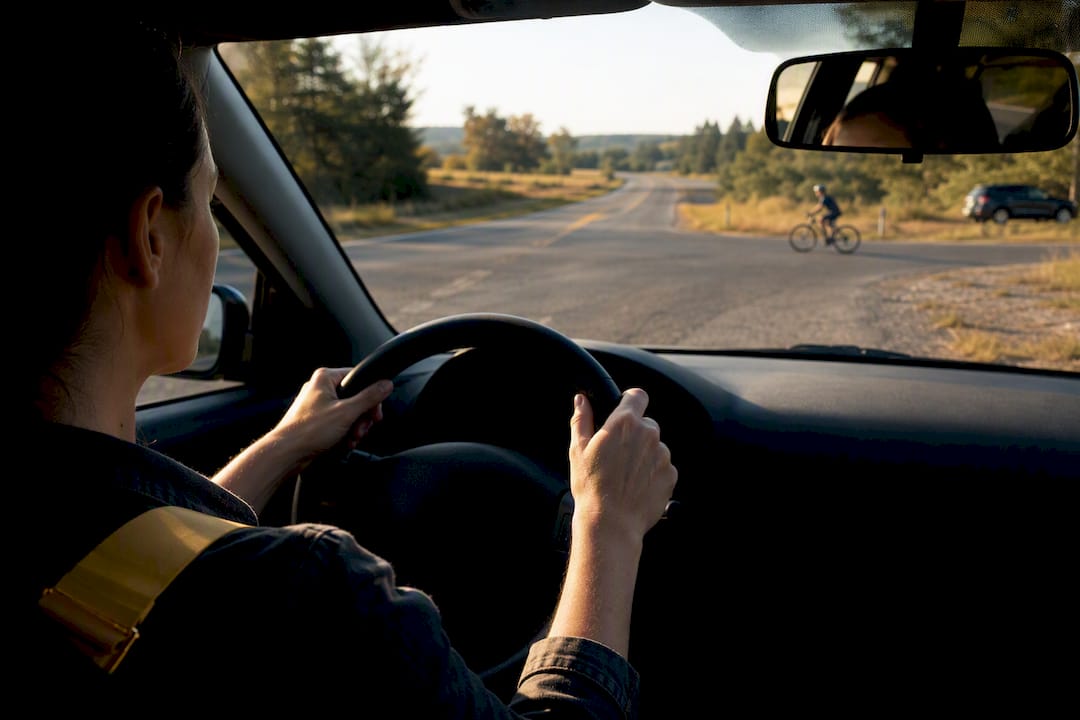
Defensive driving means driving to reduce your own crash risk instead of assuming other drivers will do the right thing. The single most important habit is keeping a protective cushion of space and time around your car by constantly scanning for trouble before it reaches you. The National Safety Council has taught this hazard-anticipation approach for decades, and educational work often builds around the core idea: most crashes come down to human error, and space plus awareness is what buys you time to avoid them.
TL;DR:
- Maintaining a minimum of a three-second following distance is crucial, especially in adverse conditions like rain or fog, to allow enough reaction time.
- Scanning 12 to 15 seconds ahead and checking mirrors every 5 to 8 seconds helps anticipate hazards before they reach your vehicle.
- Practicing hazard recognition and response sequences, such as SIPDE or the DDC formula, should be rehearsed regularly to become automatic under stress.
- Vehicle safety checks, including tire pressure, brake function, and light operation, directly support effective defensive driving habits.
- Avoiding distractions, fatigue, and aggressive drivers by setting phones to Do Not Disturb and increasing following distances can significantly reduce crash risk.
Table of Contents
- Defensive Driving Basics: The Core Techniques Every Driver Needs
- How SIPDE and the DDC Formula Turn Awareness Into Action
- Practice Scenarios: What To Actually Do in Common Hazards
- Vehicle Readiness: Basic Safety Checks That Back Up Good Habits
- Distraction, Fatigue, and Aggressive Drivers: Avoiding the Escalation
- Turning Tips Into Habits With Drive With Care
- Why Most “Basics” Lists Miss the Point
- Sources
- FAQ
Defensive Driving Basics: The Core Techniques Every Driver Needs
Good defensive driving techniques are not complicated. They are habits repeated so often they become automatic. Here is the practical checklist worth running through until it feels natural.
- Keep a real following distance. Use a safe following distance as your floor, generally around a few seconds. Pick a fixed point, like a sign, and count the seconds between when the car ahead passes it and you do. Add seconds for rain, darkness, or highway speed.
- Scan 12 to 15 seconds ahead, not just the bumper in front of you. That is roughly a city block at 30 miles per hour. Check your mirrors every 5 to 8 seconds so you always know what is behind and beside you.
- Run a decision framework on every hazard. Scan, identify, predict, decide, execute. It sounds academic until you use it at a four-way stop with a driver who is not looking your way.
- Adjust speed before you need to, not after. Slowing early beats braking hard later, and it is far easier on your tires and your nerves.
- Manage your space so you are never boxed in. Leave an escape route on at least one side whenever traffic allows it.
- Handle distractions before you shift into drive. Set your phone to Do Not Disturb, load your playlist, and enter your destination while parked.
- Be predictable. Signal well before you turn or change lanes, and avoid last-second maneuvers that surprise the drivers around you.
- Sit correctly and hold the wheel with both hands in a position that gives you full control, a basic that Consumer Reports flags as something even experienced drivers get wrong.
- Treat driver-assist tech as backup, not a co-pilot. Lane-keeping and automatic braking help, but they do not replace your attention.
Pro Tip: Practice the mirror-check habit at red lights. Every time you stop, glance at both mirrors before you go. It builds the reflex without adding any real time to your drive.
How SIPDE and the DDC Formula Turn Awareness Into Action
Spotting a hazard does no good if you freeze or react too late. That is why two frameworks show up in nearly every state driver’s manual and professional training course.
- SIPDE stands for Scan, Identify, Predict, Decide, Execute. You scan the road, identify something that could go wrong, predict how it might unfold, decide on a response, then execute it. IPDE is the same idea with scanning folded into “identify.”
- The DDC Collision Prevention Formula, taught in driver training programs and summarized in VA driversafety materials, breaks it down to three steps: recognize the hazard, understand the specific defense it calls for, and act correctly in time.
Picture a car drifting into your lane without signaling. You scan and identify the drift within a second or two. You predict it might be a distracted driver rather than a deliberate lane change. You decide to ease off the gas and cover your brake. You execute by tapping the horn if needed and creating space, rather than swerving. That whole sequence happens in under three seconds, which is exactly why rehearsing it matters more than memorizing it.
Practice Scenarios: What To Actually Do in Common Hazards
Reading about defensive driving strategies only helps if you have already rehearsed the response in your head. Run through these four scenarios until the reaction feels automatic.
- Blind intersection. Scan left, right, then left again before you creep forward. Keep your speed low enough to stop within a few feet, since a parked truck or a hedge can hide a cyclist until the last second.
- Rain, snow, or fog. Cut your speed before you hit the reduced-visibility zone, not after. Add several seconds to your following distance, switch to low beams in fog, and avoid any sudden steering input that could break traction.
- Someone tailgating you on the highway. Move to another lane if it is safe. If not, ease off the accelerator gradually to open space ahead, giving the tailgater more room to react instead of slamming your brakes.
- Pedestrians or cyclists nearby. Slow down, give as much lateral space as the lane allows, and assume they might step or swerve without warning.
Pro Tip: Mentally narrate hazards out loud when you drive, even alone. “Kid near that driveway, cyclist ahead, slowing down.” It sounds strange, but it forces your brain to actually process what your eyes are already seeing.
Vehicle Readiness: Basic Safety Checks That Back Up Good Habits
Technique only works if your car is actually ready to respond. A short pre-drive check covers most of what matters.
- Tires: correct pressure and enough tread to grip wet pavement.
- Brakes: no grinding, pulling, or a spongy pedal.
- Lights: headlights, brake lights, and turn signals all working.
- Mirrors and seat: adjusted before you move, not after you’re already rolling.
- Seat belts: everyone buckled, with the lap belt low across the hips, since proper fit is part of what makes belts effective at reducing fatal injury.
Modern safety features like lane-keep assist, blind-spot alerts, and automatic emergency braking help catch what you miss, but none of them replace attention. Treat them as a second set of eyes, not a reason to relax.
Distraction, Fatigue, and Aggressive Drivers: Avoiding the Escalation
Most serious risks come from the same short list of causes, and the NHTSA has repeatedly tied phone use and visual-manual tasks to thousands of fatal crashes each year.
- Set your phone to Do Not Disturb and finish navigation setup before you leave the driveway, and consider getting professional driver CPC training to enhance your defensive driving skills.
- Watch for fatigue signs like heavy blinking or drifting within your lane, and pull over rather than pushing through.
- If another driver becomes aggressive, do not engage. Increase following distance, avoid eye contact, and drive to a public, well-lit location if you feel threatened.
- Report genuinely dangerous driving to local authorities once you’re safely parked, and Drive With Care’s guidance walks through what to say if you need to flag a threat.
Pro Tip: If a driver is tailgating aggressively, resist the urge to brake-check them. Easing off the gas and creating space defuses the situation faster than any reaction that might provoke them further.
Turning Tips Into Habits With Drive With Care
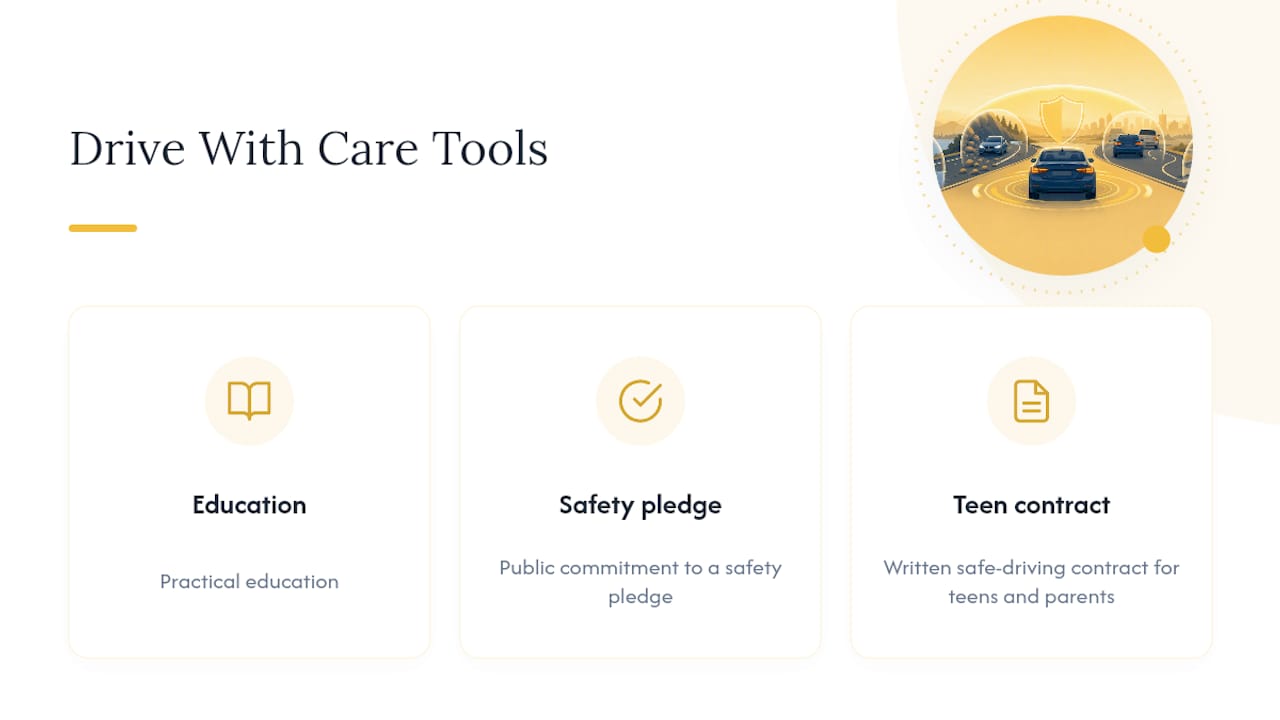
Reading a checklist once will not change how you drive. Drivewithcare’s Safer Roads Now initiative pairs practical education with a safety pledge drivers can commit to publicly, and a safe-driving contract for teen drivers and parents that turns the basics above into a written agreement. Both tools exist to make the habits stick past week one.
Why Most “Basics” Lists Miss the Point
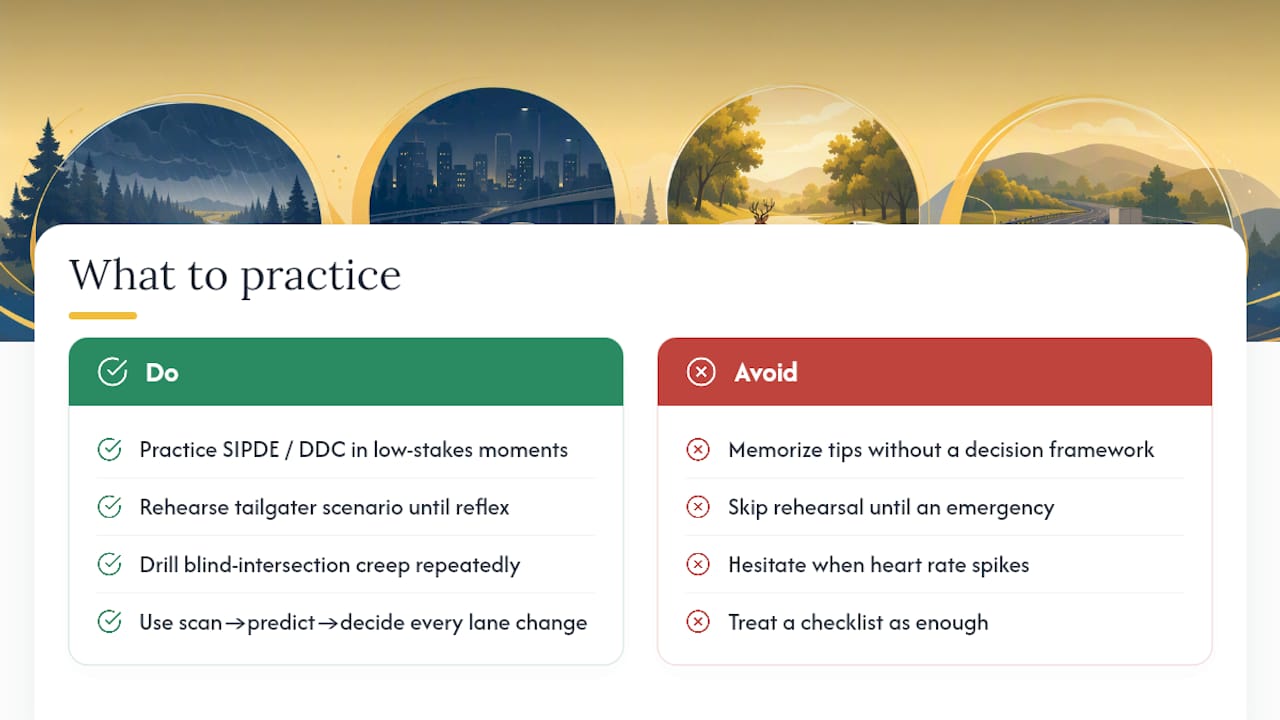
Most defensive driving articles hand you ten tips and call it done. The problem is that a list without a decision framework just gives you things to remember, not a way to act when your heart rate spikes and a car swerves into your lane. SIPDE and the DDC formula matter more than any single tip on the checklist, because they are what your brain actually falls back on under pressure.
The conventional advice also underrates rehearsal. Nobody drills the tailgater scenario or the blind-intersection creep until it becomes reflex, yet those are exactly the moments where hesitation causes crashes. If you take one thing from this guide, prioritize practicing the scan-predict-decide sequence in low-stakes moments, at every stop sign, every lane change, so it is already wired in before you need it in a real emergency. The habit, not the knowledge, is what protects you.
— Charles
Sources
For deeper detail, see the NHTSA on distracted driving, CDC seat belt guidance, Consumer Reports’ defensive driving guide, and your state DMV’s driver manual for local rules.
- NHTSA — Distracted driving
- Consumer Reports — Guide to defensive driving
- VA — Driversafety training (DDC Collision Prevention Formula)
FAQ
What are the 5 keys to defensive driving?
The core ideas are keeping a safe following distance, scanning well ahead, staying aware of your surroundings, controlling your speed for conditions, and having an escape route planned at all times. Together they reduce your reaction time when something unexpected happens.
What are the basic concepts of defensive driving?
Defensive driving concepts cover space management, hazard scanning, speed control, distraction avoidance, and decision frameworks like SIPDE and the DDC Collision Prevention Formula. Vehicle readiness, including working brakes and properly worn seat belts, rounds out the list.
What are some practical defensive driving tips?
Keep at least a 3-second following gap, scan 12 to 15 seconds ahead, check mirrors every 5 to 8 seconds, signal early, and slow down before conditions get bad rather than after. Add extra following distance in rain, fog, or snow, and always wear your seat belt.
What is the most basic principle of defensive driving?
The most basic principle is anticipating hazards before they become emergencies and keeping enough space and time to react safely. Everything else, from scanning habits to speed adjustments, exists to support that one idea.
Do defensive driving courses actually lower insurance costs?
In many jurisdictions, completing a certified defensive driving course can help dismiss an eligible traffic ticket and may qualify you for an insurance discount. Rules vary significantly by state, so check with your local DMV before enrolling.

