
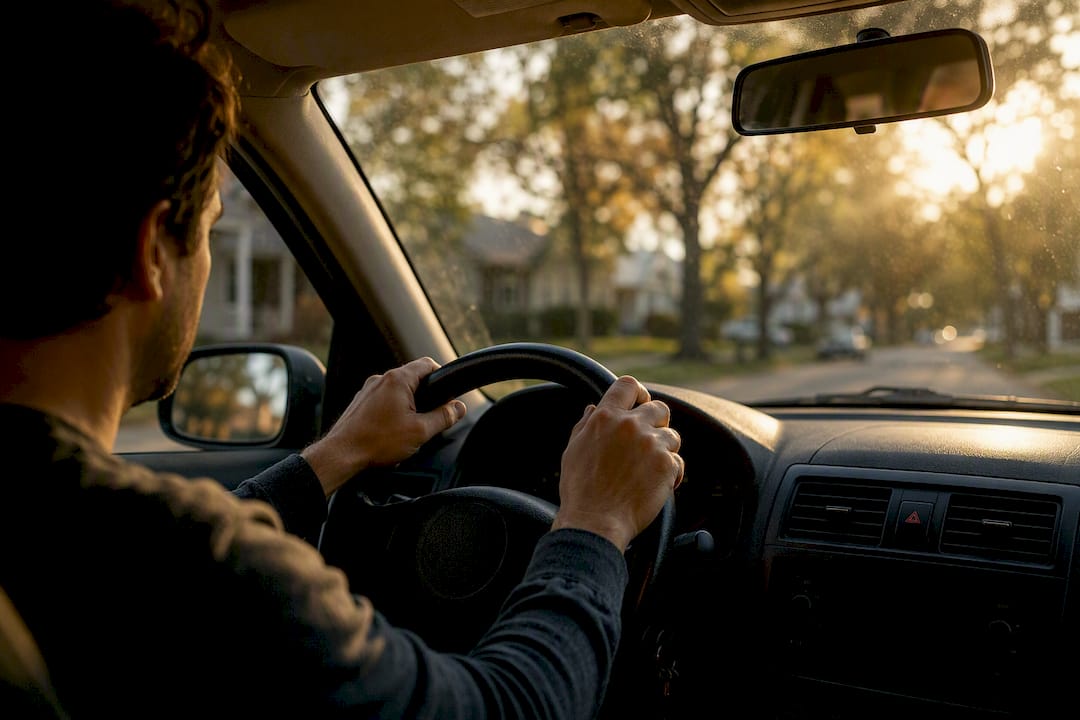
Driving anxiety after an accident is a normal, protective response, not a sign that something is wrong with you. The first move isn’t to force yourself onto the highway. It’s a short, planned exposure that starts small: sit in the parked car and practice calming down before the key ever turns.
Before your next attempt, try this:
- Do a quick safety check on the car (tires, fuel, mirrors) so your mind isn’t scanning for hidden problems.
- Practice slow, paced breathing for two minutes before you touch the ignition.
- Bring a calm, trusted passenger for the first few sessions if you can.
Do this once and you’ll likely notice your heart rate settle faster than expected. That’s the nervous system learning it’s safe, not just you gritting your teeth.
Pro Tip: Pick a familiar route at a low-traffic time, like a Sunday morning, for your first attempt. Bad timing on the first try can create a new, discouraging memory that sets you back further than the crash did.
Key Takeaways
Recovering from driving anxiety after an accident works best through small, consistent graded exposure paired with evidence-based therapy when symptoms persist.
| Point | Details |
|---|---|
| Start small and safe | Begin with a parked car and calming breath before ever driving, then build up gradually. |
| Recognize real symptoms | Racing heart, intrusive thoughts, and route avoidance signal anxiety worth addressing directly. |
| Follow a graded hierarchy | Progress from parking lots to quiet streets to highways only once anxiety settles at each step. |
| Know when to get help | Panic attacks, flashbacks, or symptoms past one month call for CBT, exposure therapy, or EMDR. |
| Expect six to twelve weeks | Consistent practice typically brings meaningful improvement in that window, with normal dips along the way. |
| Support from Drivewithcare | Drivewithcare offers survivor resources, emotional support guidance, and a donation page funding this work. |
Table of Contents
- What Driving Anxiety After a Crash Actually Feels Like
- Why You Feel This Way After a Crash
- Getting Ready Before You Try Driving Again
- The Graded Exposure Plan That Actually Rebuilds Confidence
- What to Do If Anxiety Spikes Mid-Drive
- When to Get Professional Help
- How Long Recovery Really Takes
- Where to Find Reliable Support
- Frequently Asked Questions
- Sources
What Driving Anxiety After a Crash Actually Feels Like
The physical symptoms tend to show up before you’ve even opened the car door: a racing heart, shallow breathing, nausea, sweaty palms, or shaking hands. Cognitively, it often shows up as intrusive flashes of the crash, catastrophic “what if” thinking, or a heightened, exhausting scan for danger on every other car around you.
Behaviorally, driving anxiety tends to shrink your world. You might start avoiding highways, refuse to drive at night, take long detours around the crash site, or stop being a passenger altogether.
- Physical: racing heart, breathlessness, nausea, trembling
- Cognitive: intrusive images, catastrophic thoughts, constant hypervigilance
- Behavioral: route avoidance, refusing passenger seats, canceling plans that require driving
When avoidance starts costing you a job, a relationship, or basic errands, that’s the signal the anxiety has moved from “uncomfortable” to “impairing,” and it deserves more structured attention than white-knuckling through it.
Why You Feel This Way After a Crash
Anxiety after a wreck is your brain’s alarm system doing its job, just recalibrated too high. That system exists to keep you alive, but trauma can turn the volume knob past where it’s useful.

Classical conditioning explains a lot of this. Your brain linked the sound of screeching tires, a specific intersection, or even the color of the other car to danger, and now similar cues trigger the same alarm even when there’s no real threat. Avoiding driving feels like relief in the moment, but it teaches your brain the danger was real, which is exactly why avoidance backfires over time.
For some survivors, this overlaps with full post-traumatic stress disorder. Research on crash survivors has found PTSD rates as high as 24 to 28 percent at six to twelve months out, with higher risk among women, people with prior depression or trauma history, and those involved in more severe collisions.
Your alarm system isn’t broken. It’s doing exactly what it was built to do, just aimed at the wrong target after a shock like this. That distinction is why clinicians treat this as a learning problem, not a character flaw.
Getting Ready Before You Try Driving Again
A little preparation lowers your body’s baseline arousal before you even sit down in the driver’s seat. Handle the practical stuff first so your mind has one less thing to defend against.
Safety checklist:
- Confirm the car is in good working order (tires, lights, fluids)
- Charge your phone fully and share your route with someone
- Save emergency contacts where you can reach them in one tap
- Plan a route that avoids the crash site for this first attempt
Before you start the engine:
- Sit in the driver’s seat with the engine off for two to three minutes.
- Practice slow breathing: four seconds in, six seconds out, repeated for one minute.
- Name your exit plan out loud (where you’ll park, how you’ll stop if it gets too intense).
Choose your first passenger carefully. The right person stays calm, doesn’t narrate every close call, and lets you drive at your pace rather than theirs. Their job is to model steadiness, not to coach you through it.
The Graded Exposure Plan That Actually Rebuilds Confidence
Clinicians consistently recommend a progressive, step-by-step approach that starts small and builds only when your anxiety has genuinely settled at the current step, not before.
- Sit in the parked car, engine off, and practice calming techniques.
- Start the engine and sit for a few minutes without moving.
- Drive a short loop around an empty parking lot.
- Drive a quiet residential street during low-traffic hours.
- Run a short local errand on familiar roads.
- Drive during moderate traffic on a route you know well.
- Attempt busier roads, then highways or bridges, once earlier steps feel manageable.
You’ll know you’re ready to move up when a few things line up:
- Your anxiety noticeably drops during the current step, not just after it ends.
- You can use a breathing or grounding technique to calm yourself without stopping the car.
- You’ve repeated the step at least two or three times with a similar or better result each time.
Practice each step several times a week if possible. Short, frequent sessions beat one long, dreaded drive. A dip in confidence after a good session is normal and doesn’t erase the progress you made. If you’re stuck at one level for weeks with no improvement, a therapist trained in exposure work, or a certified driver rehabilitation specialist, can adjust the pace and troubleshoot what’s holding you back.
Pro Tip: If you notice your anxiety climbing instead of settling over three or four attempts at the same step, that’s your cue to bring in professional support rather than pushing harder on your own.
What to Do If Anxiety Spikes Mid-Drive
Paced breathing and grounding are your fastest tools when panic rises behind the wheel, and both are simple enough to use without taking your eyes off the road for long. Clinical guidance points to slow, deliberate breaths and the 5-4-3-2-1 grounding method, naming five things you see, four you hear, and so on, as accessible ways to bring your nervous system back down.
If it gets to be too much:
- Signal early and pull over somewhere safe, using your hazard lights if needed.
- Put the car in park and focus on slow, extended exhales for a minute or two.
- Decide honestly whether you can continue or need to end the drive there.
- Passing the crash site, bad weather, or an aggressive driver nearby can all act as sudden triggers.
- It’s fine to end a drive early. Ending safely counts as a win, not a failure.
- Write down what triggered the spike so you can plan around it or work through it deliberately next time.
When to Get Professional Help
Some warning signs mean it’s time to bring in a specialist rather than keep working solo. Panic attacks behind the wheel, symptoms lasting more than a month, flashbacks, or anxiety that’s now shrinking your work or family life all warrant a referral.
The evidence base here is solid. CBT with exposure is the first-line treatment for driving-related fear and phobias, and clinical sources report that a high proportion of people improve with structured exposure therapy. EMDR tends to help most when the fear is tangled up with vivid, intrusive memories of the crash itself rather than general nervousness. Virtual reality exposure and memory-focused training are newer options showing promise in trials for road-traffic-accident survivors.
Ask any therapist you’re considering how many driving-phobia or post-crash cases they’ve treated with exposure therapy, and whether they use in-vivo practice or virtual reality tools. Their answer tells you fast whether they’re the right fit.
If a prescriber recommends medication, it works best as a short-term bridge that makes exposure practice tolerable, not a replacement for it, and should be managed alongside therapy rather than on its own.
How Long Recovery Really Takes
Most people who practice graded exposure or CBT consistently see meaningful improvement within six to twelve weeks. That’s not a guarantee, and it’s not linear.
Expect good weeks and rough ones. A setback after progress doesn’t erase what you’ve already built.
- Track real markers: fewer avoided routes, shorter anxiety spikes, more solo drives completed.
- Expect dips, especially around anniversaries or after a stressful week.
- Consistency beats intensity. Three short drives a week outperform one long, dreaded one.
Where to Find Reliable Support
Recovery goes faster with the right resources on hand. Drivewithcare’s guidance on driving again after a serious accident walks through practical next steps, and its emotional and psychological support directory connects survivors to counselors and peer groups.
- Look for a therapist who specifically lists CBT, exposure therapy, or EMDR experience.
- Ask about their track record with driving phobias or post-crash trauma, not just general anxiety.
- If cognitive symptoms like memory or mood changes linger, review what often shifts after a crash.
A Short, Honest Word From Someone Who’s Watched This Work
Every survivor who rebuilds confidence does it in small, unglamorous steps. Setbacks don’t erase progress. Keep going.

How Drivewithcare Supports Your Recovery
Rebuilding confidence after a crash isn’t just a personal project. It’s part of a larger mission Drivewithcare has built around survivor support, road safety education, and community pledge programs that keep drivers accountable to each other. If this guide helped you take one honest step forward, consider taking another: visit what to do after a traffic accident for practical next steps, or support the work directly by making a donation that funds survivor resources, safety education, and the research behind programs like these. Every gift keeps this kind of guidance free and available to the next person sitting in a parked car, working up the nerve to turn the key.
Frequently Asked Questions
Is it normal to feel anxious about driving after a car accident?
Yes. It’s one of the most common reactions to a crash, and it usually improves with gradual, planned practice rather than avoidance.
How long does driving anxiety after an accident usually last?
Many people see real improvement within six to twelve weeks when they practice graded exposure or work with a therapist consistently.
What’s the difference between normal post-crash stress and PTSD?
Normal stress tends to ease within a few weeks. PTSD involves persistent flashbacks, nightmares, or avoidance lasting over a month and often needs professional treatment.
Can medication help with driving anxiety?
It can, usually as a short-term aid alongside therapy, and should be managed by a prescriber rather than used as a stand-alone fix.
What if I panic while actually driving?
Signal, pull over safely, use hazard lights if needed, and practice slow breathing before deciding whether to continue or end the drive there.
This article is general information, not a substitute for advice from a qualified doctor. Consult a qualified healthcare professional about your own circumstances before acting on anything here.
Sources
Recommended
- Driving again after a serious accident – Safety Behind the Wheel Foundation
- Memory, Personality, and Emotional Changes After a Car Crash – Safety Behind the Wheel Foundation
- What to do after a traffic accident? – Safety Behind the Wheel Foundation
- What to say when driving pressure shows up for the young drivers – Safety Behind the Wheel Foundation

