Every day, people set out with somewhere meaningful to go. Someone is heading to a job interview, bringing a newborn home, reuniting with family, or meeting someone special for the first time. Explore stories of unexpected turns, meaningful connections, recovery, kindness, and choices that changed what came next. Each story offers a fresh perspective and a little inspiration for the road ahead. Begin my story
A close call, a habit you changed, a conversation that made someone pause, or one thoughtful choice can be worth sharing. Your experience does not need to be dramatic to matter. Our guided story experience can help you put that moment into words. Begin my story
The roads we share · Drive With CareIn memory
Four seconds
What they want you to rememberWhatever is on your phone can wait. My son never got those four seconds back.
My life before the experience
Daniel was nineteen and saving for a used truck. He rode his bike to his job at the hardware store every morning, helmet on, lights blinking, the same route he had taken since high school.
He always texted me a thumbs-up when he got there and another when he left. He said it was cheaper than me calling.
What happened
On a Tuesday in April, the second thumbs-up never came. A driver coming the other way looked down at a message. She told the officer it was four seconds, maybe less. In those four seconds her car drifted across the line and into the bike lane.
How it affected us
We still set six places at Sunday dinner. Nobody planned it. It just kept happening, and none of us could be the one to stop.
His sister got her license this year. Before she starts the car, she hands me her phone without a word. That is how she keeps him with her.
What I want others to remember
I do not hate the woman who was driving. I think she believed what most of us believe, that a quick look is harmless. Put the phone where you cannot reach it, every trip, every time. Somebody’s child is on the other side of that screen.
Their message to drivers
Put the phone away
Protect pedestrians and cyclists
A Drive With Care story, inspired by situations drivers face every day.
If a story brings up something difficult, you are not alone. Find emotional support. In an emergency, call 911.
The roads we share · Drive With CareNear miss
The rumble strip that woke me
What they want you to rememberTired driving is impaired driving. If your eyes are heavy, pulling over is the bravest thing you can do.
My life before the experience
I am an ICU nurse. For eleven years I worked twelve-hour night shifts and drove home at sunrise with the windows down and the radio loud. I thought being exhausted was just part of the job.
What happened
One morning I closed my eyes at a red light. The next thing I knew, the rumble strip was roaring under my tires. I had drifted onto the shoulder at fifty-five miles an hour, and a truck passed close enough to rock my car.
I have no memory of the two miles before that.
How it affected us
I pulled into a gas station and shook for twenty minutes. Then I called my husband, because I could not drive the last six miles.
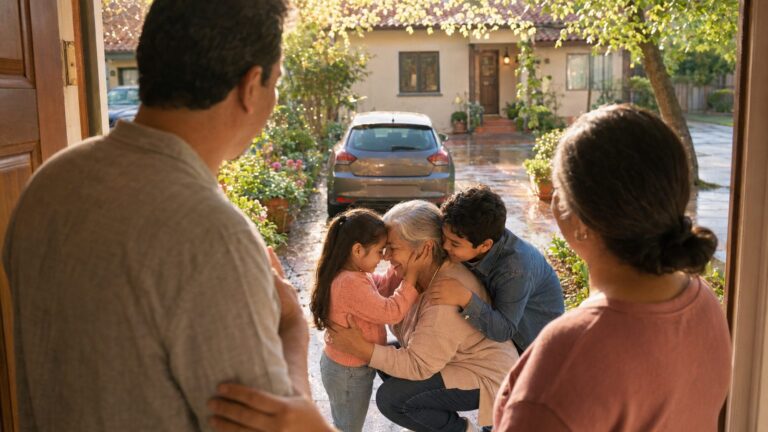
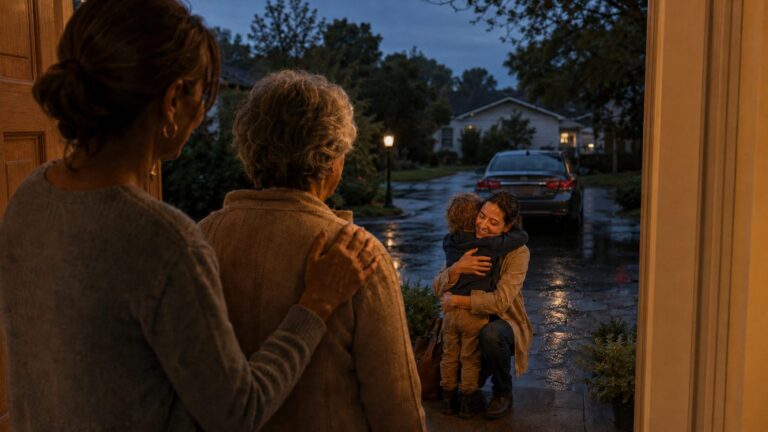
When we got home, my mother and our girls were waiting at the door. My youngest was still in her pajamas. She held my hand like I was the one who needed looking after. I was.
What I understand now
Now I sleep for twenty minutes in the hospital parking lot before I leave, or I take a ride home. My coworkers teased me less than I expected. Three of them do it too now.
Their message to drivers
Rest before driving
Prepare before the trip
A Drive With Care story, inspired by situations drivers face every day.
If a story brings up something difficult, you are not alone. Find emotional support. In an emergency, call 911.
The roads we share · Drive With CareA habit I changed
My daughter was copying me
What they want you to rememberOur kids learn to drive long before they turn sixteen. They learn it by watching us.
What happened
Mia was four. We were sitting in the grocery store parking lot when I heard her say, in my exact voice, “Hold on, baby, Mommy is just checking one thing.”
I turned around. She was holding her toy steering wheel with one hand and a wooden block up to her face with the other, glancing down at it and back up at the road she was imagining.
How it affected us
I laughed, because it was cute. Then I sat there with the engine running and could not stop thinking about how many times she had watched me do it for real. At red lights. On the highway. With her in the car.
What I understand now
That night I turned on the setting that silences my phone while I drive. The phone lives in the glove box now.
Mia is seven, and she checks. If she sees my phone in the cup holder, she says, “Glove box,” and I put it there. She is going to drive someday. I want her to remember the glove box, not the block.
Their message to drivers
Put the phone away
Prepare before the trip
A Drive With Care story, inspired by situations drivers face every day.
If a story brings up something difficult, you are not alone. Find emotional support. In an emergency, call 911.
The roads we share · Drive With CareSupporting recovery
Walking to the park bench, again
What they want you to rememberA crash lasts a few seconds. Recovery can last years. Slow down, and be patient with people who are still healing.
My life before the experience
Walt and I have been married forty-one years. He is the kind of man who fixes the neighbors’ lawn mowers for fun and can tell you the score of every Phillies game since 1980.
What happened
A driver going far too fast ran a red light and hit the driver’s side of Walt’s car. His broken ribs and wrist healed in a few months. His brain injury did not follow anyone’s timeline.
How it affected us
He lost words. He would reach for “spoon” and find “shovel.” He got lost in the house he built with his own hands. Some days he was angry at a world that moved too quickly for him, and some days I was angry right along with him.
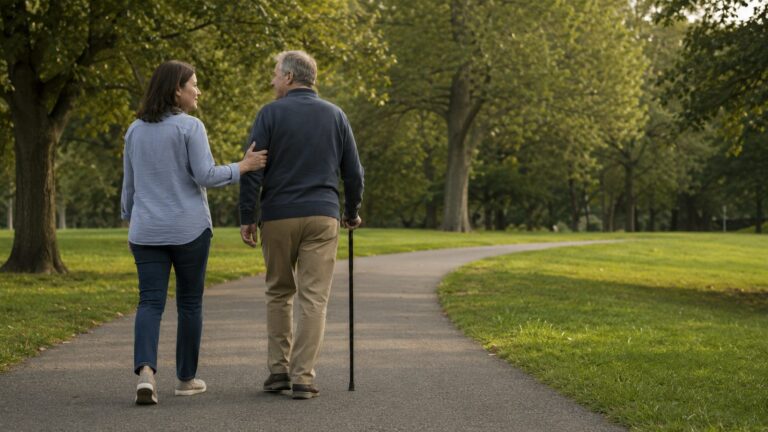
His therapist gave us one goal: walk to the end of the block. It took three weeks. Then the corner. Then the park. The first morning he made it all the way to the bench by the pond, he sat down, looked at the water and said, “I’m back.”
He was not all the way back. But he was there, and so was I.
What I understand now
Brain injuries are often invisible. People would see Walt walking and tell me how well he looked. I learned to say, “Thank you. He works very hard.”
Ask caregivers how they are doing, too. Most of us will say “fine.” Ask again.
Their message to drivers
Slow down
Take brain and memory symptoms seriously
Support people after a serious incident
A Drive With Care story, inspired by situations drivers face every day.
If a story brings up something difficult, you are not alone. Find emotional support. In an emergency, call 911.
The roads we share · Drive With CareWitness or responder
I held her hand until the sirens came
What they want you to rememberBuckle up, every time. Her seat belt did what none of us standing on that roadside could do.
What happened
I was the third car back. A pickup came off the highway ramp too fast, slid through the stop sign and hit a small sedan on the driver’s side. I pulled over, called 911 and walked up to the car with my hands shaking.
The driver was a young woman, maybe twenty. She was awake and frightened, and she kept asking if her mom knew. I told her help was coming. I did not move her. I reached in, held her hand and talked about anything I could think of until the paramedics arrived. It was eleven minutes. It felt like an hour.
How it affected us
One of the paramedics told me afterward that her seat belt was the reason she was talking to me at all. For weeks I could not drive through that intersection without my heart pounding.
What I understand now
Five months later a card came in the mail. Inside was a photo of her in a cap and gown, standing on her own, and one line from her mother: “Thank you for staying.”
I buckle up before the car is in gear now, and I wait until everyone in the car does too. I slow down at every ramp. And if you ever stop at a crash, it is okay to talk to someone about it afterward. I did. It helped.
Their message to drivers
Wear a seat belt
Slow down
Support people after a serious incident
A Drive With Care story, inspired by situations drivers face every day.
If a story brings up something difficult, you are not alone. Find emotional support. In an emergency, call 911.
The roads we share · Drive With CareHarm prevented
The day I gave my granddaughter my keys
What they want you to rememberKnowing when to stop driving is part of driving well. Have the conversation before something happens, not after.
My life before the experience
I drove for sixty-two years without so much as a parking ticket. I drove my husband to every chemo appointment and my grandkids to every swim meet. Driving was not just how I got places. It was how I took care of people.
What happened
Last fall I was turning left at the library, a turn I had made a thousand times. A little boy in a red jacket stepped into the crosswalk, and I did not see him until his father pulled him back by the hood. I stopped. Nobody was hurt. The father did not even yell. He just looked at me, and I knew he was right.
My eye doctor had been telling me for a year that my side vision was going. I had been telling myself I was careful enough to make up for it.
How it affected us
That Sunday I put my keys on the table in front of my granddaughter Ava, who had just gotten her license, and told her she was my driver on Tuesdays now. She cried more than I did.
What I understand now
I thought giving up my keys would make my world smaller. Instead, Tuesday became the best day of my week. We get groceries, we stop for pie, and she tells me things she would never tell her mother.
If you are worried about someone you love, talk to them early and kindly. If you are the one who is worried, listen to that feeling. I am so grateful that little boy’s father was faster than I was.
Their message to drivers
Protect pedestrians and cyclists
Speak up when a driver takes a risk
A Drive With Care story, inspired by situations drivers face every day.
Think of a new driver, a friend who drives tired, or someone who checks their phone while driving. One story can stay with them longer than any warning. Pick an app below. The link and a short message are ready to send.
These stories stayed with me, and I thought of you. Unexpected turns, recovery, kindness, and choices that changed what came next. Read one before your next drive.
The roads we share: every journey has a storyDriveWithCare.Org