
Communities can cut serious crashes by applying evidence-based countermeasures and organizing a local road safety program: start by forming a road safety working group or launching a small, data-driven pilot. The approach draws on Safe System principles already used by public agencies worldwide, and practical grants and resources exist to make that first step realistic for a neighborhood, school district, or small city.
TL;DR:
- Infrastructure measures like roundabouts and cable median barriers can reduce serious crashes by at least 48%, making them cost-effective upgrades.
- Speed management, protected crossings, and targeted enforcement are crucial, especially in high-conflict urban and rural areas, to complement infrastructure changes.
- Starting with a small, focused pilot on one street segment and measuring results within 90 days builds credibility for larger safety investments.
- Community involvement ensures program sustainability by leveraging local knowledge and fostering resident support for safety interventions.
- Federal grants, such as the Safe Streets and Roads for All program, provide roughly $3.9 billion for planning and infrastructure projects across communities, including rural areas.
Table of Contents
- Why community involvement matters in road safety
- Proven interventions that work at the community scale
- How to start and run a community road safety program
- Funding, grants, and practical resources for communities
- Measuring impact and evaluating what changed
- Drive With Care: what we do and how we support communities
- A prioritized plan for community leaders
- Partner with us to support safer roads
- FAQ
- Sources
Why community involvement matters in road safety
National agencies set standards, but local residents know which crosswalk gets ignored, which curve floods, and which intersection scares parents every morning. That knowledge is why community-led programs tend to stick: people support interventions they helped identify, and ownership keeps a pilot alive past its first funding cycle.
The Safe System approach, endorsed by the World Health Organization, reframes road deaths as preventable rather than inevitable, and it spreads responsibility across five linked pillars:
- Safe roads and roadsides designed to forgive mistakes.
- Safe speeds matched to the function and context of each street.
- Safe vehicles with modern crash protection and driver assistance.
- Safe road users supported by education, licensing, and enforcement.
- Safe post-crash care that reduces death and long-term injury after a crash happens.
The stakes are global and immediate, highlighting the importance of community-focused safety efforts like those at Total Tox. Road traffic deaths total approximately 1.19 million people a year, and road injuries are the leading cause of death for people between ages 5 and 29, with pedestrians, cyclists, and motorcyclists bearing disproportionate harm.
Proven interventions that work at the community scale
Not every safety idea deserves equal investment. Some countermeasures carry strong evidence behind them, while others sound good but rarely move the needle on their own.
Infrastructure changes consistently produce the largest gains. A public health resource from UNC’s Highway Safety Research Center found that high-friction surface treatments on curves can reduce fatal and injury crashes by roughly 48%, and that cable median barriers and roundabouts often cut serious crashes by more than half in the studies cited.
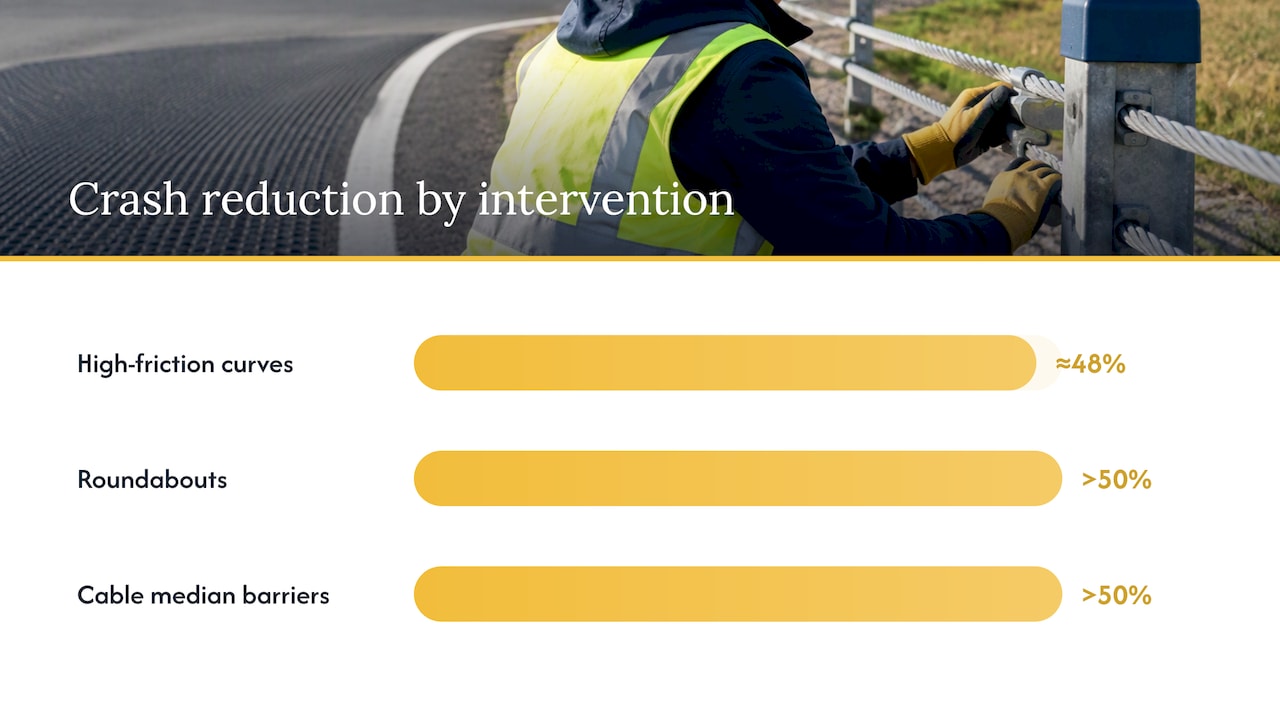
Roundabouts, cable median barriers, and high-friction surface treatments can each reduce serious crashes by 48% or more, according to documented community interventions, making them strong candidates for limited local budgets.
Beyond infrastructure, communities have a short list of reliable levers:
- Speed management through 20 mph or 30 kmh zones, speed humps, and targeted camera enforcement where crash data shows speeding is a factor.
- Protected crossings and separated bike lanes on routes with heavy pedestrian or cyclist conflict.
- Coordinated behavioral campaigns that pair education with enforcement and infrastructure rather than standing alone.
Isolated school-only education programs tend to produce weak, short-lived results when they run without a matching engineering or enforcement change. Rural roads usually need shoulder and curve treatments plus speed management, while dense urban corridors benefit more from crossings, separated lanes, and intersection redesign.
How to start and run a community road safety program
A workable program follows a sequence, not a wish list. The steps below mirror how agencies and grant reviewers expect a local plan to be built.
- Convene the right stakeholders: local government staff, police, school representatives, a few residents, and, where possible, a crash survivor or family member who can keep the human stakes visible.
- Map roles so everyone knows who owns data collection, who approaches the city council, and who manages volunteers.
- Pull crash data from local police or transportation records and layer it against a Field Perception Survey, a resident-reported hazard map that often catches problems crash records miss, such as obscured crossings or driveway conflicts, an approach central to the Data-Driven Hyperlocal Intervention framework.
- Pick one or two low-cost, high-impact pilots using the 5E lens: engineering, enforcement, education, emergency care, and evaluation.
- Assign a lead for each pilot, set a 60 to 90 day timeline, track a handful of indicators, and scale whatever shows measurable improvement.
Pro Tip: Pilot one intersection or one street segment first; a focused, well-measured win builds the credibility needed to ask for bigger funding later.
Before partnering with a local authority, ask who owns maintenance after installation, whether the agency will share raw crash data, and how decisions get made when community input conflicts with engineering standards. A red flag worth watching for is an agency that welcomes volunteers but will not commit to any infrastructure follow-through, since that usually signals the partnership will stall at the education stage.
Funding, grants, and practical resources for communities
Money is often the real barrier, not ideas. In the United States, the Safe Streets and Roads for All program has awarded roughly $3.9 billion to more than 2,000 communities between 2022 and 2026, funding both Action Plans and physical implementation projects, with close to half of awards benefiting rural communities.
Local and regional programs fill in the gaps between major federal grants:
- Regional road safety grant programs, such as those run by state transportation departments, typically fund councils, school districts, and community nonprofits rather than individual residents.
- FHWA’s local and rural road safety resources include a do-it-yourself tool for building a Local Road Safety Plan and lists of proven countermeasures suited to smaller agencies.
- Strong applications align explicitly with Safe System pillars, document local crash and perception data, and include a monitoring plan rather than promising vague awareness gains.
Scope mismatches sink otherwise solid applications: a grant meant for planning rarely covers construction, so matching the ask to the grant category matters as much as the idea itself.
Measuring impact and evaluating what changed
A pilot without measurement cannot earn more funding. Core outcome metrics are fatalities, serious injuries, and total crash counts over a defined period, pulled from police or transportation records.
Shorter-term indicators matter too, since fatal crash data moves slowly:
- Speed surveys before and after an intervention on the same stretch of road.
- Pedestrian and cyclist counts to confirm a safer route is actually being used.
- Resident-reported perceived safety, gathered through a Field Perception Survey or a simple local poll.
Combining crash records with perception data and basic heatmaps helps identify where the next pilot should go, an approach used in data-driven hyperlocal targeting. A practical cadence is a baseline measurement before the pilot, a check at 90 days, and a full review at one year, compared against the original baseline rather than against a different street entirely.
Drive With Care: what we do and how we support communities
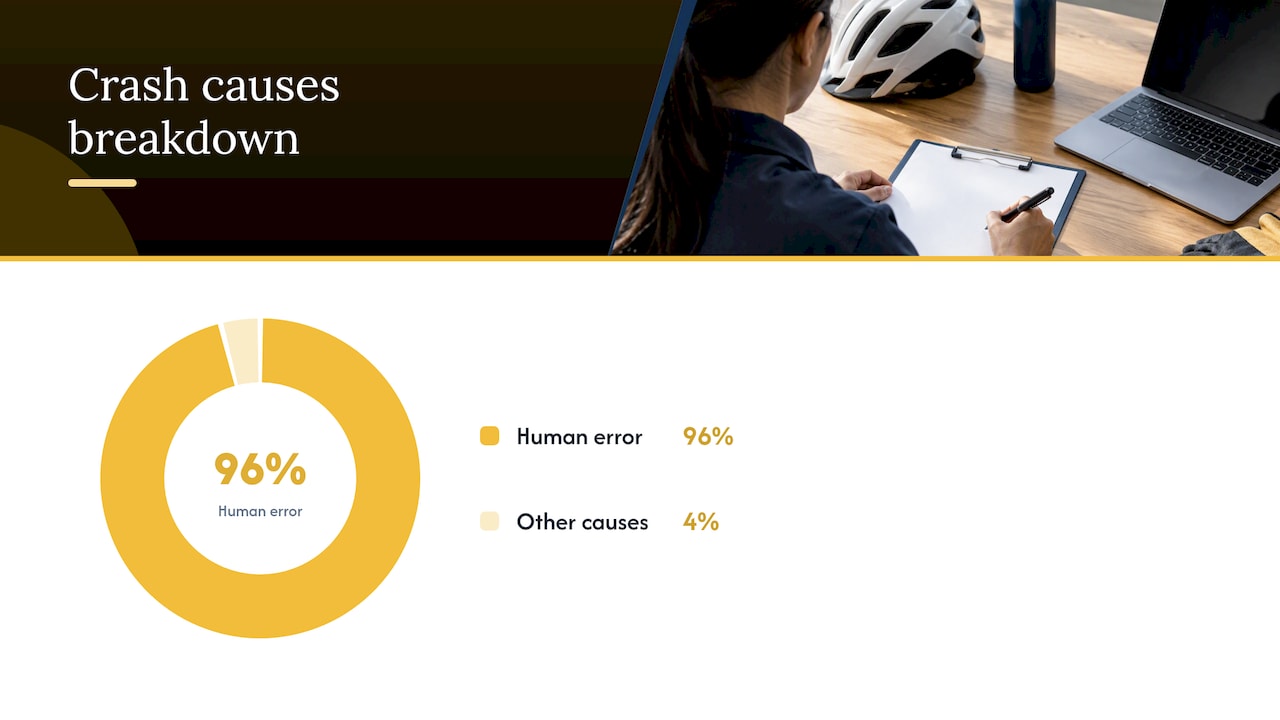
We are a nonprofit focused on transforming road safety through education and support for both drivers and accident survivors. Our core initiative, Safer Roads Now, addresses human error, which accounts for up to 96% of incidents, by combining survivor stories, community engagement, and data analysis.
We support community efforts in several concrete ways:
- We offer educational sessions and awareness resources that local groups can bring into schools and civic events.
- We connect volunteers with roles in pledge drives, outreach events, and survivor support.
- We partner with local agencies to extend safety education beyond a single campaign.
- We welcome requests from community groups looking to get involved as ambassadors or local partners.
A prioritized plan for community leaders
If you only do four things this year, do them in this order: gather your crash and perception data first, run one small pilot, make sure the result is visible to residents, then use that visible win to apply for bigger funding. Momentum beats a perfect plan that never launches.
In your first month, convene your working group, pull existing crash data, run a short perception survey on your target street, and pick one low-cost intervention you can install within 90 days. Small, visible progress is what turns skeptical neighbors into advocates.
— Charles
Partner with us to support safer roads
Backing community road safety does not require building a program from scratch. A one-time gift through our Donate Now page funds education, survivor support, and pledge campaigns already reaching drivers and families.
For organizations ready to go further, our Safety Supporter Partnership at $250 fits a small community group, while our Community Safety Partner Partnership at $1,500 suits agencies or schools wanting ongoing collaboration. Larger organizations can step into a Road Safety Partner Partnership at $5,000 or become a Founding Road Safety Partner at $10,000.
- Individuals and families: start with a direct donation.
- Small community groups: the Safety Supporter Partnership offers an accessible entry point.
- Agencies, schools, and corporate sponsors: a Community Safety Partner or Road Safety Partner Partnership matches larger goals.
Choose the level that matches your capacity, and donate now to put support behind the next local pilot.
FAQ
What is the Safe System approach to road safety?
The Safe System approach treats road deaths as preventable rather than inevitable, spreading responsibility across safe roads, safe speeds, safe vehicles, safe road users, and safe post-crash care. It is the framework endorsed by the World Health Organization and used by agencies worldwide to prioritize interventions.
How many people die in road crashes each year?
Road traffic crashes kill approximately 1.19 million people annually worldwide, and road injuries are the leading cause of death for people aged 5 to 29. Pedestrians, cyclists, and motorcyclists make up a disproportionate share of these deaths.
What funding is available for community road safety projects?
In the United States, the Safe Streets and Roads for All program has awarded roughly $3.9 billion to more than 2,000 communities between 2022 and 2026 for both planning and implementation. Local and state transportation departments also run smaller grant programs for councils, schools, and nonprofits.
What infrastructure changes reduce crashes the most?
High-friction surface treatments, cable median barriers, and roundabouts are among the countermeasures with the strongest documented results, with some studies showing reductions in serious crashes of 48% or more. These work best when paired with speed management and targeted enforcement.
How can I get involved with Drive With Care?
You can support our work through a direct donation, by volunteering for pledge drives and outreach events, or by requesting an educational session for your school or community group. Organizations can also explore a partnership tier that matches their size and goals.
Sources
- Strategies for Improving Road Safety: A Public Health Resource (UNC/HSRC, 2025)
- Safe Streets and Roads for All (SS4A) Grant Program | U.S. Department of Transportation
- Local and Rural Road Safety | FHWA

