
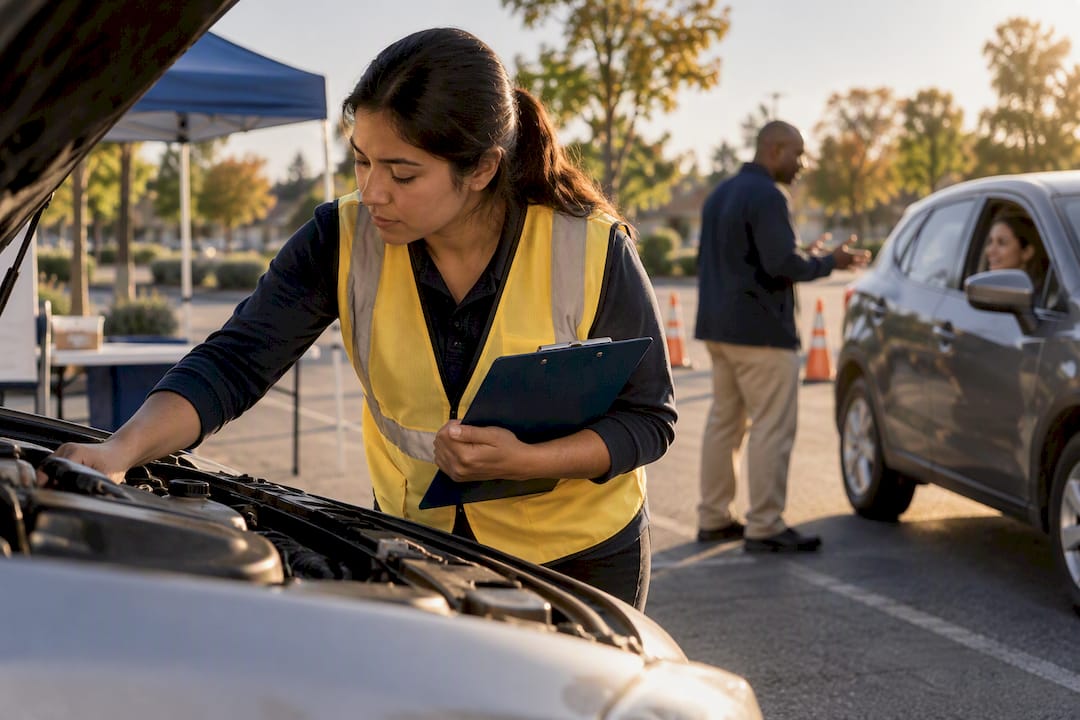
Host a high-impact road safety event by running a bounded vehicle or bike safety check paired with a pledge station, then scale from there. Assemble a small planning team this week and contact your local traffic authority before setting a date. This format works because it delivers a visible safety benefit on the spot and gives schools, police, and driving instructors an easy way to say yes to partnering.
TL;DR:
- Hosting a vehicle or bike safety check paired with a pledge station can deliver immediate safety benefits and attract community partners with minimal setup.
- Organizers should focus on well-defined activities like vehicle checks, route audits, or pledge stations, rather than overbuilding with large events or multiple message outlets.
- Early coordination with local traffic authorities, police, and emergency services is crucial for permits, traffic control, and safety logistics, ideally done weeks before the event.
- Measuring success involves tracking attendance, pledges, partner involvement, and changes in participant intentions, with an emphasis on evaluating behavior shifts.
- Partnering with organizations like Drive With Care offers resources, pledge materials, and messaging guidance to support effective, sustainable road safety events.
Table of Contents
- Building your event planning framework
- Choosing event formats that fit your community
- Getting permits, traffic control, and safety logistics right
- Crafting a message that changes behavior, not just awareness
- Measuring turnout, pledges, and what happens next
- What Drive With Care brings to community organizers
- What most road safety events get wrong
- Partner with Drive With Care to support your next event
- Toolkits and checklists worth downloading
- Sources
- FAQ
Building your event planning framework
Start with three or four people: an organizer to run logistics, a partner liaison for schools or police, a volunteer coordinator, and someone who tracks budget and permits. Each person owns one lane so nothing falls through in the final weeks.
Write a single SMART objective before picking activities. A workable template: “Get drivers to sign a seat belt pledge and complete a free vehicle check at [location] by [date].” That phrasing forces a decision about audience, action, and measurement in one sentence.
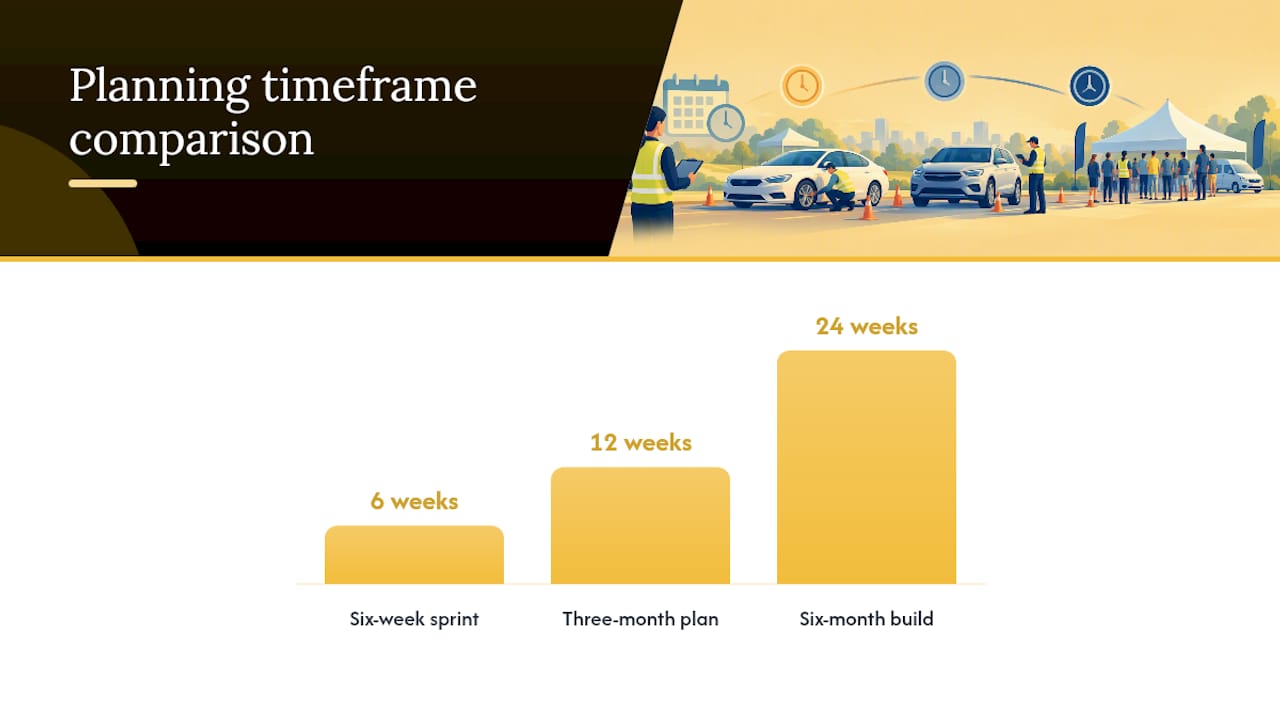
- Six-week sprint: a single vehicle check or pledge station at an existing gathering (farmers market, school pickup).
- Three-month plan: a school assembly plus a walk-to-school audit with light street closures.
- Six-month build: a multi-activity safety fair with police, survivors, and local media involved.
Budget lines rarely surprise organizers until permit fees or insurance certificates show up late. Plan for permit costs, signage and barrier rental, basic supplies (pledge cards, reflective vests, first-aid kit), and event insurance if you are using public space. Small grants from driving schools, insurance agencies, or municipal safety offices often cover these costs faster than public fundraising drives.
Pro Tip: Lock your date around an existing high-traffic community event instead of creating a standalone one. You inherit their crowd and cut your promotion budget in half.
Choosing event formats that fit your community
Practitioner guidance and the Brake vehicle safety checks toolkit point to small, supervised activities with trained partners as the easiest entry point, rather than a large road closure. Pick one or two formats that match your volunteer capacity and venue.
- Vehicle or bike safety checks: mechanics or trained volunteers inspect tires, lights, and brakes in 10 minutes per vehicle; run these in a parking lot with clear lanes in and out.
- Walk or roll to school events with a route audit: combine a supervised group walk with residents and students flagging unsafe crossings, then submit findings to transport officials.
- Bike rodeos: a cone course teaching helmet fit, hand signals, and braking, best for elementary-age children with parent supervision.
- Pledge stations: a table where drivers sign a commitment card, often paired with a raffle or giveaway to draw foot traffic.
- School assemblies and safety fairs: short talks paired with booths from police, EMS, and insurance partners.
- Memorial moments: a brief, dignified tribute led by survivors or family members, kept separate from promotional messaging.
The 2025 Bike Walk Toolkit lists these formats as standard building blocks, and most can run side by side at one location. For youth activities, keep adult-to-child supervision ratios tight, check that routes avoid unmarked crossings, and have a plan for participants who need mobility accommodations.
Getting permits, traffic control, and safety logistics right
Contact your road authority, local police, and emergency services as soon as you have a date and location, not after. If a transit route runs nearby, loop in the transit operator too. The FHWA’s planned special events checklists recommend assessing traffic, parking, pedestrian flow, and transit operations well before the event, and using a written checklist rather than memory.
- Confirm which permits apply: street closure, amplified sound, food service, and temporary signage often need separate approvals.
- Verify local rules directly with your municipality rather than assuming last year’s process still applies.
- Plan day-of signage, barriers, and a drop-off and parking flow that keeps emergency vehicles able to pass at all times.
- Assign trained marshals at every crossing point and give them a simple radio or phone contact chain for problems.
Pro Tip: Walk your event site in person a week ahead with whoever is running traffic control. Maps hide blind corners and narrow sidewalks that become real problems on event day.
Safeguarding matters as much as traffic control. Keep children’s activities in a fenced or clearly bounded area, brief volunteers on who is authorized to supervise minors, and make at least one route step-free for wheelchair or stroller access.
Crafting a message that changes behavior, not just awareness
Pick one risk to focus on: speeding, seat belt use, distraction, or child restraints. The WHO road safety mass media toolkit recommends building messages around a single evidence-based risk and pairing awareness with an action the participant can take immediately, such as signing a pledge or booking a car seat check.
- Draft two or three message versions and test them informally with a handful of people from your target audience before printing anything.
- Use plain, accessible language, and translate materials if your community includes non-English speakers.
- Recruit partners with built-in credibility: schools can supply an audience, police can lend authority, survivors can add emotional weight, and elected officials can open media doors.
- Time press outreach for a weekday morning and consider anchoring your event to a recognized safety week or awareness month for easier media pickup.
Measuring turnout, pledges, and what happens next
Track more than headcount. Useful metrics include registrations, day-of attendance, pledge signatures, partner participation, media or social reach, and a short pre- and post-event question such as “How likely are you to wear a seat belt every drive?” on a simple scale.
- Compare pre- and post-event answers to see if intentions shifted, even informally.
- Log which partners showed up and what they contributed, for future ask letters.
- Use pledge counts and turnout numbers in a short report to funders and partners.
One evaluation point worth building in from day one: designing pre- and post-event measures into your plan makes it far easier to justify a repeat event or a request to local officials for infrastructure fixes like a new crosswalk or lower speed limit.
What Drive With Care brings to community organizers
Drive With Care runs Safer Roads Now, a program built on the idea that human error factors into the vast majority of crashes and that survivor stories, paired with concrete action, shift driving habits more than statistics alone. Its pledge program has collected thousands of driver commitments through partnerships with driving schools and local agencies.
Organizers can request pledge cards, toolkits, or a partnership conversation through Drive With Care’s resource pages. Any survivor involvement in your event should stay voluntary, paced by the survivor, and separate from fundraising asks.
What most road safety events get wrong
Most organizers overbuild their first event. They chase a road closure, a keynote speaker, and a press conference before they have proven a single activity draws a crowd. The evidence points the other way: a bounded, well-run vehicle check or pledge station with one clear message beats a sprawling festival with five competing messages.
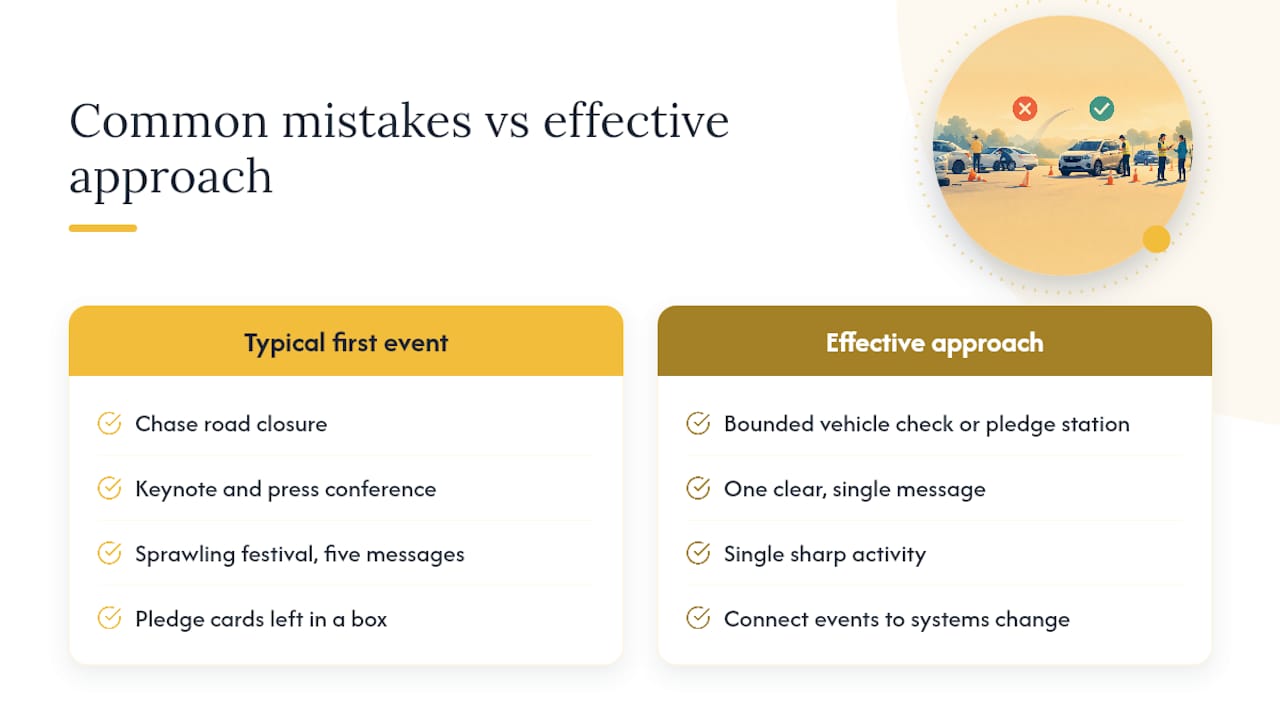
The bigger gap is follow-up. Plenty of groups run a strong event, then let the pledge cards sit in a box. The UN Road Safety Fund’s guidance on connecting one-off events to systems change is the part organizers skip, and it is the part that actually moves the needle on infrastructure and policy.
Prioritize one sharp activity, one message, and a real evaluation plan over a bigger guest list. Do that once, well, and scaling becomes a much easier conversation with partners and funders.
— Charles
Partner with Drive With Care to support your next event
Drive With Care supports community organizers with pledge materials, messaging guidance informed by survivors, and partnership options for groups at various stages.
Requesting support connects you with pledge cards, a partnership contact, and messaging resources drawn from the Safer Roads Now program. If you would rather support the work directly, you can donate now to fund education and survivor programs, or explore partnership options to bring Drive With Care into your next event.
Toolkits and checklists worth downloading
- FHWA’s event operations checklists cover permits, traffic planning, and stakeholder outreach.
- The WHO’s mass media campaign toolkit guides message design across a full campaign cycle.
- Safe Routes and Brake toolkits supply ready-to-run templates for bike rodeos, vehicle checks, and school events.
Sources
- Planned Special Events: Checklists for Practitioners (FHWA)
- Road safety mass media campaigns: a toolkit (WHO)
- Bike Walk Toolkit (2025)
FAQ
What is a good slogan for road safety day?
Effective slogans pair a single risk with a clear action, such as “Buckle up, every trip, every time” or “Slow down, arrive.” Keep it short enough to fit on a pledge card and test it with a few people from your target audience before printing it widely.
What are some ideas for safety events?
Practical formats include vehicle and bike safety checks, walk or roll to school events with route audits, bike rodeos, pledge stations, school assemblies, and community safety fairs, as outlined in the 2025 Bike Walk Toolkit. Most groups start with one bounded activity, such as a vehicle check, and add formats as capacity grows.
What are the 10 golden rules for road safety?
Definitions vary by country and organization, so there is no single official list. Most versions cover core habits like wearing a seat belt, avoiding distraction, obeying speed limits, never driving impaired, and yielding to pedestrians, which align with the risk areas the WHO mass media toolkit recommends targeting in campaigns.
What are the five pillars of road safety?
The concept generally groups road safety work into road safety management, safer roads, safer vehicles, safer road users, and post-crash response. Community events typically focus on the safer road users pillar through education and pledges, while infrastructure asks that come out of evaluation feed the safer roads pillar.
How do I keep a road safety event affordable?
Anchor your event to an existing gathering to cut venue and promotion costs, and ask driving schools, insurers, or municipal safety offices for small grants to cover permits and supplies. Partnership tiers like Drive With Care’s Safety Supporter Partnership can also offset materials and messaging costs for organizers just starting out.

