
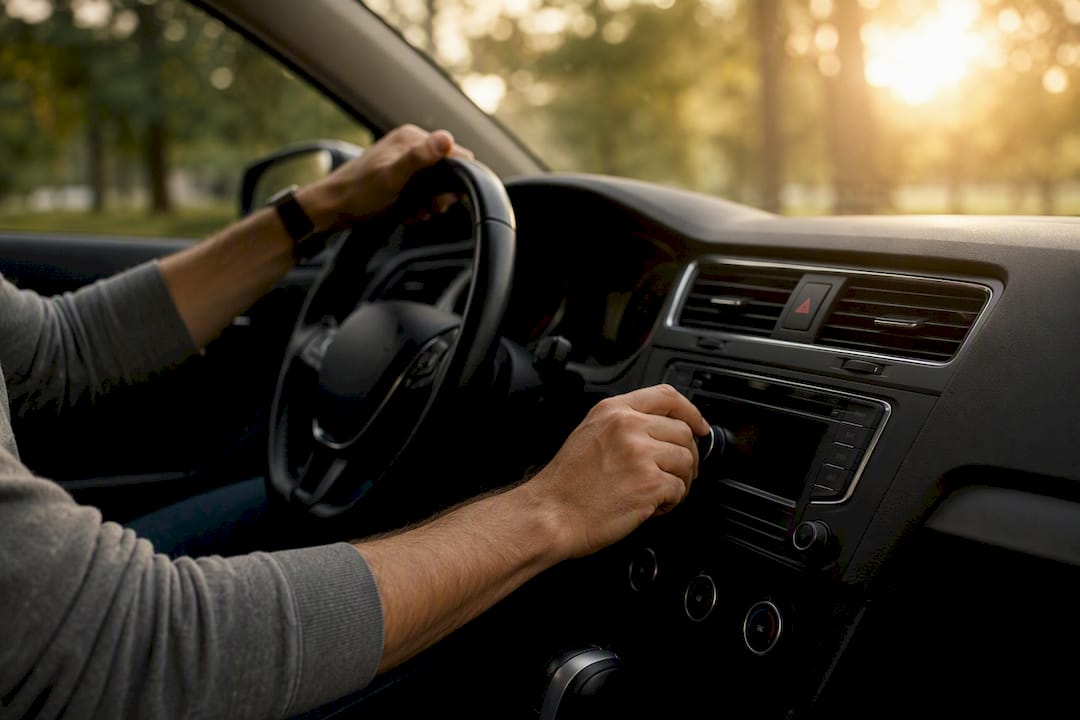
Short, action-driven slogans stick because they tell someone exactly what to do, not just what to feel. “Phone Down, Eyes Up” works better than a paragraph about distraction statistics because a driver can act on it in three seconds.
Here are ten ready to copy onto a poster, banner, or dashboard card today:
- “Phone Down, Eyes Up”
- “Text Later, Arrive Now”
- “Buckle Up. Show Up.”
- “One Drink, Zero Drives”
- “Slow Down. Get Home.”
- “Seatbelts Save Seats at the Table”
- “Put the Phone Away or Pay”
- “Drive Sober or Get Pulled Over”
- “Speeding Slows You Down”
- “Eyes on Road, Not on Phone”
Pick one and pair it with a matching action right now. If you go with a distracted driving line, name a passenger as the designated texter before you pull out of the driveway.
Key Takeaways
Safe driving slogans work when they pair a short, action-driven line with a real commitment, not when they stand alone on a wall.
| Point | Details |
|---|---|
| Short beats long | Three to six words with an action verb sticks better than a full sentence. |
| Match theme to audience | Distracted driving, drunk driving, speeding, and seatbelt lines each need distinct tone and placement. |
| Pair every slogan with an action | Link phrases like “Phone Down, Lives Up” to a designated texter or Do Not Disturb mode. |
| Timing amplifies impact | Enforcement campaigns like Drive Sober or Get Pulled Over align messaging with high-risk holiday windows. |
| Commitment converts intent | Drivewithcare’s safety pledge and teen driving contract turn a slogan someone reads into a promise someone signs. |
Table of Contents
- Safe Driving Slogans by Category for Posters and Campaigns
- How to Write Your Own Safe Driving Slogan
- Turning Slogans Into Habits, Not Just Wallpaper
- Where and How to Display Your Slogan
- Why Slogans Only Work When Someone Signs Something
- Bring These Slogans to Life With Drive With Care Resources
- Frequently Asked Questions
- Sources
Safe Driving Slogans by Category for Posters and Campaigns
Different risks need different language. A line that works for a school zone poster falls flat on a fleet dashboard sticker, and a joke that lands with teenagers can feel tone deaf at a memorial event. Sorting slogans by theme makes it faster to find the right fit for your poster, flyer, or social post.
Distracted driving (anti-texting)
- “Txt Later, Live Longer”
- “Silence Your Phone, Not Your Life”
- “Eyes on the Road, Not the Screen”
- “One Text Could Be Your Last”
- “Don’t Text and Drive. Live to Decide.”
- “Focus on the Road, Not Your Notifications”
- “A Text Can Wait. A Life Can’t.”
- “Hang Up and Drive”
The strongest line here is “A Text Can Wait. A Life Can’t.” It works because it contrasts a trivial delay against an irreversible loss in eight words.
Drunk and impaired driving
- “Buzzed Driving Is Drunk Driving”
- “Friends Don’t Let Friends Drive Drunk”
- “Plan A Ride Before You Pour the First One”
- “Impaired Judgment, Permanent Consequences”
- “Drive Sober or Get Pulled Over”
- “One for the Road? Call a Cab Instead.”
- “Never Drink and Drive”
Speeding
- “Speed Kills. Slow Down.”
- “Speeding Slows You Down”
- “Life Is Short. Don’t Make It Shorter.”
- “Slow Down, Live Long”
- “The Faster You Go, the Less You Control”
- “Arrive Alive, Not on Time”
Seatbelts and restraints
- “Click It or Ticket”
- “Buckle Up for the Ride of Your Life”
- “Seatbelts Don’t Restrict. They Protect.”
- “Wear It, Don’t Wear the Consequences”
- “Belt Up, Buttercup”
Teens and schools
- “New Driver, Not a Racer”
- “Drive Now, Text Later, Live Forever”
- “Your License Isn’t a Dare”
- “School Zone: Slow Your Roll”
- “Practice Makes Permanent, Not Perfect. Drive Careful.”
“Drive Now, Text Later, Live Forever” earns its spot for teen audiences because it reframes patience as the cooler, more mature choice rather than a restriction.
Fleet and workplace driving
- “Deliveries Wait. Families Don’t.”
- “Drive Like Your Team Is Watching”
- “Safety Is Part of the Job Description”
- “No Load Is Worth a Life”
Funny and emotional
- “Honk If You Love Life”
- “Real Drivers Don’t Text and Wreck”
- “Your Family Is Waiting. Drive Like It.”
- “Better Late Than Never Arriving”
How to Write Your Own Safe Driving Slogan
Most weak slogans fail for the same reason: they describe a problem instead of demanding an action. “Distracted driving is dangerous” is a fact. “Put the phone down” is an instruction. Instructions get remembered.
Three rules separate a slogan that gets ignored from one that gets repeated:
- Keep it to three to six words. Anything longer loses its punch on a poster or a bumper sticker.
- Lead with an action verb. “Buckle,” “Slow,” “Put,” “Drive” — verbs give the brain something to do.
- Build in rhythm or rhyme. “Click It or Ticket” works because it sounds like a beat, not a sentence.
Run every draft through this checklist before you print it:
- Who’s reading this — teens, commuters, parents, fleet drivers?
- Does the tone match the setting (serious for a memorial event, lighter for a school poster)?
- Does it pair naturally with a specific action, like buckling up or handing over a phone?
- Would a stranger understand it in two seconds, with no extra context?
Pro Tip: Take your weakest draft and cut it in half. “Please remember to always wear your seatbelt every time you get in the car” becomes “Buckle Up, Every Trip.” Shorter almost always wins.
Turning Slogans Into Habits, Not Just Wallpaper
A poster on a wall is a suggestion. A poster tied to a specific action is a behavior change tool, and that distinction is what separates campaigns that get cited nationally from ones nobody remembers past the parking lot.

The NHTSA’s distracted driving campaign built “Put the Phone Away or Pay” around a legal consequence, not just a moral appeal, since texting behind the wheel is illegal in most states. Between 2012 and 2023, distraction-affected crashes killed more than 38,984 people, a scale that explains why the campaign pairs its slogan with concrete steps: name a designated texter, or switch your phone to Do Not Disturb before you start the engine.
The Drive Sober or Get Pulled Over campaign works the same way, timing high-visibility enforcement to Labor Day weekend and the winter holidays when impaired driving spikes. And Speeding Slows You Down ties its line to enforcement mobilization rather than letting the message stand alone.
Drivewithcare applies the same logic through its driving safety pledge, converting a slogan someone reads into a commitment someone signs. Copy-ready pairings worth stealing:
- “Phone Down, Lives Up” + designate a passenger as texter
- “One Drink, Zero Drives” + program a rideshare app before the party starts
- “New Driver, Not a Racer” + sign a teen driving contract with your parent
Where and How to Display Your Slogan
Placement decides whether a slogan gets read or ignored. School zones, hazard curves, and vehicle headrests work well physically because drivers are already looking in that direction and moving slowly enough to absorb a short phrase. Digitally, email footers, social banners, and in-app alerts reach people at moments when a phone is already in hand, which is exactly the risky moment you want to interrupt.
A few design habits make the difference between a slogan that gets read and one that blurs past:
- Use high-contrast colors and a font large enough to read from a moving vehicle.
- Keep the line to one visual row, never wrapped across two.
- Match your organization’s colors and typography across every poster for recognition.
- Offer a Spanish or bilingual version in communities where it fits.
Pro Tip: Add a QR code linking to a pledge page under any printed slogan. It turns a passive glance into a trackable action, and the scan count tells you whether the message landed.
Why Slogans Only Work When Someone Signs Something
A slogan on its own is a nudge. A slogan attached to a pledge is a decision. Drivewithcare has watched thousands of people move from reading a line on a poster to actually signing a commitment, and the gap between those two moments is where most safety campaigns quietly lose their impact.
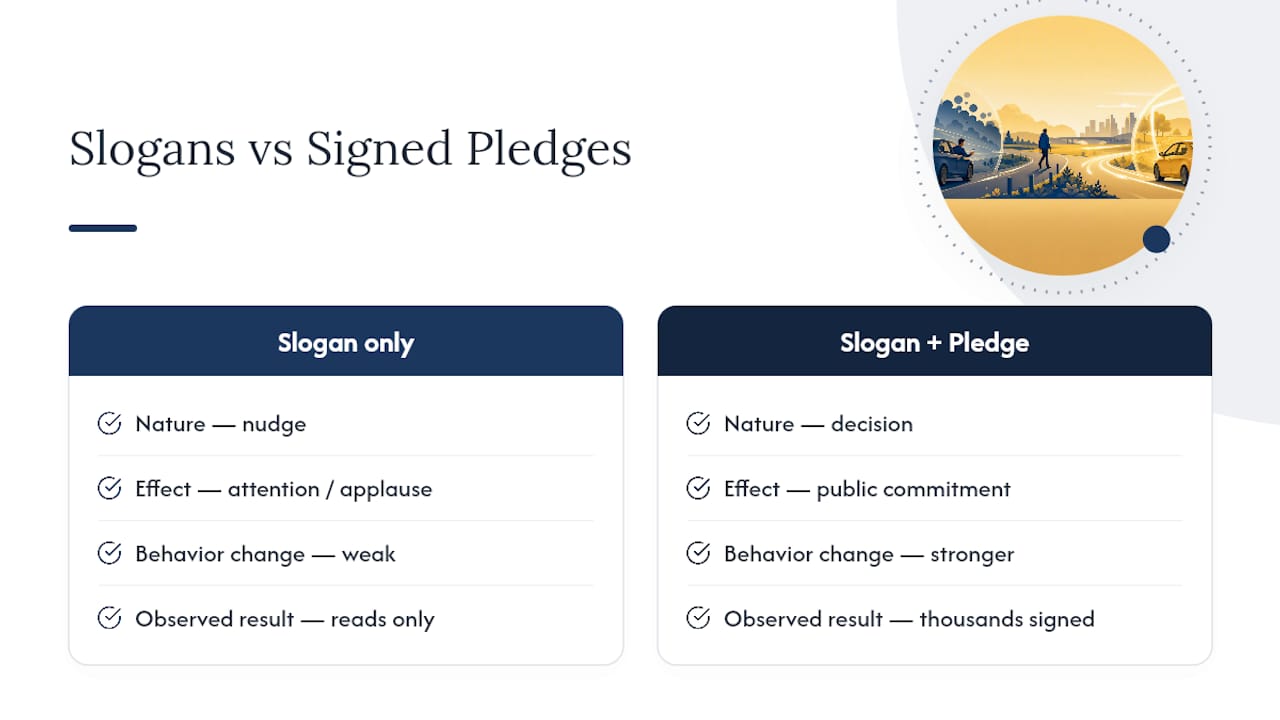
That gap is worth closing. If a slogan resonates, the next step should always be an action, not applause. Use the materials, adapt the language for your community, and invite people to put their name behind it.
Bring These Slogans to Life With Drive With Care Resources
A slogan on a flyer only goes so far. Drivewithcare turns that same line into a tracked commitment, giving community groups, schools, and fleets a way to convert a catchy phrase into a signed promise instead of a poster nobody remembers past the first week.
Three resources make that jump easy. The Drive With Care Safety Pledge lets anyone commit publicly to the behavior your slogan describes, whether that’s putting the phone away or buckling up every trip. The teen driving contract gives families a structured agreement to pair with any new-driver slogan. And the safety awareness and campaign resources hub has downloadable posters and messaging you can adapt for your own school, workplace, or neighborhood.
Pick the slogan that fits your audience, then send them straight to the pledge page to make it stick.
Frequently Asked Questions
What makes a safe driving slogan memorable?
Short length, an action verb, and rhythm or rhyme. “Click It or Ticket” outperforms longer explanations because it sounds like a beat, not a lecture.
What are some good distracted driving poster ideas?
Pair a line like “A Text Can Wait. A Life Can’t.” with a visual of a phone locked away, and add a QR code linking to a pledge for measurable follow-through.
How do I create a road safety poster that actually gets noticed?
Use high contrast colors, one short line per poster, a large readable font, and place it where drivers are already looking, like school zones or hazard curves.
Can slogans really reduce distracted driving or speeding?
On their own, no. Slogans work as reminders, but pairing them with enforcement campaigns, pledges, or contracts is what NHTSA and Drive With Care campaigns consistently rely on to shift behavior.
Where should I place safe driving messages for the biggest impact?
Physical spots include school zones, hazard curves, and vehicle headrests. Digital spots include email footers, social banners, and in-app alerts, since phones are already in hand at those moments.

