
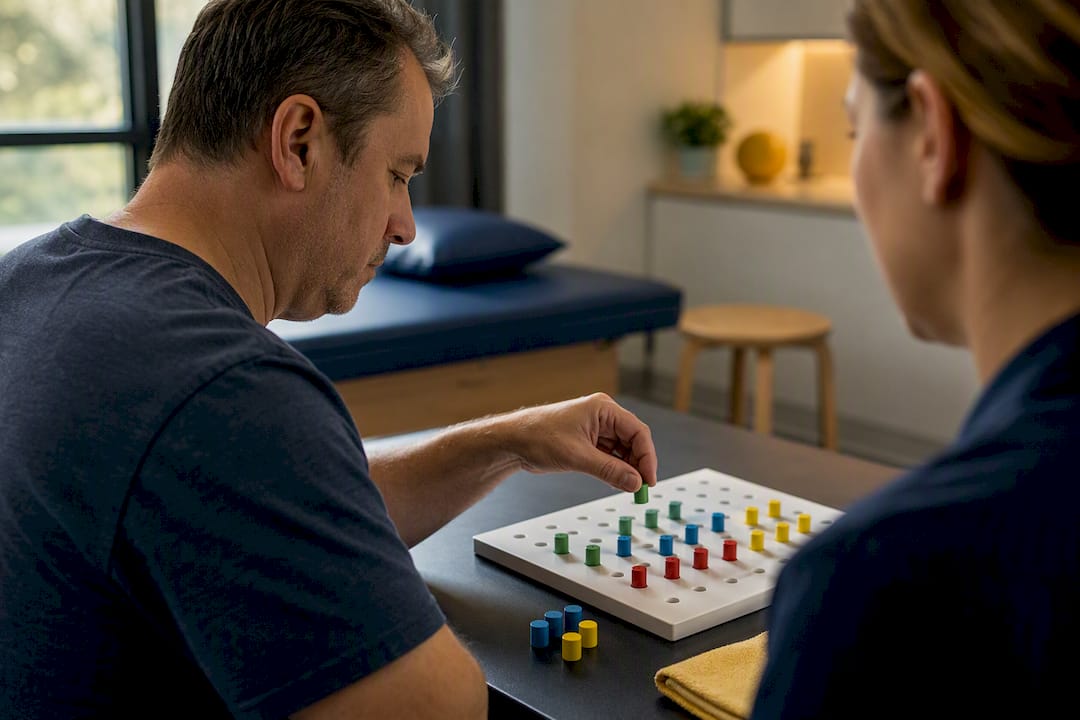
Neuroplasticity enables measurable recovery after brain injury, but results vary widely, and the biggest predictor isn’t luck. Early medical stabilization, repeated task-focused practice, and lifestyle supports like sleep and aerobic exercise are the actions that most reliably help the brain rewire itself. Recovery can also stall or move in the wrong direction if compensatory habits harden too soon. The single most important next step: start structured, task-specific practice as early as a clinician clears you, and keep it frequent rather than occasional.
TL;DR:
- Structured, task-specific practice should begin as early as medically safe, with high frequency and incremental difficulty to maximize neuroplasticity gains.
- Recovery phases differ biologically, with the subacute window offering the most opportunity for effective intervention before gains slow in the chronic stage.
- Neuroplasticity involves mechanisms like axonal sprouting, network reorganization, and neurogenesis, which do not directly correlate with lesion size but depend on network-level changes.
- Maladaptive plasticity, such as learned nonuse or chronic pain circuits, can hinder recovery if early habits become ingrained, requiring varied and graded practice to counteract these effects.
- Long-term success depends heavily on emotional and social support to sustain motivation, consistent practice, and the avoidance of overexertion or premature compensatory habits.
Table of Contents
- What Neuroplasticity Means for Brain Injury Recovery
- The Recovery Timeline: Acute, Subacute, and Chronic Phases
- How the Brain Actually Rewires: Sprouting, Diaschisis, and Network Reorganization
- Rehabilitation Approaches That Put Neuroplasticity to Work
- Daily Exercises and Habits That Support Brain Recovery
- Neuromodulation, Robotics, and Other Emerging Therapies
- When Plasticity Works Against Recovery
- Setting Realistic Expectations for TBI Recovery
- Drivewithcare’s Role in Supporting Long-Term Recovery
- The Perspective Conventional Rehab Advice Misses
- Support Recovery Through Drivewithcare
- Sources
- FAQ
What Neuroplasticity Means for Brain Injury Recovery
Neuroplasticity is the nervous system’s capacity to reorganize its structure, connections, and function in response to experience, injury, or therapy. After a traumatic brain injury, this isn’t a bonus feature. It’s the actual mechanism behind every meaningful gain a survivor makes, from relearning to speak clearly to regaining fine motor control in a hand.
Clinically, plasticity after TBI unfolds across three recognized windows: acute, subacute, and chronic. Each phase involves different biology, and each one produces a different category of outcome, according to a clinical overview from the NCBI Bookshelf. Understanding those categories reframes what “recovery” even means:
- Restorative plasticity rebuilds function close to pre-injury baseline by reactivating or repairing existing circuits.
- Neutral plasticity produces reorganization that doesn’t clearly help or hurt function, essentially structural noise.
- Maladaptive plasticity locks in compensatory patterns that work in the short term but limit long-term recovery or create new problems, like chronic pain circuits.
None of this is guesswork anymore. Functional MRI can show which brain regions activate during a task before and after therapy. Diffusion tensor imaging (DTI) tracks the integrity of individual white matter tracts, revealing whether an injured pathway is healing or a new one is compensating. PET imaging adds metabolic detail neither can capture alone. Clinicians increasingly use these tools together, since each one has real limits on its own.
For families, the takeaway is concrete: the brain after TBI isn’t simply “damaged” in a fixed sense. It’s actively reorganizing, and the direction of that reorganization responds to what happens next in terms of medical care, therapy, and daily habits.
The Recovery Timeline: Acute, Subacute, and Chronic Phases
Plasticity doesn’t behave the same way on day one as it does six months later. Rehabilitation that ignores this timeline wastes effort or, worse, pushes too hard at the wrong biological moment.
- Acute phase (first 48 hours). The priority here is medical stabilization, not rehab exercises. Cortical inhibition actually drops in this window, which can temporarily unmask secondary neural networks, according to detailed mechanistic findings on TBI plasticity. Controlling swelling, oxygenation, and blood pressure matters more right now than any cognitive drill.
- Subacute phase (roughly the first several weeks). This is when synaptogenesis, the formation of new synaptic connections, ramps up, and cortical pathways gradually shift from inhibitory to more excitatory states. Task-specific rehab typically starts here, once a clinician confirms medical stability. Starting too early risks aggravating inflammation; waiting too long wastes a biologically favorable window.
- Chronic phase (weeks to months, sometimes longer). Structural remodeling continues, but gains slow down and become more incremental. This is not a plateau to fear. It’s the phase where consistent, moderately challenging practice yields the most durable, functional improvements, even if progress feels less dramatic day to day.
Recognizing which phase a survivor is in helps caregivers calibrate expectations and avoid pushing intensity before the brain is ready for it.
How the Brain Actually Rewires: Sprouting, Diaschisis, and Network Reorganization
Recovery happens at multiple biological scales simultaneously, and this is where a lot of oversimplified explanations fall short.
At the synaptic level, two competing processes are always running. Hebbian plasticity strengthens connections between neurons that fire together repeatedly, which is the biological basis for “practice makes permanent.” Homeostatic plasticity works in the background to keep overall neural activity balanced, weakening unused connections so the system doesn’t spiral into overexcitation.
Zoom out further and three additional mechanisms come into play, detailed in the same NCBI clinical chapter on TBI:
- Axonal sprouting, where surviving neurons grow new branches to form connections that partially replace damaged pathways.
- Dendritic remodeling and neurogenesis, adding new receiving structures and, in limited regions, new neurons themselves.
- Diaschisis, a temporary functional shutdown in areas connected to but physically distant from the injury site, which can reverse as swelling and inflammation subside.
- Vicariation, where a different brain region gradually takes over a function the damaged area used to handle.
This is precisely why lesion size on a scan doesn’t reliably predict how someone will function. A person with a smaller lesion in a highly connected network hub can struggle more than someone with a larger lesion in a less integrated area. Outcomes track network-level reorganization far better than raw damage volume, a point emphasized in research framing rehabilitation as network perturbation. That’s also the scientific rationale behind therapies like robotics and neuromodulation: they’re designed to nudge a disrupted network toward a more adaptive configuration, not just strengthen one isolated muscle or circuit.
Rehabilitation Approaches That Put Neuroplasticity to Work
Every effective rehab strategy after TBI rests on four overlapping principles: repetition, task specificity, progressive challenge, and personal relevance. Miss any one of these and progress slows, even with hours of well-intentioned effort.
Repetition drives Hebbian strengthening. A single session of forty repetitions does more for a motor pathway than four sessions of ten. Task specificity matters because the brain reorganizes around the exact demands placed on it. Practicing a general arm swing doesn’t transfer well to buttoning a shirt. Practicing buttoning a shirt does. Progressive challenge keeps the difficulty just past the current skill ceiling, since tasks that are too easy stop producing new learning and tasks that are too hard produce frustration and disengagement. Relevance matters more than most rehab programs admit. Practicing a task the survivor actually cares about, brushing a pet, texting a grandchild, holding a coffee mug, recruits attention and motivation in ways generic exercises never will.
In practice, this shows up in several named approaches:
- Constraint-induced movement therapy (CIMT) restrains the unaffected limb, forcing intensive use of the weaker one. It’s one of the better-studied motor interventions for hemiparesis after brain injury.
- Repetitive task training breaks a functional goal, like transferring from bed to chair, into a specific movement sequence practiced dozens of times per session.
- Virtual reality (VR) training creates a controlled, gamified environment for motor or cognitive practice, increasing repetition volume and giving immediate feedback that keeps survivors engaged longer than rote drills.
- Cognitive training targets attention, memory, and executive function through structured, graded tasks rather than generic brain games.
- Coordinated PT, OT, and speech-language programs matter because deficits after TBI rarely stay in one lane; a memory problem affects how someone follows a physical therapy instruction, and a motor deficit affects how independently someone can practice a cognitive task at home.
Evidence supports early, organized, interprofessional rehabilitation combining these approaches, with clinical reviews consistently favoring structured, phase-appropriate programs over isolated, unimodal exercises.
Pro Tip: When you talk to a rehab team, ask specifically how many repetitions per session a task is being practiced and how the difficulty will progress week to week. Vague answers like “we’ll do some exercises” are a signal to ask for a more concrete plan.
Daily Exercises and Habits That Support Brain Recovery
Formal therapy sessions matter, but they’re a small fraction of a survivor’s week. What happens between sessions often determines whether gains stick.
- Break motor tasks into graded steps. Instead of attempting to fully button a shirt, practice just pinching the button, then aligning it with the hole, then pushing it through. Errorful learning, meaning the survivor is allowed to struggle and self-correct rather than being immediately assisted, actually strengthens the learning process more than constant hand-holding.
- Deliberately use the affected limb for simple, low-stakes tasks like stirring food or holding a phone, even when the unaffected side would be faster. This directly counters learned nonuse, one of the more common maladaptive patterns after TBI.
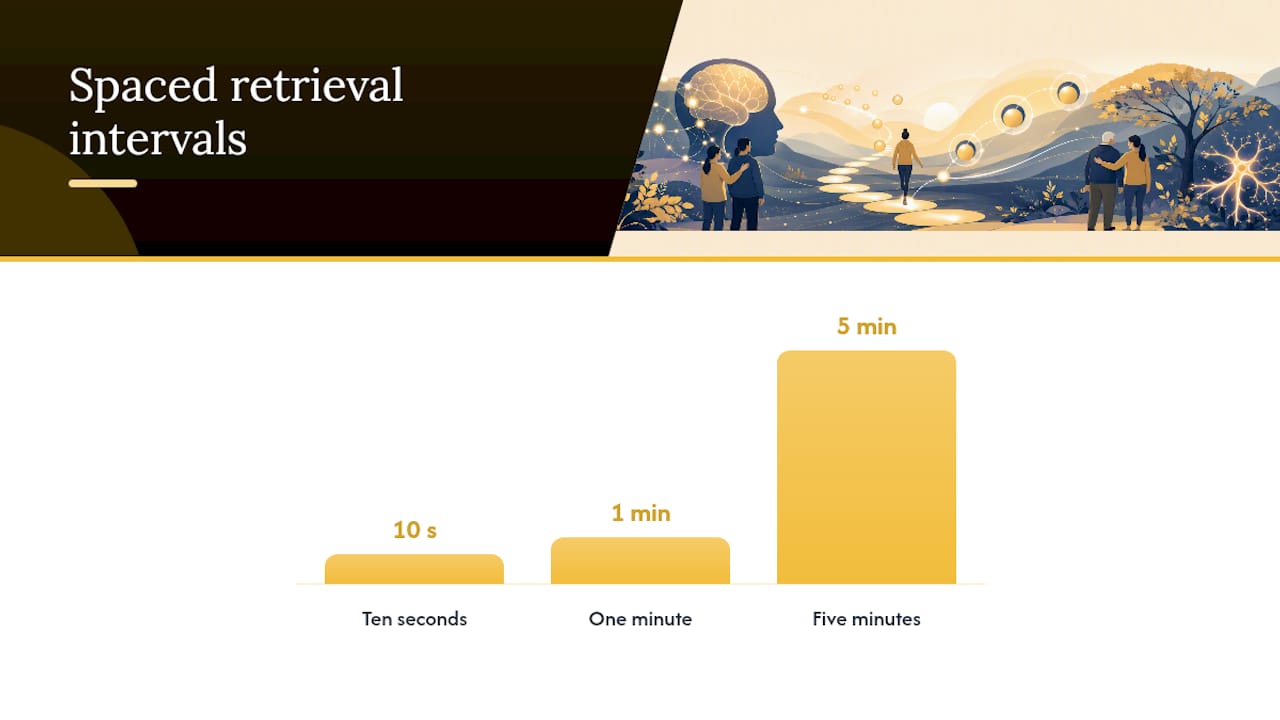
- Use spaced retrieval for memory practice. Ask the survivor to recall a piece of information at increasing intervals, ten seconds, then a minute, then five minutes, rather than repeating it immediately. This mirrors how the Drivewithcare guidance on memory loss after concussion recommends caregivers approach day-to-day memory support.
- Layer in dual-task practice once single tasks feel manageable, like walking while naming items in a category. Real life rarely asks the brain to do one thing at a time, and rehab should eventually reflect that.
- Protect aerobic exercise time. Moderate aerobic activity raises brain-derived neurotrophic factor (BDNF), a protein that supports neuronal survival and helps new connections form, according to research on exercise and neuroplasticity. Even a daily 20 minute walk, cleared by a physician, contributes meaningfully here.
- Guard sleep aggressively. Memory and motor consolidation happen largely during sleep, and skipping it undermines a full day of good rehab work.
- Rotate in novelty. Practicing the same drill in the exact same way every day produces diminishing returns. Changing the environment, the object used, or the sequence keeps the brain engaged in active problem-solving rather than rote repetition.
Pacing deserves its own mention. Fatigue after TBI isn’t ordinary tiredness. It can trigger headaches, irritability, or a temporary worsening of cognitive symptoms, and pushing through it often backfires. Watch for slowed speech, increased confusion, or sudden mood shifts as signals to stop and rest, and use a concussion and TBI red flag checklist to know when a symptom warrants an urgent call to a clinician rather than a simple break.
Pro Tip: Keep sessions short and frequent rather than long and occasional. Four ten-minute practice blocks spread across a day typically beat one forty-minute block for consolidation, since fatigue erodes the quality of practice well before the clock says it should.
Neuromodulation, Robotics, and Other Emerging Therapies
Beyond standard rehab, a growing set of tools aim to give the brain an extra push toward adaptive reorganization. The evidence for these is real but uneven, and none of them replace foundational task-specific practice.
- Transcranial magnetic stimulation (TMS) and transcranial direct current stimulation (tDCS) are noninvasive neuromodulation techniques that adjust cortical excitability in targeted regions, aiming to make the brain more receptive to therapy delivered around the same session. Evidence is encouraging in specific motor and mood applications but inconsistent enough that most reviews still call it adjunctive rather than standalone.
- Pharmacologic agents are sometimes used to modulate arousal, attention, or mood during rehab, but current clinical support for using drugs specifically to accelerate plasticity remains limited and highly individualized.
- Virtual reality and robotic-assisted devices increase the sheer volume of practice a survivor can get and add real-time feedback that human therapists can’t always match minute to minute. Robotic exoskeletons, for example, can guide a weak limb through hundreds of repetitions in a single session.
- Brain-computer interfaces (BCIs) translate neural signals directly into device commands, offering a path to functional independence even when motor pathways remain severely damaged. This field is advancing quickly but is still largely confined to research and specialty centers.
The unifying idea behind all of these tools is what researchers call network perturbation: a well-timed, well-targeted nudge can steer a disrupted brain network toward a more functional configuration, according to analysis of neurorehabilitation technology. Readers curious about the engineering side of this field can explore programs like the Master in Neurotechnology at Metapilot Academy, which covers how these devices are designed and studied. Selection of any adjunct therapy should happen with a clinician who understands both the survivor’s specific deficits and the current evidence base, since a tool that helps one person can be irrelevant or even counterproductive for another.
When Plasticity Works Against Recovery
Not every neural adaptation helps. The same mechanisms that rebuild function can just as easily entrench a bad pattern if therapy doesn’t intervene early enough.
- Learned nonuse develops when a survivor relies so heavily on an unaffected limb that the neural pathways for the affected one weaken further from disuse, not just the original injury.
- Chronic pain circuits can form when maladaptive reorganization amplifies pain signaling long after tissue has healed, according to clinical evidence on stroke and TBI plasticity.
- Rigid compensatory habits, like always turning the whole body instead of the neck to look sideways, become mechanically inefficient and hard to unlearn the longer they persist.
The clinical countermeasures are fairly consistent: varied practice that prevents any one compensatory shortcut from becoming automatic, graded exposure that reintroduces the affected side gradually rather than avoiding it, and periodic interprofessional review so a physical therapist, occupational therapist, and physician stay aligned on whether current strategies are helping or hardening a limitation. If progress stalls for several weeks, or a survivor seems to be relying on more, not less, on a workaround, that’s a reasonable trigger to request a formal re-evaluation rather than assuming things will self-correct.
Setting Realistic Expectations for TBI Recovery
Recovery trajectories after TBI vary enormously, and that variability isn’t a sign that something is being done wrong. It reflects genuine biological differences between individuals.
- Injury severity and location remain the strongest single predictors. A mild concussion and a severe diffuse axonal injury simply do not follow comparable timelines, and comparing one survivor’s recovery to another’s rarely gives useful information.
- Age plays a measurable role, with younger brains generally showing more plasticity capacity, though this is a tendency, not a rule that guarantees faster recovery for every younger patient.
- Comorbidities and rehabilitation intensity interact heavily. Someone managing diabetes, prior stroke, or depression alongside a new TBI often needs a more carefully paced program, while consistent, well-dosed therapy tends to outperform sporadic high-intensity bursts.
- Genetics and baseline cognitive reserve also shape outcomes, though these are harder to measure or plan around in a typical clinical setting.
Practically, this means goal setting should center on specific functional milestones, like independently preparing a simple meal or walking a fixed distance unassisted, rather than vague benchmarks like “getting back to normal.” Track progress in small, observable increments, and expect the pace of visible improvement to slow in the chronic phase even as underlying remodeling continues. That slowdown is not the same thing as recovery stopping.
Drivewithcare’s Role in Supporting Long-Term Recovery
Drivewithcare exists because brain injury recovery rarely stays confined to a clinic. Through the Safer Roads Now initiative, the organization pairs survivor stories and community education with the kind of practical resources caregivers actually need day to day, including an emotional and psychological support guide for the mental toll recovery takes on families. That guide complements clinical rehab rather than replacing it, addressing the anxiety, grief, and relationship strain that often accompany a long recovery. The organization also supports neurological research into brain injury and memory loss, connecting everyday prevention efforts with the science behind evolving treatment.
The Perspective Conventional Rehab Advice Misses
Most articles on this subject treat neuroplasticity like a guaranteed outcome. Do the exercises, follow the protocol, and the brain rewires itself. That framing undersells how much maladaptive plasticity actually happens in real recovery, quietly, without anyone naming it until a bad habit is already load bearing.
The bigger gap, though, is emotional. Rehabilitation research is precise about repetitions, dosing, and phase timing, but it says almost nothing about what happens when a survivor stops showing up to sessions because they feel hopeless, or a caregiver burns out and stops enforcing the home program. Motivation and mood aren’t soft add ons to recovery. They determine whether the neurologically ideal protocol ever actually gets practiced consistently enough to matter.
If there’s one thing worth prioritizing above any specific exercise, it’s building a support structure, clinical and emotional, that keeps practice consistent through the inevitable weeks when progress feels invisible. The biology rewards persistence more than intensity.
— Charles
Support Recovery Through Drivewithcare
Clinical rehab and home exercises drive the neurological side of recovery. What often gets overlooked is the financial and emotional infrastructure behind that recovery, and that’s where Drivewithcare fills a gap the clinic can’t. Every donation directly funds survivor support resources and neurological research into brain injury and memory loss, the kind of research that shapes tomorrow’s rehab protocols.

You can contribute in a few ways. A one-time gift through Donate Now ranges from $10 to $250 and goes straight toward survivor and caregiver programs. Organizations wanting a deeper partnership can explore the Safety Supporter Partnership at $250, or step up to the Community Safety Partner Partnership at $1,500 for broader community reach. None of this replaces medical care or licensed therapy. It funds the resources and research that make that care more effective over time. Start with the donation page that fits your situation and see exactly where the support goes.
This article is general information, not a substitute for advice from a qualified doctor. Consult a qualified healthcare professional about your own circumstances before acting on anything here.
Sources
- Neuroplasticity – StatPearls – NCBI Bookshelf
- Article on exercise, BDNF and neuroplasticity (PMC)
- Adaptive neuroplasticity in brain injury recovery (PMC)
- Neurorehabilitation as Network Perturbation: Shaping Neuroplasticity with Robotics, Virtual Reality, and Neuromodulation
FAQ
What Is the Typical Recovery Timeline After a Severe Brain Injury?
Recovery unfolds across acute (first 48 hours), subacute (weeks), and chronic (weeks to months) phases, with each stage involving different biological processes, as outlined in clinical neuroplasticity research. Severe injuries often see the most dramatic changes in the subacute phase, followed by slower, incremental gains for months or longer during the chronic phase.
Is Brain Damage Always Permanent?
Not necessarily. Neuroplasticity allows the brain to reorganize and often restore function through alternate pathways, though outcomes range from full restorative recovery to neutral changes to maladaptive patterns, depending on the injury and the rehabilitation that follows. Severity, location, and how quickly structured therapy begins all shape whether a deficit becomes permanent or improves substantially.
How Long Does Short-Term Memory Recovery Take After a Brain Injury?
Memory recovery timelines vary enormously depending on injury severity and which brain regions were affected, and there’s no single fixed number that applies to everyone. Consistent strategies like spaced retrieval practice, discussed in Drivewithcare’s guidance on memory loss after concussion, support gradual improvement, though some memory changes can persist long term.
Should Brain Injury Be Treated as a Chronic Condition?
For many survivors, especially after moderate to severe TBI, yes. Ongoing management of cognitive, physical, or emotional symptoms often continues well past the initial recovery window, similar to how other chronic health conditions are managed over years rather than resolved in a single treatment episode.
How Can Neuroplasticity Actually Help Recovery Day to Day?
Neuroplasticity aids recovery by letting the brain form new connections and strengthen surviving pathways through repeated, meaningful practice, exactly the mechanism behind therapies like CIMT and task-specific training discussed above. It works best when combined with medical stability, quality sleep, and aerobic exercise, which supports the BDNF release documented in exercise research.

