
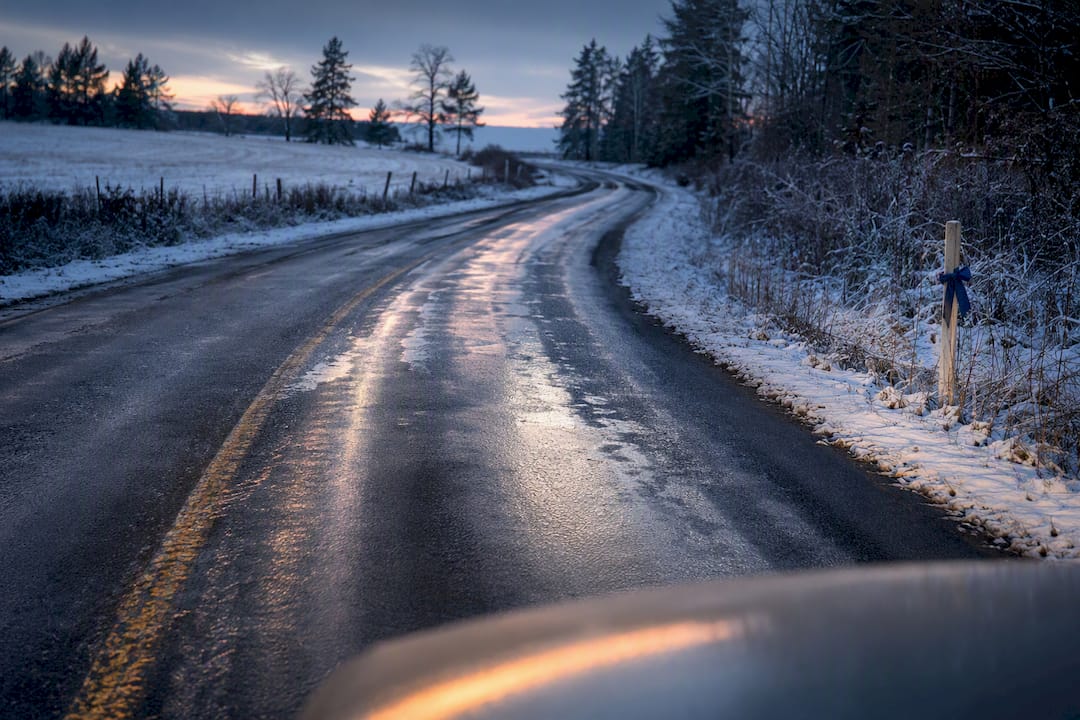
The best way to avoid a holiday driving crash is simple: plan your route and departure time before you leave, get your vehicle road-ready, and never get behind the wheel impaired or drowsy. Add a designated sober driver and a five-minute tire and fluid check, and you’ve cut most of the risk that spikes every holiday season, according to NHTSA and the CDC.
TL;DR:
- Ensure your tires are properly inflated and have sufficient tread depth, especially in cold weather, to prevent dangerous blowouts.
- Keep at least half a tank of fuel to avoid condensation buildup and buffer in case of traffic delays or stalls.
- Plan your route and departure time to avoid peak traffic and check weather conditions across the entire journey to prevent surprises.
- Assign a sober driver and confirm ride-sharing arrangements beforehand to reduce the risk of impaired driving accidents.
- Conduct quick vehicle checks, such as battery load testing and light inspection, before leaving, and pack an emergency kit with essential supplies.
Table of Contents
- Quick Holiday Driving Safety Checklist You Can Use Right Now
- Before You Go: Vehicle Maintenance and What to Pack
- How Do You Stay Safe Driving in Holiday Traffic and Bad Weather?
- Keeping Kids and Passengers Safe on Holiday Trips
- What to Do If Something Goes Wrong on the Road
- Drive With Care Resources You Can Use Today
- Why Most Holiday Safety Advice Misses the Point
- Sources
Quick Holiday Driving Safety Checklist You Can Use Right Now
Print this or screenshot it. These are the items that move the needle most, in the order that makes sense to tackle them.
- Map your route and set a departure time that avoids peak congestion windows
- Check tire pressure and tread depth
- Test your battery if it’s more than three years old
- Fill the gas tank before you leave, not when the light comes on
- Pack an emergency kit (see the full list below)
- Secure loose cargo, gifts, and luggage so nothing becomes a projectile
- Buckle every seat belt, every seat, every time
- Set your phone to Do Not Disturb before you start driving
- Line up a sober driver or rideshare option in advance
- Check the weather forecast for your entire route, not just your starting point
Do the vehicle checks and route planning the night before. Do the phone settings and sober-ride confirmation the hour before you leave.
Statistic Callout: Holiday travel periods carry a higher rate of traffic fatalities per mile driven than an average week, and alcohol involvement in fatal crashes climbs during major holidays, according to the National Safety Council. Buckling up remains one of the single most effective ways to survive a crash you can’t avoid, which is why NHTSA leads its holiday guidance with seat belts and sober driving.
Before You Go: Vehicle Maintenance and What to Pack
A car that’s fine for a daily commute isn’t automatically fine for six hours on the interstate with a full trunk. Cold weather punishes weak batteries and underinflated tires faster than any other season, so the pre-trip check matters more in December than in June.
- Tires — check pressure when tires are cold and inspect tread depth; cold air drops PSI fast, and a tire that looked fine in October can be dangerously low in January.
- Battery — batteries lose a meaningful chunk of their cranking power in freezing temperatures, so have it load-tested if it’s aging.
- Lights and wipers — replace worn wiper blades and confirm every light works, including brake lights, since holiday driving often means dawn or dusk departures.
- Fluids — check oil, coolant, and washer fluid, and confirm your defroster clears the windshield quickly.
- Fuel strategy — keep the tank at least half full in cold weather; a fuller tank reduces condensation risk and gives you a buffer if traffic stalls for hours.
- Load limits — don’t stack the trunk and back seat so high that visibility or handling suffers.
Your emergency kit should include a blanket, bottled water, a phone charger and backup battery, a flashlight, jumper cables, and traction material like cat litter or sand for icy shoulders. Keep a printed copy of your insurance card and emergency contacts in the glovebox in case your phone dies. Simple items like belts, fluids, and wipers you can check yourself in ten minutes. Anything involving the battery’s actual health or brake wear is worth a quick stop at a service shop before a long trip, not a guess.
How Do You Stay Safe Driving in Holiday Traffic and Bad Weather?
Slow down before conditions demand it, not after. A basic rule: add one full second of following distance for every adverse condition stacked on top of normal traffic (rain, dark, unfamiliar roads), and double your distance on any road with visible ice.
Fatigue kills as quietly as alcohol does. Medical experts warn that drowsy driving can impair reaction time similarly to driving drunk, and that’s not a metaphor, according to the Mayo Clinic. Rotate drivers every two hours on long trips, pull into a rest stop the moment you catch yourself drifting, and skip sedating cold or allergy medication before you drive, even the over-the-counter kind.
Impairment isn’t limited to alcohol, but alcohol still drives the holiday spike in fatal crashes. If you’re hosting, collect keys early and have a rideshare number ready for anyone who’s been drinking. If you’re the one going out, book the ride home before you book the first drink.
Distraction is manageable if you handle it before the car moves:
- Set your navigation and playlist before pulling out of the driveway
- Turn on Do Not Disturb or a driving-mode app
- Give an older kid or passenger the job of handling texts and directions
Pro Tip: Check the weather for your entire route the morning of departure, not just your local forecast. A clear sky at home means nothing if there’s a squall waiting two states away. Tools like 511 traffic services and mapping apps with live traffic layers can warn you early enough to delay departure instead of driving into it.
Keeping Kids and Passengers Safe on Holiday Trips
Car seats and boosters need a real check before a long trip, not just a glance. Keep kids in thin layers under the harness, since bulky winter coats compress in a crash and leave straps dangerously loose, a point pediatric safety guidance from the American Academy of Pediatrics stresses every winter.
- Assign one adult to manage young kids so the driver isn’t twisted around at 65 miles per hour
- Pack activities and snacks within easy reach before you start moving, not mid drive
- Secure wrapped gifts and luggage in the trunk or cargo area, not loose on the back seat
- Plan an overnight stop on trips longer than six or seven hours with young children, since fatigue in a driver managing a car full of restless kids compounds fast
A five-minute stop to fix a slipping strap beats an hour of a screaming toddler and a distracted driver.
What to Do If Something Goes Wrong on the Road
Most holiday incidents fall into two buckets: breakdowns and crashes. Both go better with a plan.
- If your car breaks down, get it off the traveled lane if you can move safely; “steer it, clear it” applies to minor incidents in light traffic.
- If a crash is serious, injuries are involved, or moving the car isn’t safe, stay put, turn on hazards, and call 911 rather than risk walking on a live highway.
- Once safe, photograph the scene, exchange insurance information, and collect contact details from any witnesses.
- Watch for concussion or brain injury symptoms, including confusion, headache, or nausea, and treat any of them as urgent even if the crash felt minor.
| Situation | First move | Key resource |
|---|---|---|
| Stuck on ice or snow | Use traction material, stay with the vehicle | Emergency kit |
| Minor fender bender | Move to shoulder, exchange info, photograph scene | What to do after an accident |
| Possible head injury | Seek medical evaluation immediately | Concussion/TBI checklist |
| Stranded overnight | Run engine intermittently for heat, crack a window | Emergency kit |
Drive With Care Resources You Can Use Today
Drivewithcare built its Safer Roads Now initiative around the fact that human error, not mechanical failure, causes the overwhelming majority of crashes. That’s why the organization’s tools focus on behavior, not just gear.
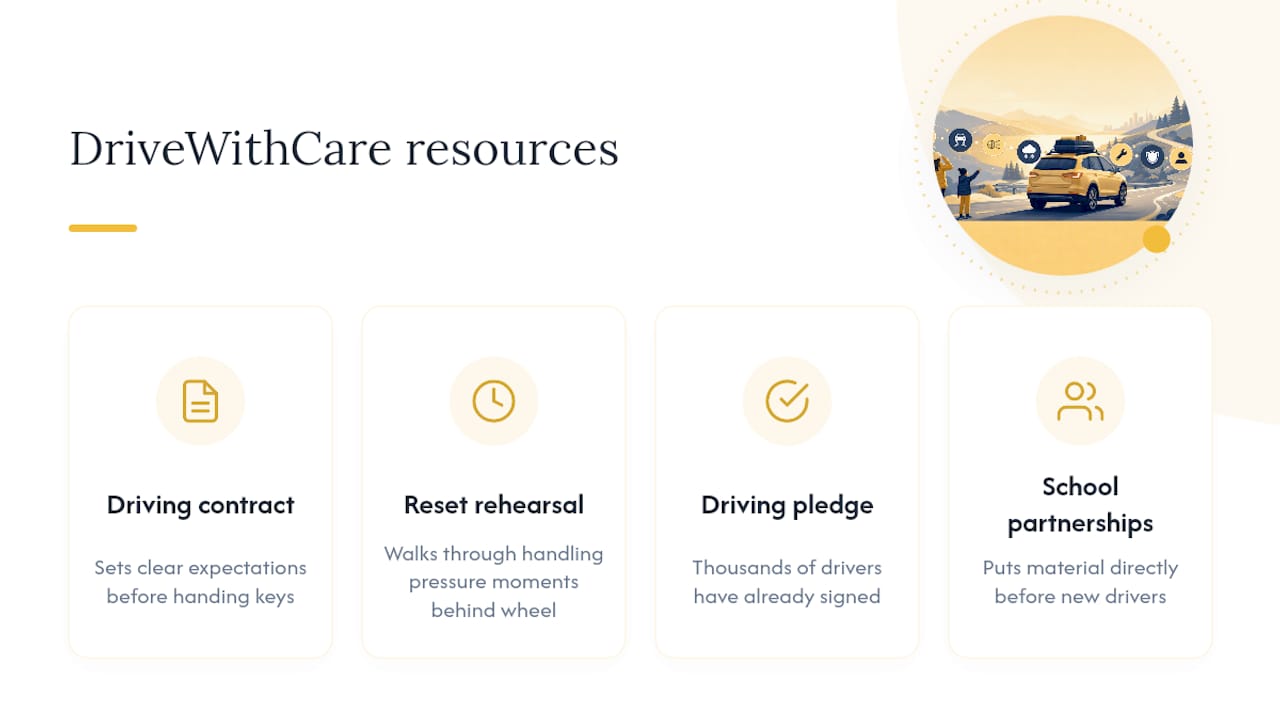
Families can use the safe driving contract between teen drivers and parents to set clear expectations before handing over keys, and the safety reset rehearsal walks through how to handle pressure moments behind the wheel. Drivewithcare’s broader safety awareness programs include a driving pledge that thousands of drivers have already signed, plus partnerships with driving schools that put this material directly in front of new drivers.
Why Most Holiday Safety Advice Misses the Point
Most holiday driving advice reads like a checklist because it’s easy to write and easy to nod along to. Check your tires, buckle up, don’t drink and drive. All true, all necessary, and all incomplete on their own.
What the research actually supports is that behavior change beats gear and gadgets. NHTSA and the National Safety Council keep coming back to the same handful of human decisions: sobriety, seat belts, rest. Those aren’t glamorous, but they explain most of the variance in whether a holiday trip ends normally or ends in an emergency room.
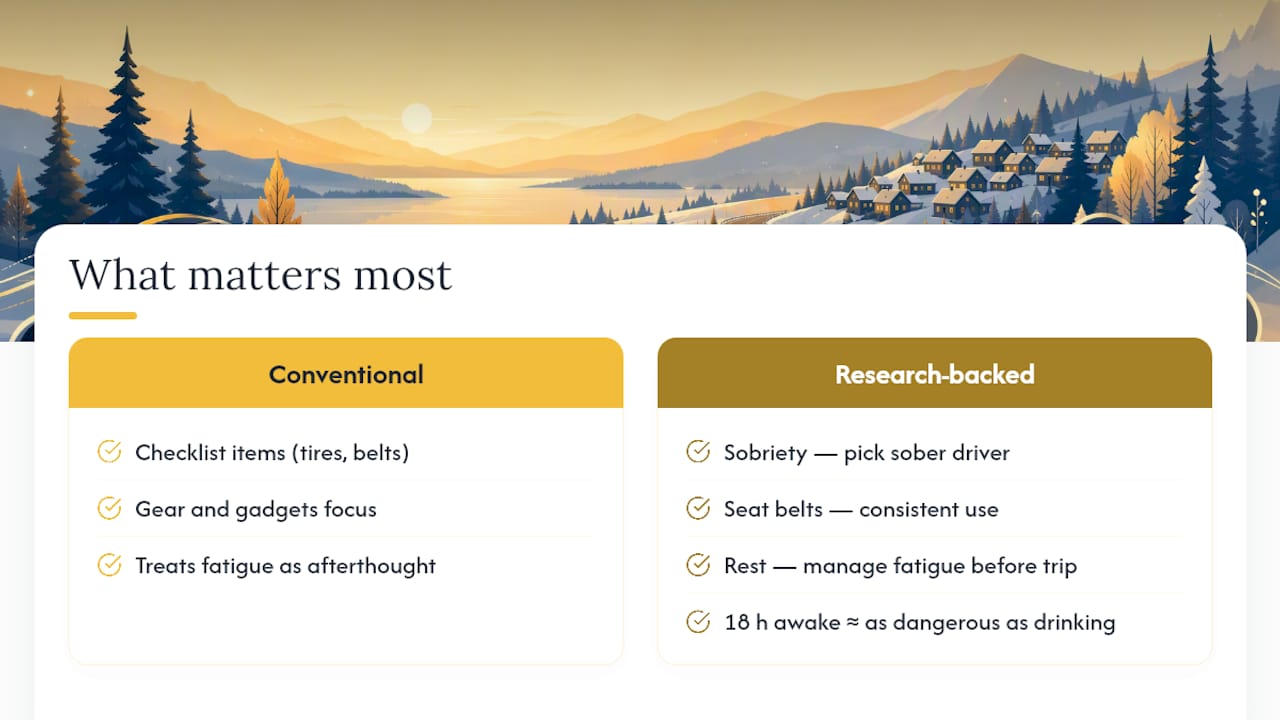
Where conventional advice falls short is treating fatigue as an afterthought behind drunk driving. It shouldn’t be. A driver who’s been awake for eighteen hours can be functionally as dangerous as one who’s been drinking, and almost nobody plans for it the way they plan a designated driver.
If you take one thing from this article, make it this: decide who’s driving sober and how you’ll manage fatigue before you leave the driveway, not somewhere on I-95 at midnight.
— Charles
Ready to commit to safer habits beyond this trip? Drivewithcare’s pledge and program resources give you tools that outlast one holiday season, and if you’ve been in a crash and need support, the organization’s emotional and psychological support resources are built specifically for survivors and their families.
Sources
- Thanksgiving Travel Safety Tips — NHTSA
- Holiday safety — National Safety Council
- Traveling holidays safety — CDC
- Mayo Clinic Minute: Holiday driving safety tips — Mayo Clinic

