
My driving pressure profile on emotional regulation, impulsivity, and judgement

Self-check from Safety Behind the Wheel Foundation

61. You just had a bad argument with a parent, friend, or partner. You are angry, embarrassed, and want to leave. You have the keys.

What are you most likely to do?

62. You are driving somewhere unfamiliar. Your GPS keeps changing directions, traffic is heavy, and you feel your stress rising.

What would you most likely do?

63. You are approaching an intersection. The light turns yellow. You are close enough that you have to make a quick decision.

What sounds most like you?

64. You are behind someone driving below the speed limit. You are already running late, and there is no easy way around them.

What are you most likely to do?

65. You are driving with friends. Someone jokes, “You drive like an old person,” or “Come on, go faster.”

What would you most likely do?

66. You have been driving for a while and have not had any serious problems. You start feeling more comfortable behind the wheel.

Which thought sounds most like you?

67. Your friends are doing something risky — a dare, a stunt, sneaking somewhere, using substances, or doing something that could get people hurt or in trouble.

What are you most likely to do?

68. Think about the last time you had an “almost” moment while driving or riding with someone — almost missed a turn, almost hit the brakes too late, almost got distracted, almost went too fast, almost ignored a risk.

What happened next?

69. You are late for school, work, practice, or an event. You know people are waiting on you.

What are you most likely to do?

70. You are upset, angry, or hyped up, and you put on music that matches your mood.

What usually happens?

71. Two passengers in your car start arguing, laughing loudly, filming, or messing around. You are trying to focus.

What would you most likely do?

72. You accidentally cut someone off or make a driving mistake. The other driver honks or gestures at you.

What are you most likely to do?

Special thanks to our contributors

We appreciate the professionals, experts, and community members who share their knowledge and perspectives to help make this resource better. Your insights are always welcome and appreciated.

Have professional expertise, firsthand experience, or a perspective that could make this resource better?

We welcome your input. Your knowledge and experience can help us make this resource more useful, accurate, and meaningful to the people who rely on it.

    Your contribution; thank you for taking the time to share your expertise with us. We truly appreciate your help in making this resource better.

    If there is a link, example, reference, resource, or other information you think may be helpful, please feel free to include it.

    About you; help readers see the expertise behind your contribution.

    Please use your personal profile link. To help keep recognition professional, including your LinkedIn is at the discretion of the foundation. Thank you for understanding.
    How would you like to be recognized?
    If your contribution helps improve this resource, you may recognize me by name and professional title in the Contributors section of this page. My organization and LinkedIn may also be included if I selected those options above.You may use my contribution to improve this resource without displaying my name, title, or organization.

    Thank you for helping us make this resource stronger and more useful for everyone.

    We review contributions before making changes. Recognition does not imply endorsement by Safety Behind the Wheel Foundation of any individual, organization, product, or service.

    ⏱️ Safety education impact:
    People reached 1,864

    Keep learning

    Safe Driving Resource Center

    Guides, self-checks and articles for drivers, parents of new drivers, and families recovering after a crash.
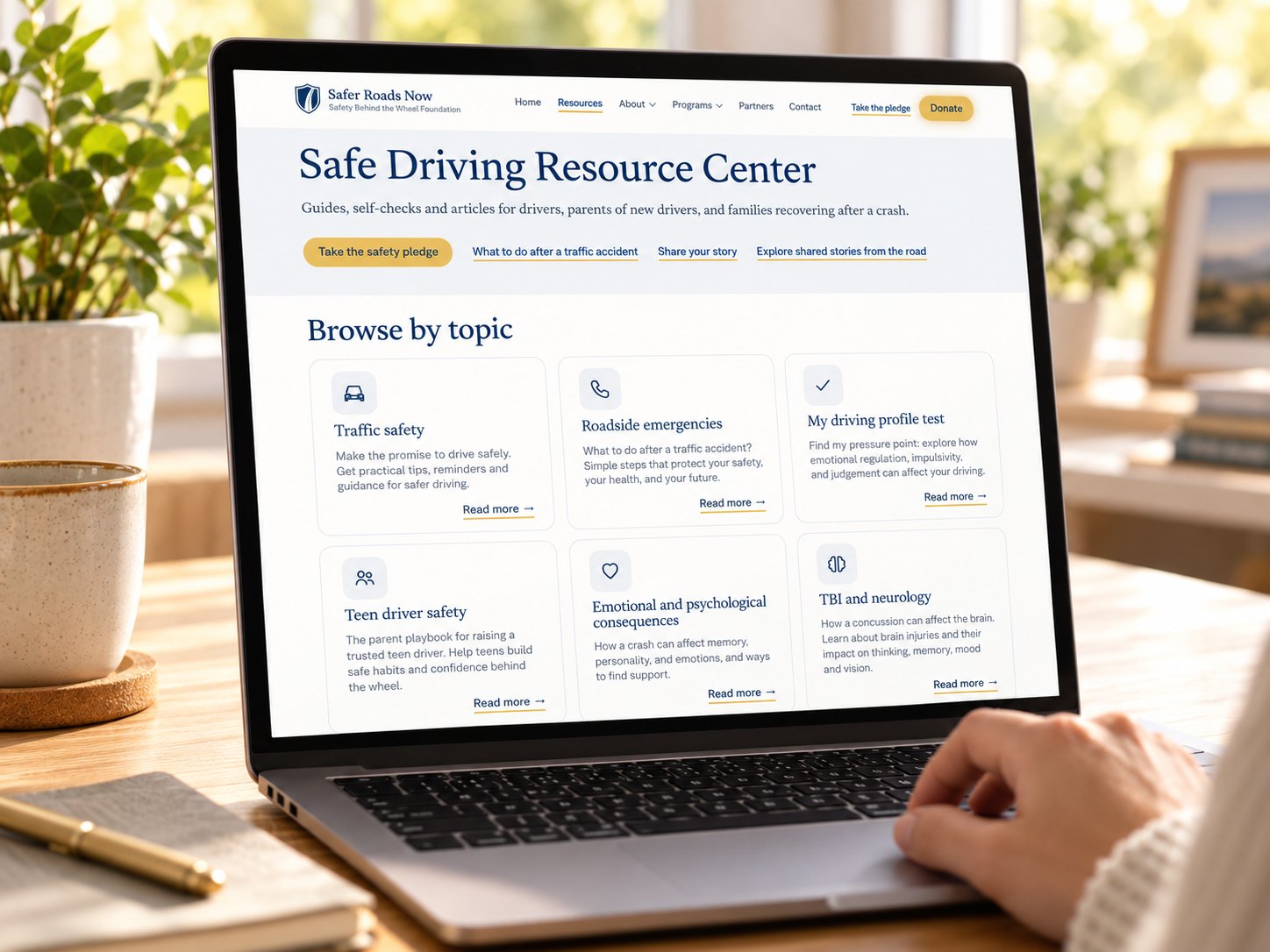
    A laptop open to the Safe Driving Resource Center page, with guides grouped by topic.
    Back to top